Official portal of the realm

Crown · Assembly · People

A tiny nation.
A living tradition.

Tucked into the North Atlantic between Greenland and Iceland, Tiravell is a constitutional kingdom shaped by the sea, Celtic tradition, and government by consent.

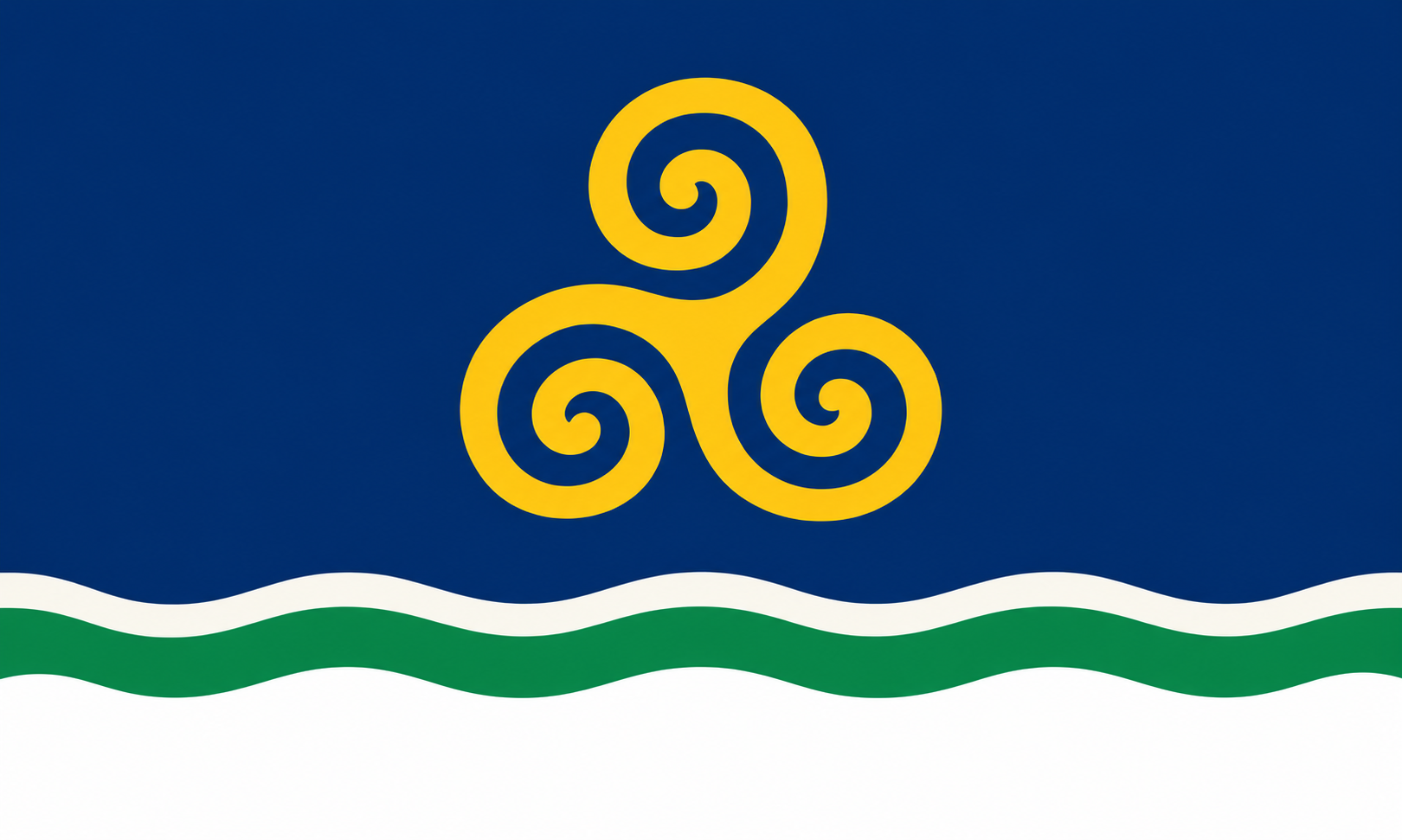
Flag of Tiravell, with navy, white, and green fields and a gold Celtic triskele
National flag Sea, peace, land, and continuity

The Realm

Small in scale.
Whole in spirit.

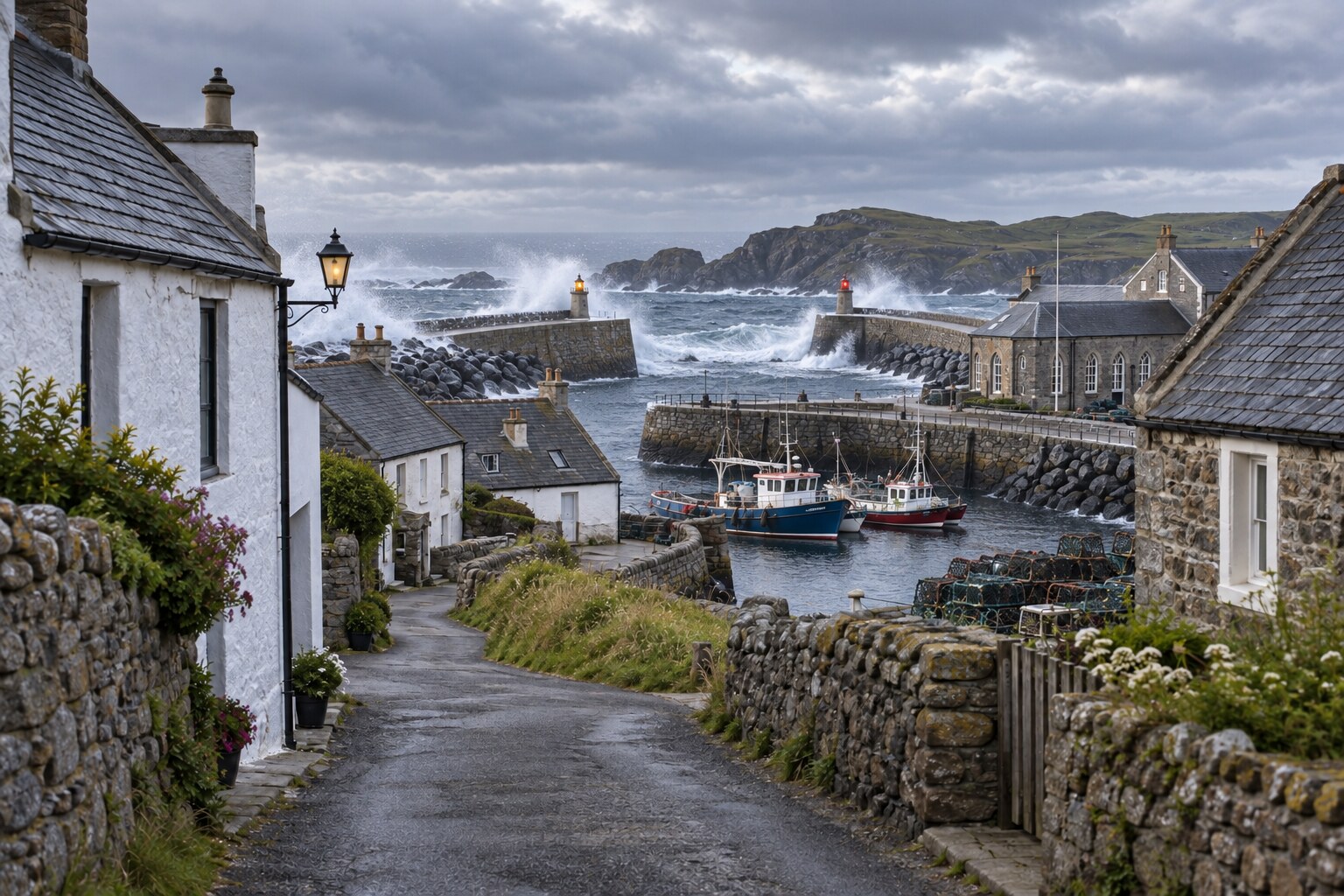
Tiravell is a tiny, self-governing island nation in the cold waters of the North Atlantic. Its sheltered coves, green headlands, and old seafaring customs form the heart of Tiravellan life.

Official name
The Constitutional Kingdom of Tiravell
Government
Parliamentary constitutional monarchy
Capital
Caeravell
Legislature
Assembly of the Isles
Head of government
First Minister
Demonym
Tiravellan
Language
English

The People of Tiravell

A close-knit island community.

Small by design and tradition

Tiravell has an incredibly small permanent population. Civic life is personal, neighbours are closely connected, and stewardship of the island is understood as a shared responsibility across generations.

Across the Realm

A nation of modest scale.

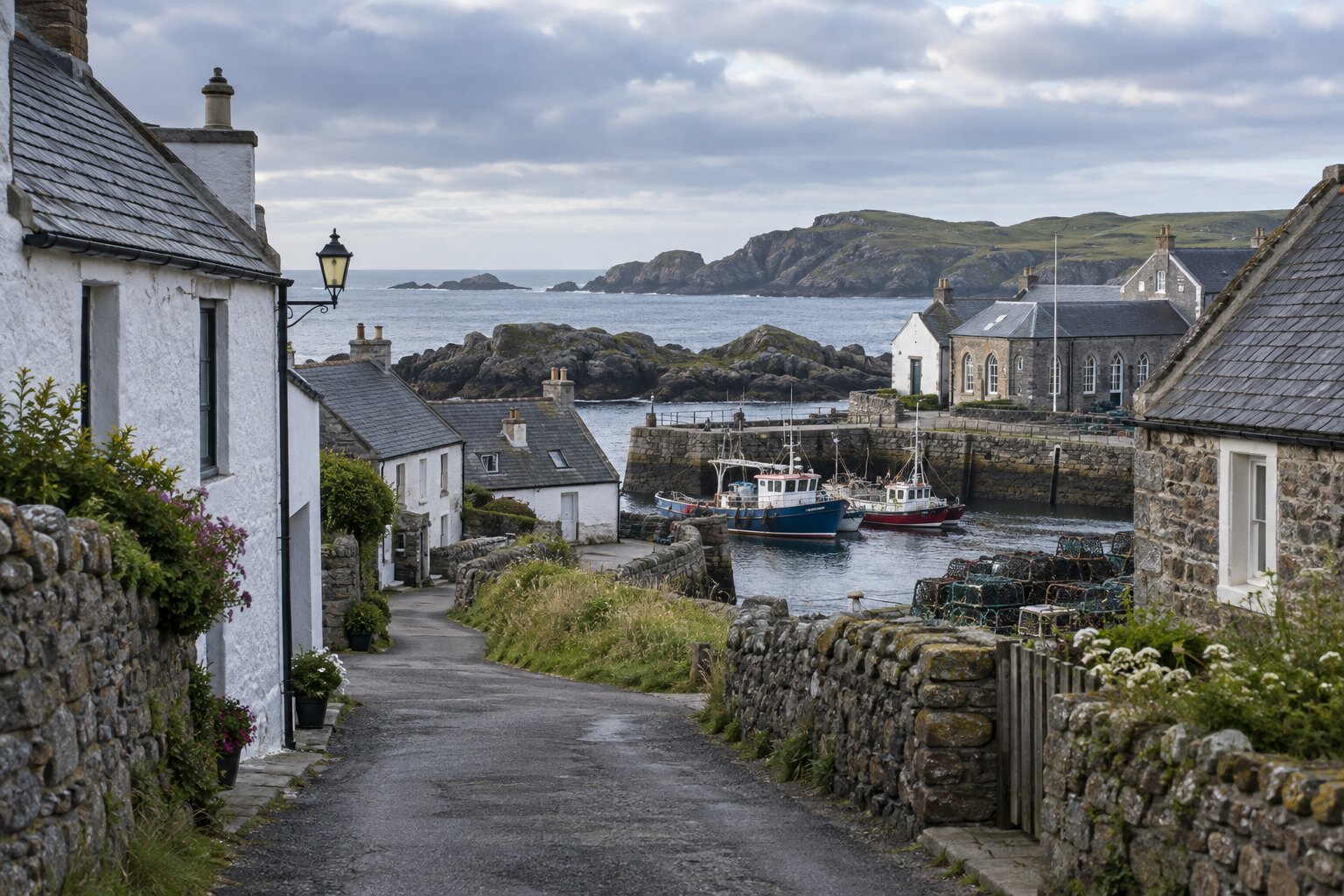
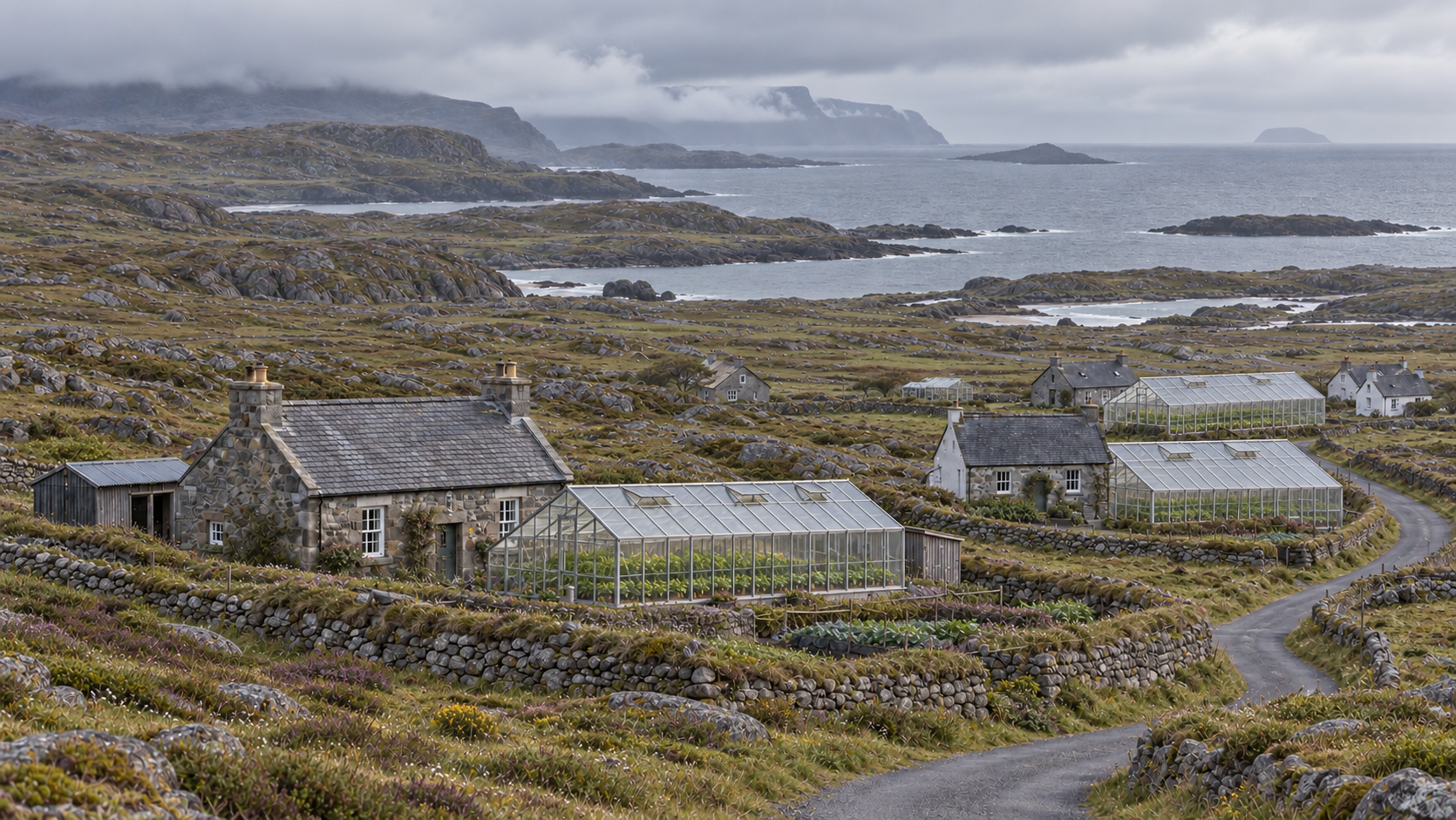
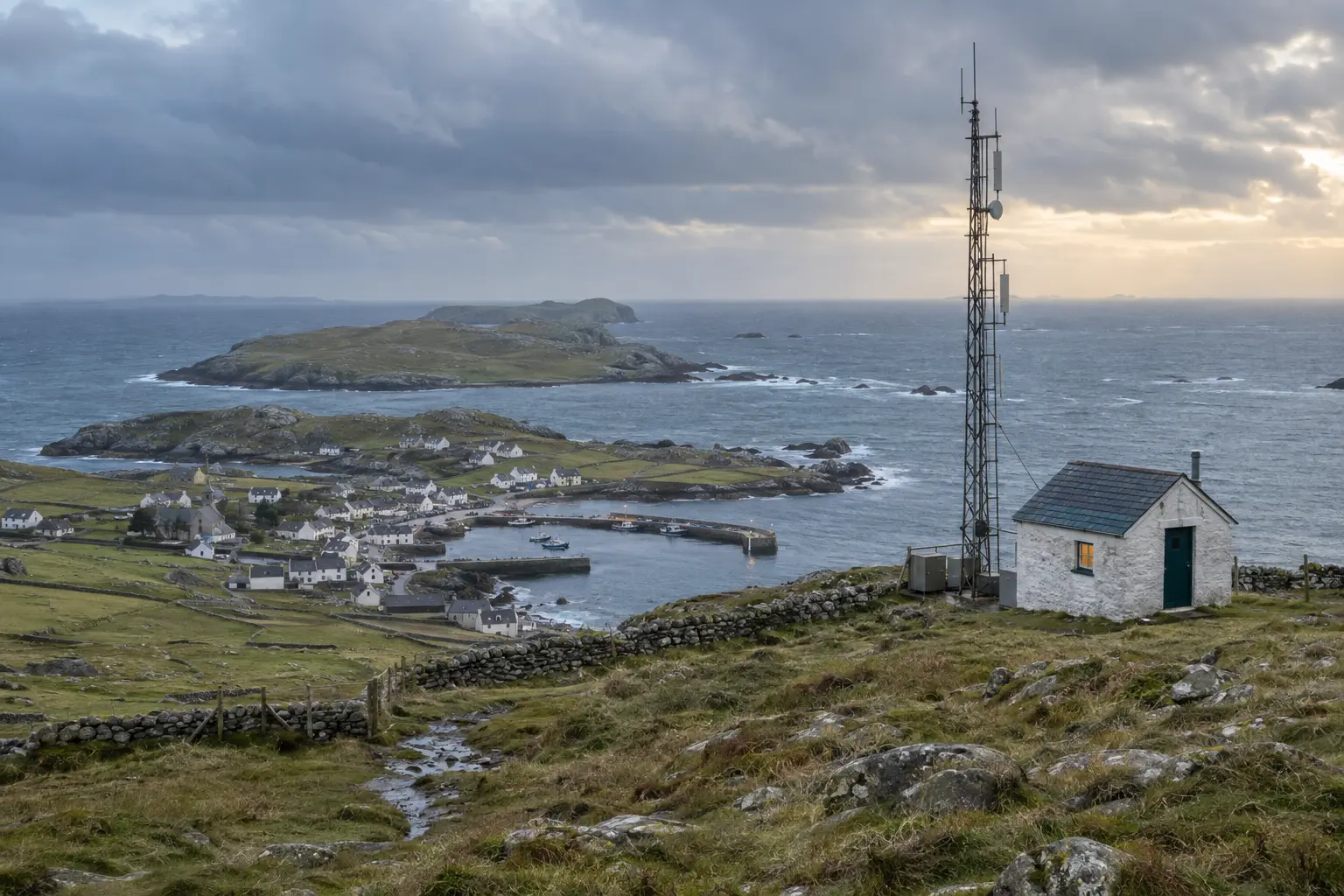
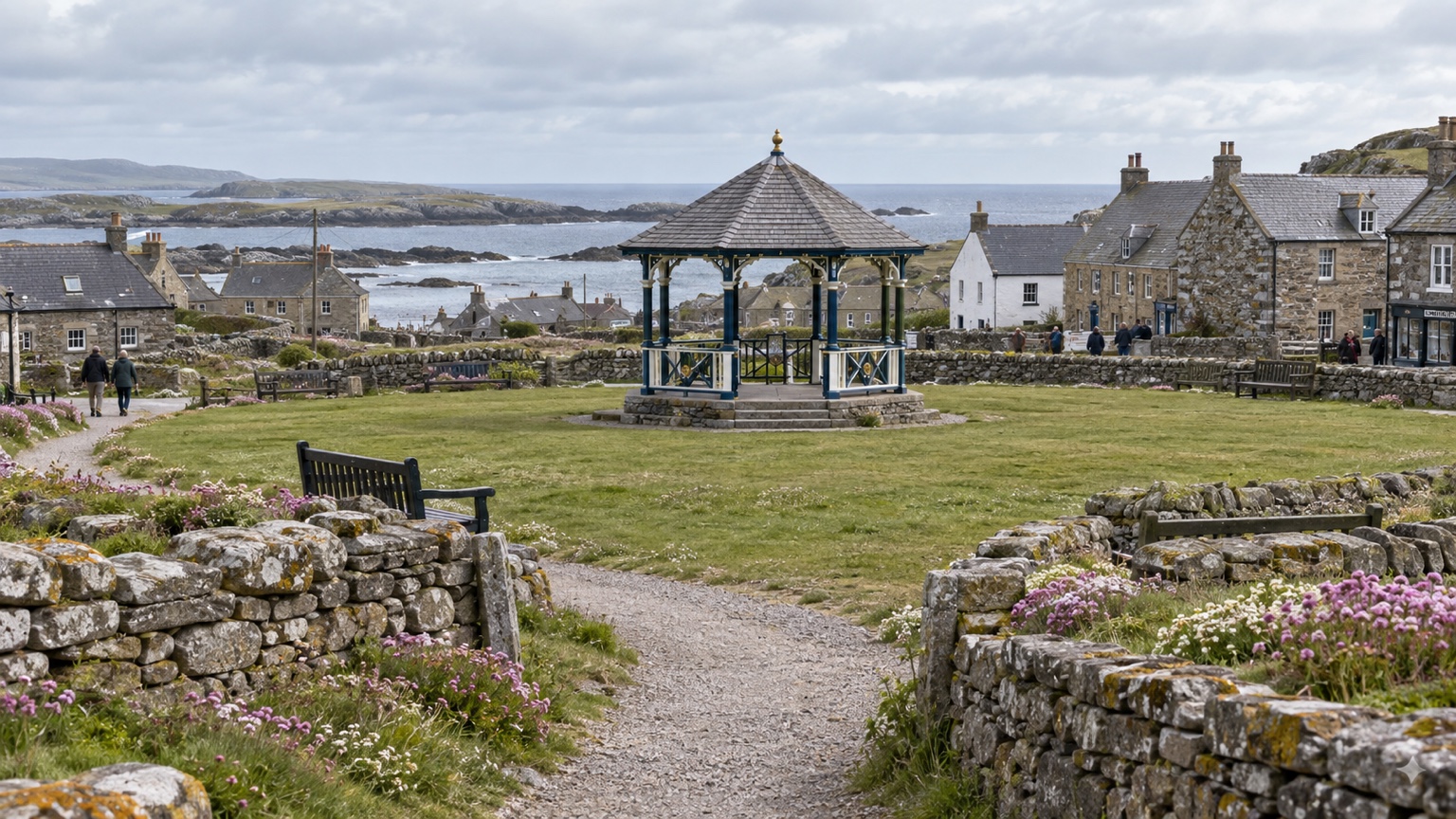
Tiravell's landscape is marked by green headlands, sheltered water, simple stone homes, and settlements built close to the sea.

The Tiravellan Story

A wee nation
made by the sea.

Tiravellan tradition dates the first lasting settlement to 1847, when several Irish families sailing from Galway, Clare, and Donegal were driven north by an Atlantic storm. They found shelter in the island's deep cove and a place where a small community might endure together.

1847

The Landing

The settlers came ashore, repaired their vessel, and built a shared storehouse above the cove. Some remained through the first winter while others returned with family, tools, seed, and livestock.

1848

The Covenant of the Cove

The households agreed that land and essential stores would be held in common care, that no neighbour would go without food or shelter, and that public questions would be settled together.

1912

The Constitutional Settlement

The community placed its ceremonial Crown beneath a written constitution and affirmed the Assembly of the Isles as the equal voice of the people.

Today

The Living Compact

Tiravell remains deliberately small. Its institutions continue the settlers' promise: shared provision, open decisions, careful stewardship, and dignity for every person.

The Constitutional Compact

Tradition held
in democratic trust.

Tiravell joins a ceremonial Crown with direct democratic government and a strong social commonwealth. Authority is exercised under the Constitution, never above it.

01

The Crown

The monarch serves as ceremonial head of state, representing continuity, public service, and the unity of the realm.

02

The Assembly

Every resident aged sixteen or older sits in the Assembly with one equal vote on the laws and public measures of Tiravell.

03

The First Minister

The Assembly chooses an eligible Tiravellan citizen older than thirty to lead the government for a three-year term and remain accountable to the people.

04

The Court

Three judges, elected directly by the people, administer justice independently and may be removed by a two-thirds vote of the full Assembly.

Founding Law of the Realm

The Constitution of Tiravell

We, the people of Tiravell, joined by mutual care and equal dignity, establish this Constitution so that liberty may be protected, power may remain answerable to the people, the necessities of life may be shared fairly, and the island may be preserved for those who follow.

Article I

The Realm and Its Sovereignty

Tiravell is a parliamentary constitutional kingdom and a democratic socialist commonwealth. Sovereignty belongs equally to the people. The Crown, Assembly, First Minister, courts, and every public body possess only the authority granted by this Constitution.

Article II

The Assembly of the Isles

Every resident of Tiravell who is sixteen years of age or older is a voting member of the Assembly of the Isles. Each member holds one equal vote. The Assembly debates and decides laws, public spending, treaties, and national measures directly. Ordinary measures pass by a majority of votes cast, with proceedings and records open to the public.

Article III

The First Minister

The Assembly collectively elects the First Minister from among the citizens of Tiravell who are older than thirty years of age. The First Minister directs the government, carries out the Assembly's decisions, and remains accountable to it. Each term lasts three years. No person may serve more than three three-year terms, whether consecutive or separate.

If no willing and qualified citizen older than thirty remains who has served fewer than three terms, the Assembly may, by a two-thirds vote, permit a former First Minister to serve one additional three-year term. This exception must be reconsidered before every additional term and ends as soon as another eligible candidate is available.

Article IV

The Crown

The Monarch is the ceremonial Head of State and a guardian of continuity, culture, and public service. The Crown does not govern, veto the democratic will, set taxes, or command public funds. Royal duties must be performed in accordance with this Constitution and the decisions of the Assembly.

Article V

The Social Commonwealth

Land, water, energy, harbours, fisheries, communications, and other resources essential to the common life shall be protected for public benefit. Essential services shall be publicly or cooperatively owned wherever practical. Personal property and small private enterprise are protected, provided they do not exploit labour, endanger the island, or place private power above the common good.

Article VI

Rights and Equal Dignity

Every person is equal before the law and has the rights of speech, conscience, peaceful assembly, privacy, due process, democratic participation, and freedom from discrimination. No office, title, wealth, family, or belief grants a person greater civil rights than another.

Article VII

Social Guarantees

Every resident has a right to healthcare, education, safe housing, sufficient food and water, basic energy, care in childhood and old age, and assistance in disability or hardship. These guarantees are public duties and may not be withheld for inability to pay.

Article VIII

Work and the Economy

Workers have the right to fair pay, safe conditions, collective organization, and a democratic voice in their workplaces. The realm shall favour cooperatives, local production, shared prosperity, and useful work over monopoly or the accumulation of excessive private wealth. Taxation shall be progressive and openly accounted for.

Article IX

Justice

The judicial branch consists of three judges elected directly by the people of Tiravell. Each judge must decide matters independently, impartially, and according to this Constitution and the law. A judge may be removed from office by a two-thirds vote of the full Assembly of the Isles.

Every accused person is presumed innocent, entitled to counsel, and entitled to a fair and public hearing. Justice shall respect human dignity and favour restoration, public safety, and reintegration.

Article X

Stewardship of the Island

The sea, coast, wildlife, climate, and cultural inheritance of Tiravell are held in trust for future generations. Public decisions must consider ecological limits, long-term resilience, and the duty to leave the realm whole and habitable.

Article XI

Emergency Powers

Emergency authority must be necessary, limited, and publicly declared. It expires after thirty days unless renewed by a two-thirds vote of the Assembly. Elections, equal protection, access to the courts, and the prohibition of cruel treatment may never be suspended.

Article XII

Amendment and Supremacy

This Constitution is the highest law of Tiravell. An amendment requires public notice, at least thirty days of open debate, and approval by two-thirds of the full Assembly. No amendment may abolish equal voting, democratic government, human dignity, or the people's ultimate sovereignty.

Article XIII

Citizenship

Full citizenship may be granted by a majority vote of the Assembly following a public petition. Each member of the Royal Family may nominate no more than three persons per calendar year; a royal nominee receives full citizenship unless two-thirds of the full Assembly votes to deny the nomination. The Royal Dog exercises no constitutional power.

Honorary citizenship may be bestowed by the Assembly, but does not confer residency, voting membership, public office, or a claim upon the island's land or public services.
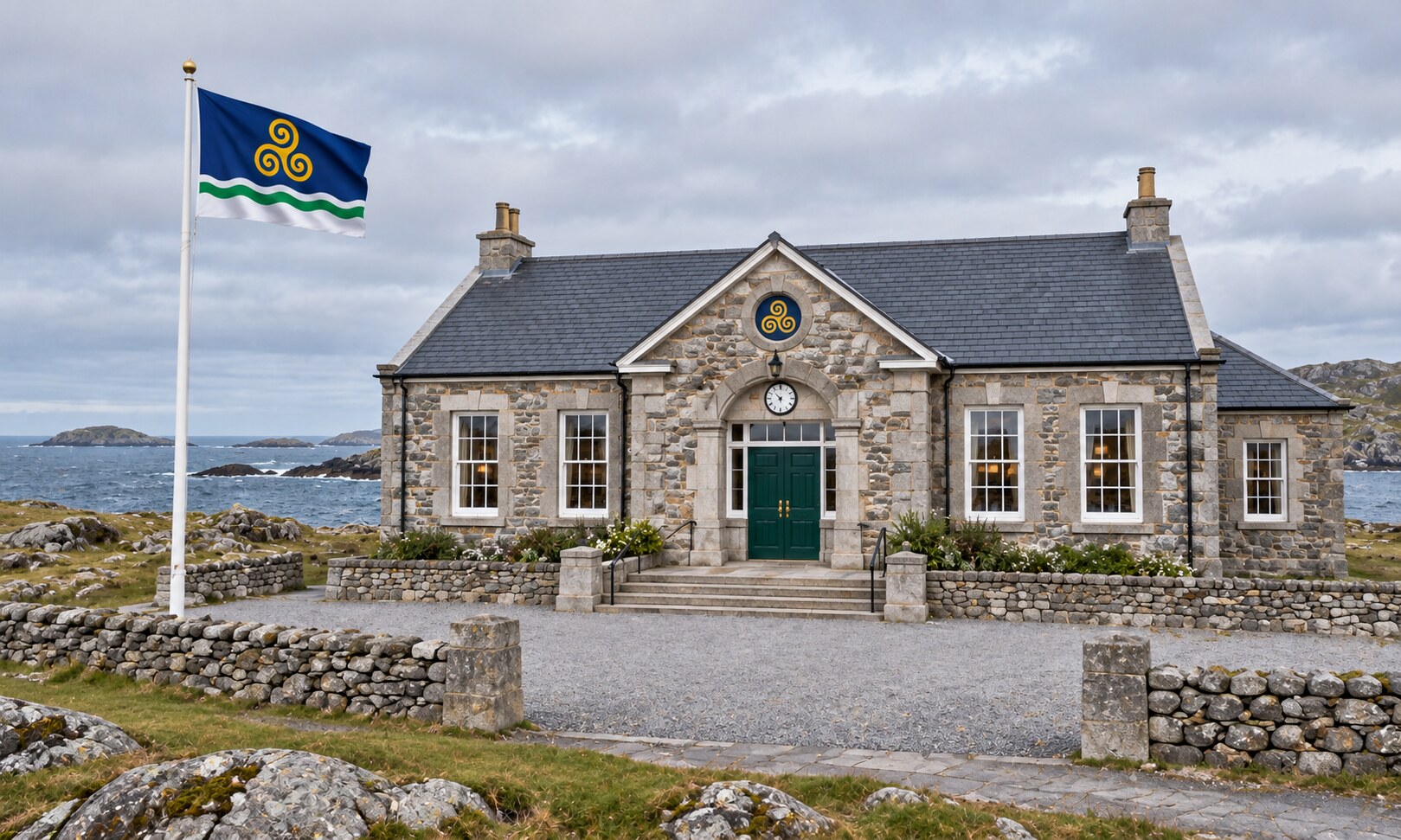
Government House and Court of Tiravell, a modest island civic building beside the North Atlantic

The People's House

Government House
and Court.

This modest civic building contains the public meeting hall of the Assembly of the Isles, the working office of the First Minister, and the courtroom shared by Tiravell's three elected judges.

Assembly meetings and court hearings are ordinarily open to the public. The building belongs to the people and is designed for deliberation rather than grandeur.

Assembly
All residents aged 16 and older
Judicial branch
Three judges elected by the people
Removal
Two-thirds vote of the full Assembly

Belonging to Tiravell

Becoming a
new citizen.

Because land, housing, and natural resources are very limited, full citizenship is granted carefully and not often. Every decision must protect both the applicant's dignity and the island's ability to provide for its people.

01

Citizenship by public vote

An applicant presents a public petition and a commitment to uphold the Constitution, share in civic responsibilities, and respect the island's ecological limits. The people consider the petition in the Assembly, and a majority vote grants full citizenship.

02

Royal nomination

Each member of the Royal Family may nominate no more than three individuals in a calendar year. A nominee receives full citizenship unless two-thirds of the full Assembly votes to deny the nomination. The Royal Dog holds affection and honour, but no constitutional nominating power.

03

Full civic membership

A person granted full citizenship receives the rights and duties of Tiravellan citizenship. Once residing in Tiravell and aged sixteen or older, that citizen also becomes an equal voting member of the Assembly and may participate fully in government.

04

Honorary citizenship

The Assembly may bestow honorary citizenship for exceptional friendship or service to Tiravell. It is a public honour and does not by itself grant residency, an Assembly vote, public office, or a claim upon the island's limited land and services.
The Royal Household

The Crown
and family.

The Royal Household represents continuity, service, and the traditions of Tiravell. The Crown's role remains ceremonial within the constitutional order.

Members of the Royal Family retain their own family surname in civil life, but it is not used in ceremony. They are formally presented as King Kevin of Tiravell, Queen Shannon of Tiravell, Prince Aaron of Tiravell, and Prince Quinn of Tiravell. Older court tradition sometimes calls the dynasty the House de Tiravell—an intentionally Tiravellan form meaning the House “of Tiravell.”

His Majesty

King Kevin

The King

Her Majesty

Queen Shannon

The Queen

His Royal Highness

Prince Aaron

Prince of Tiravell

His Royal Highness

Prince Quinn

Prince of Tiravell

Companion to the Crown

Marble

The Royal Dog

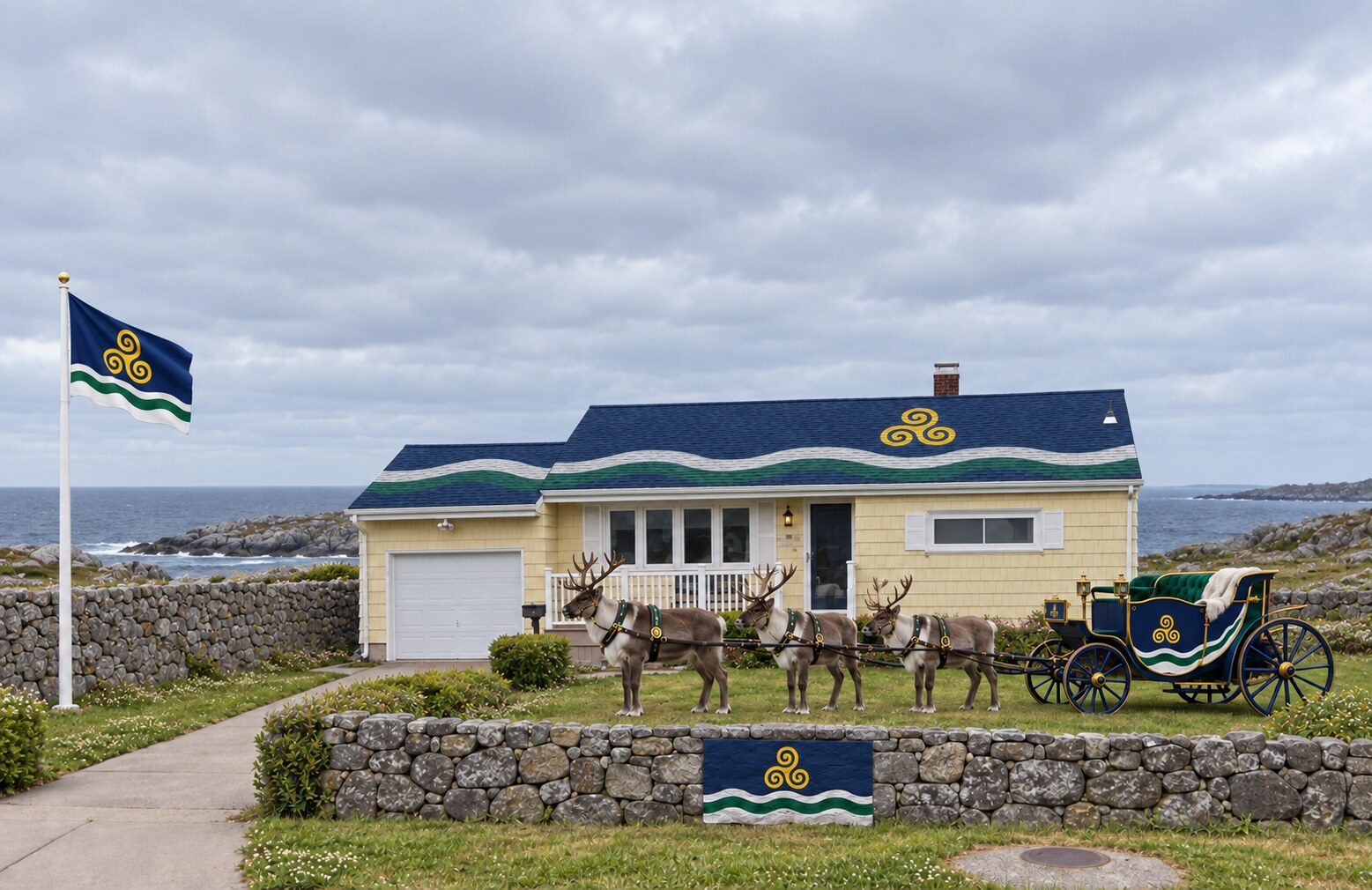
The Royal Home of Tiravell beside the ocean, with a flag-coloured roof, the national flag, a tall stone boundary wall, and reindeer harnessed to the royal carriage
Official ResidenceThe Royal Home of Tiravell

The modest residence of the Royal Household reflects Tiravell's tradition of service without grandeur. The national flag flies above the grounds, while the royal carriage is kept for ceremonial occasions.

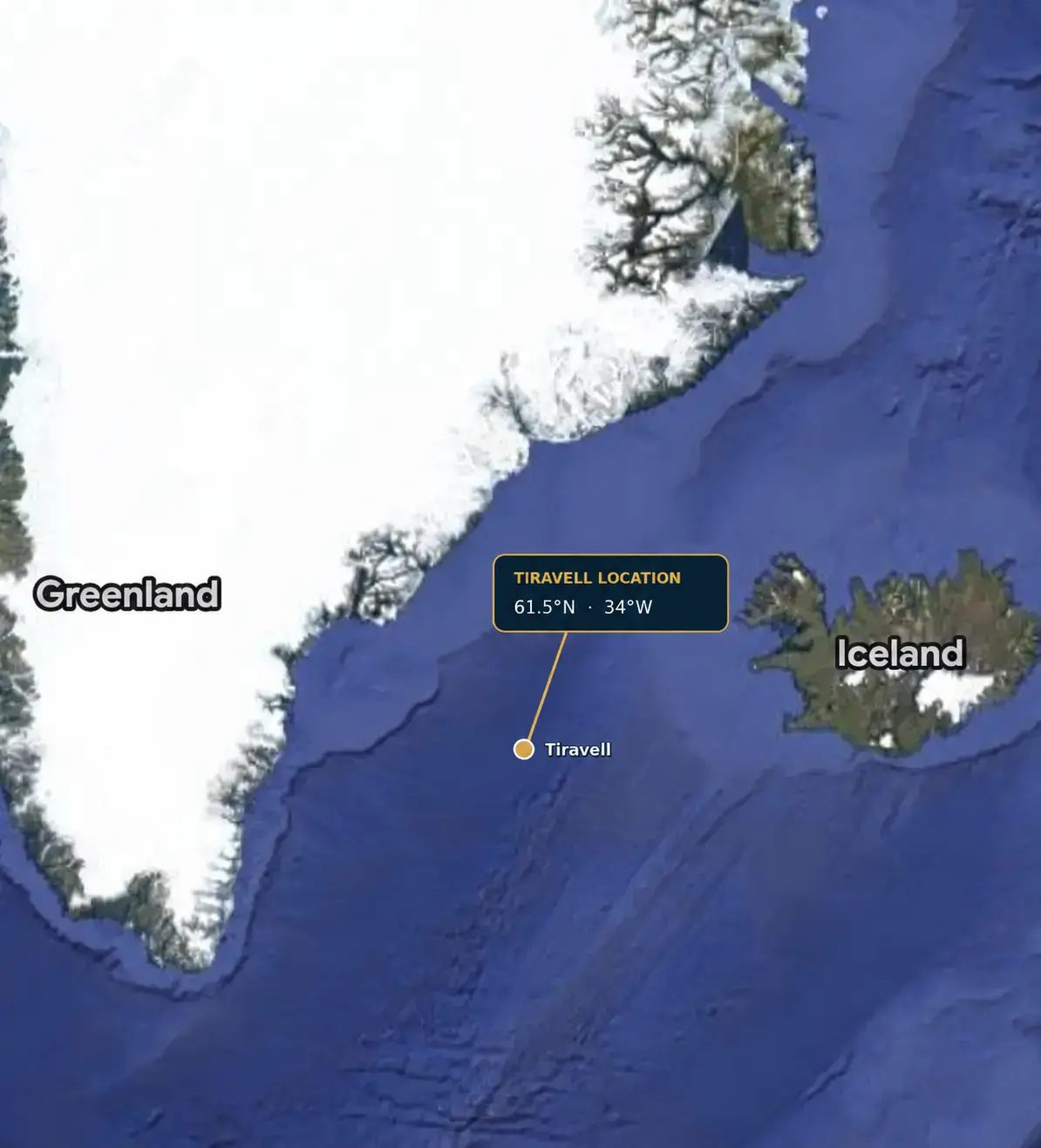
Map of the North Atlantic showing the extremely small Constitutional Kingdom of Tiravell between Greenland and Iceland
Open the map and zoom in to find the tiny realm.

North Atlantic

A realm between
great horizons.

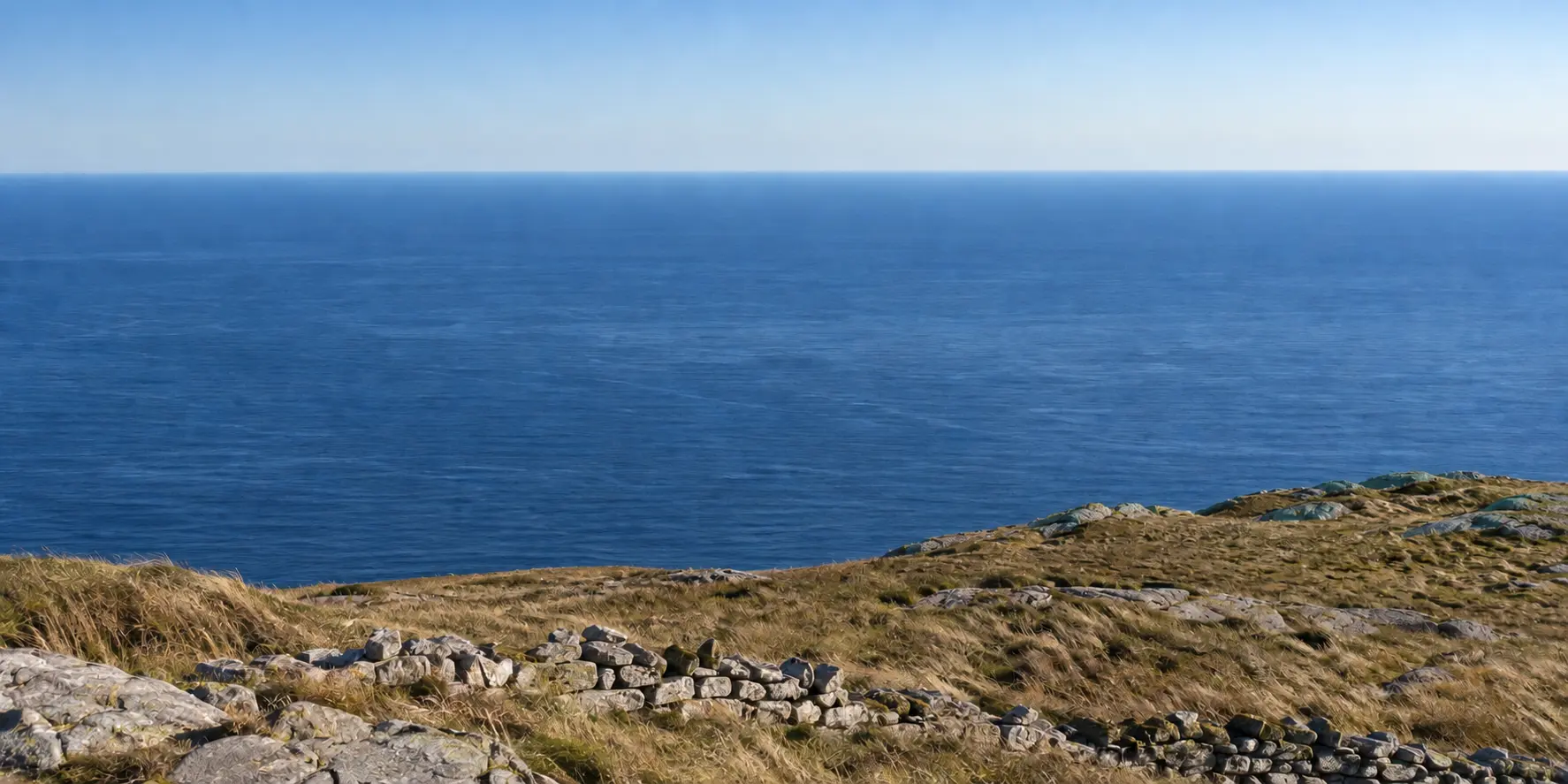
Very small and deliberately secluded, Tiravell rests among the northern seas between Greenland and Iceland—where ocean weather, long summer light, and dark winter skies set the rhythm of the year.

Illustrative national map — not to scale

Travelling to Tiravell

The last part of
every journey is by sea.

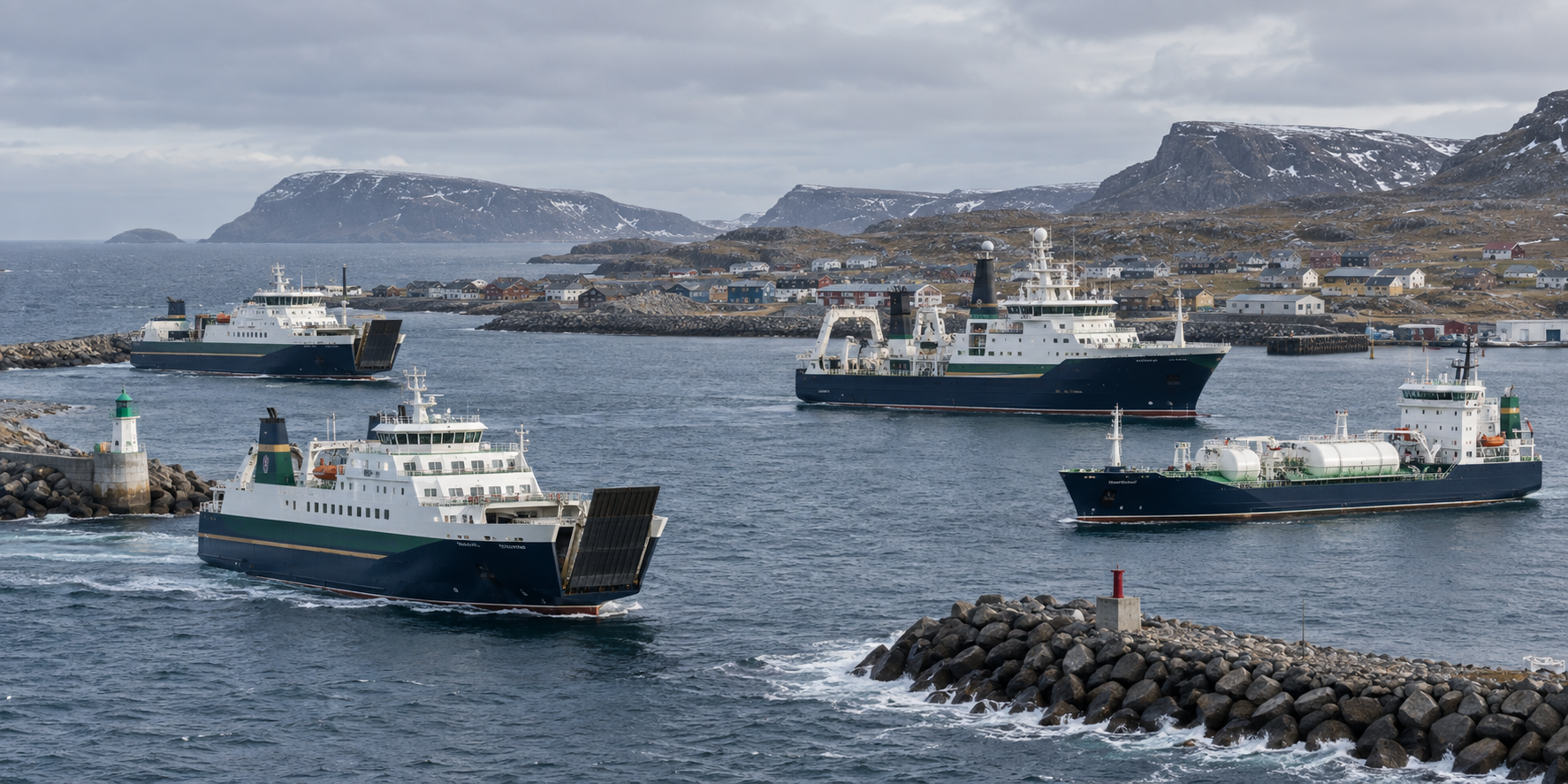
Tiravell is too small for an airport, so every visitor arrives through Caeravell harbour. Although the island lies physically closer to Iceland, it may be easier to fly to Greenland and continue aboard a Tiravellan passenger ferry or an arranged boat, depending on the season and available connections.

Travellers may also approach from Iceland by charter vessel. Crossing times vary with weather, and the harbourmaster may delay departures when North Atlantic conditions are unsafe.

01 · Principal route

Via Greenland

Fly to Greenland, travel onward to the coastal departure quay, and board the small passenger ferry serving Caeravell. This is considered the usual route when connections are operating.

02 · Alternate route

Via Iceland

Despite Iceland being geographically nearer, onward service is less regular. Visitors commonly arrange passage on a charter boat or join a scheduled supply sailing.

03 · Harbour arrival

Caeravell passenger quay

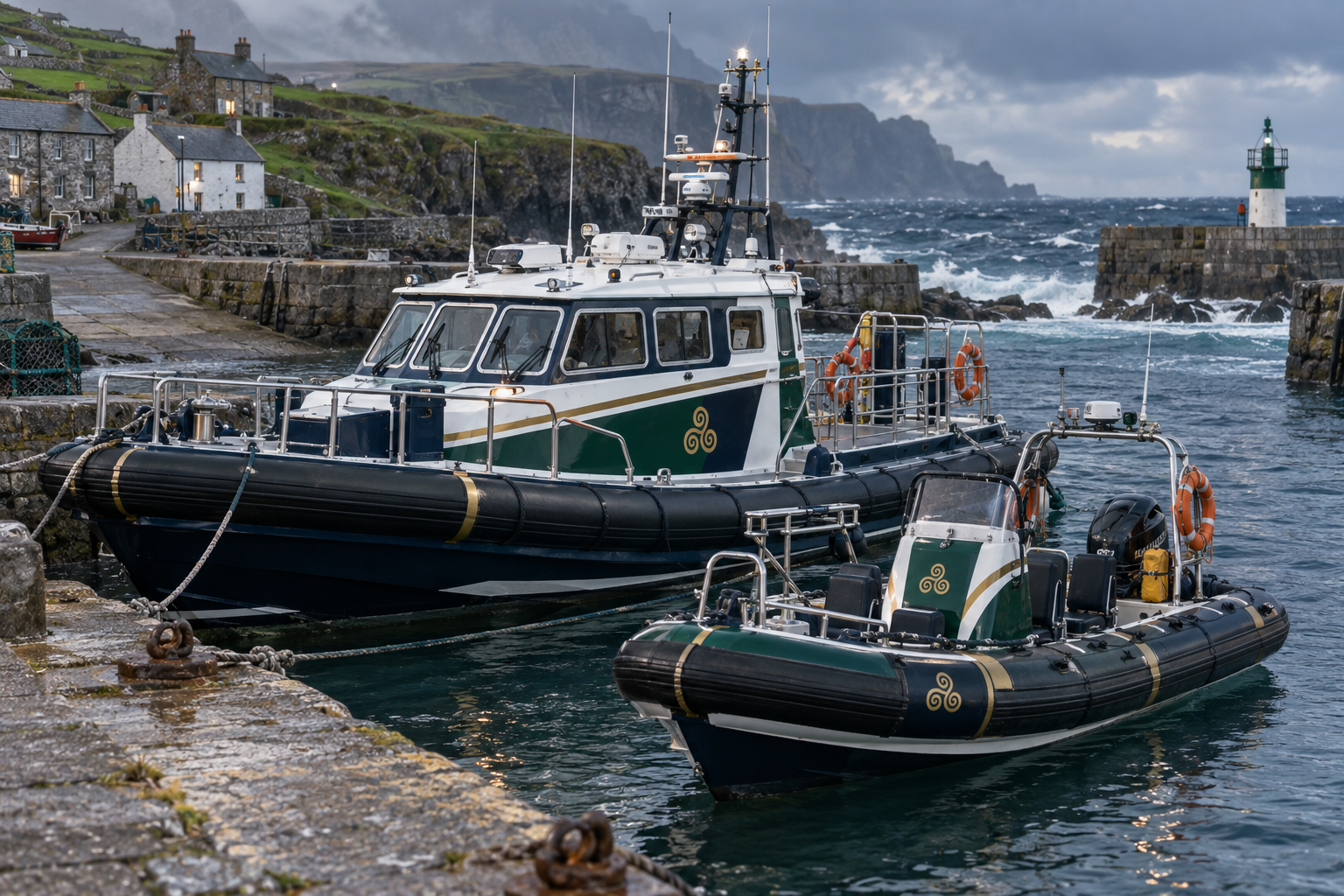
Ferries and visiting boats berth beside the village. A small harbour launch—known locally as the water taxi—carries passengers between anchored vessels, the main quay, and the island's sheltered coves.
04 · On the island

Slow travel

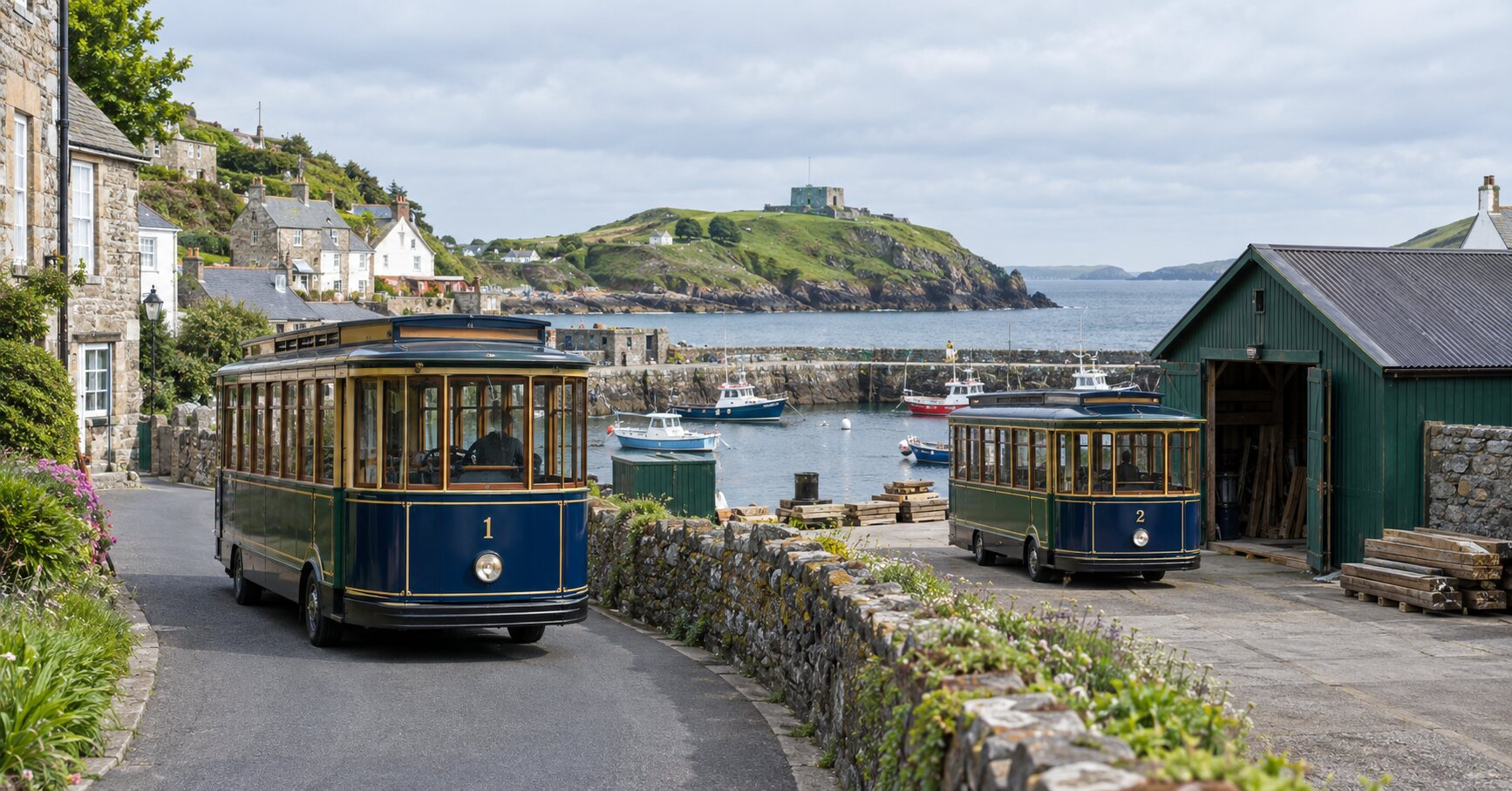
There are no long roads and little need for cars. Visitors explore on foot or bicycle, while electric carts carry luggage and supplies. Advance notice is customary because guest rooms and ferry places are limited.
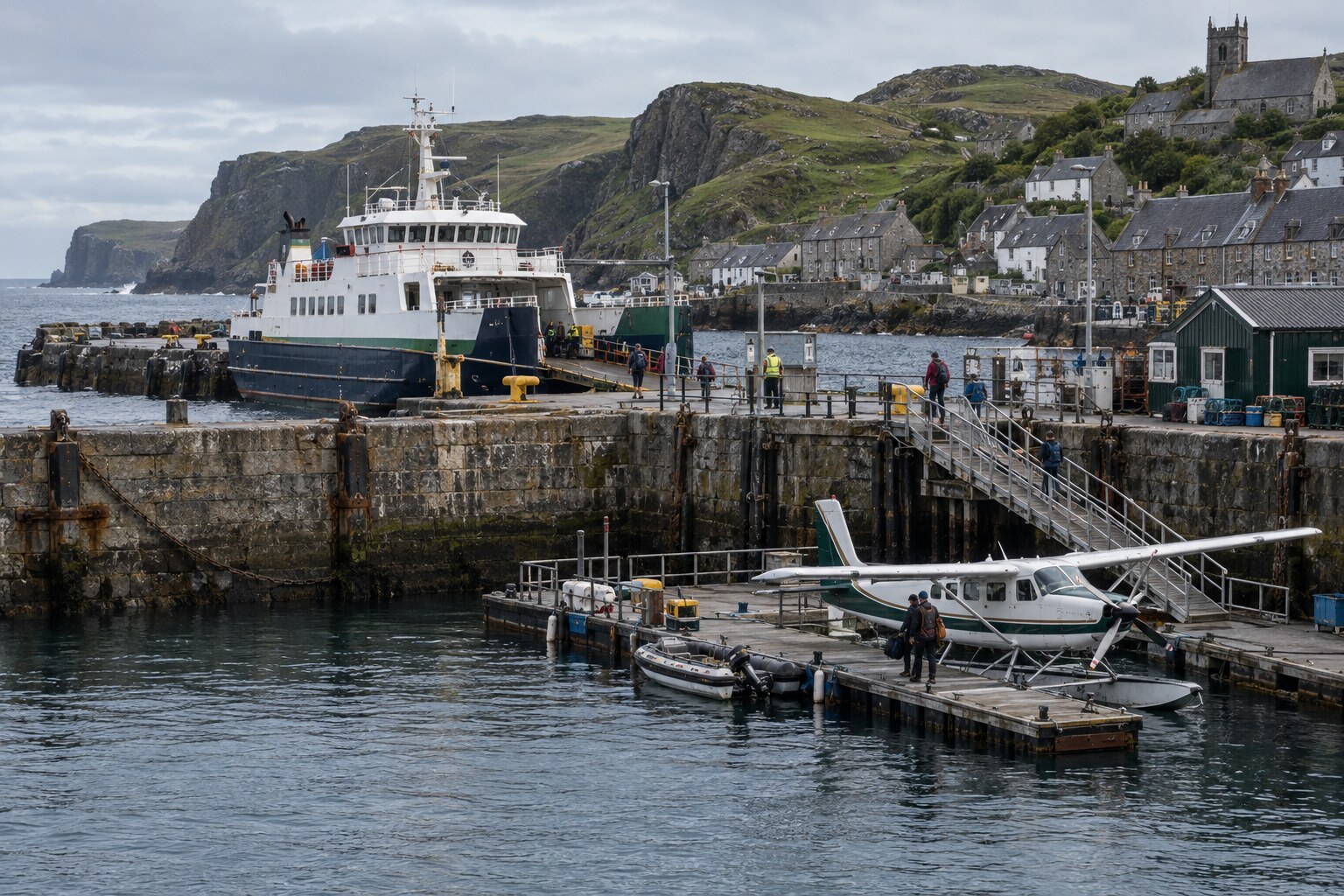
Caeravell's two-level maritime platform with a passenger ferry at the upper berth and a seaplane and small boats at the lower dock
The Maritime Gate Caeravell's two-level landing platform

The raised stone-and-timber berth serves ferries, supply ships, and larger visiting vessels. A lower floating stage rises with the tide and gives seaplanes, water taxis, and small boats a safer place to load and unload.

Money & Exchange

The Tiravellan vell.

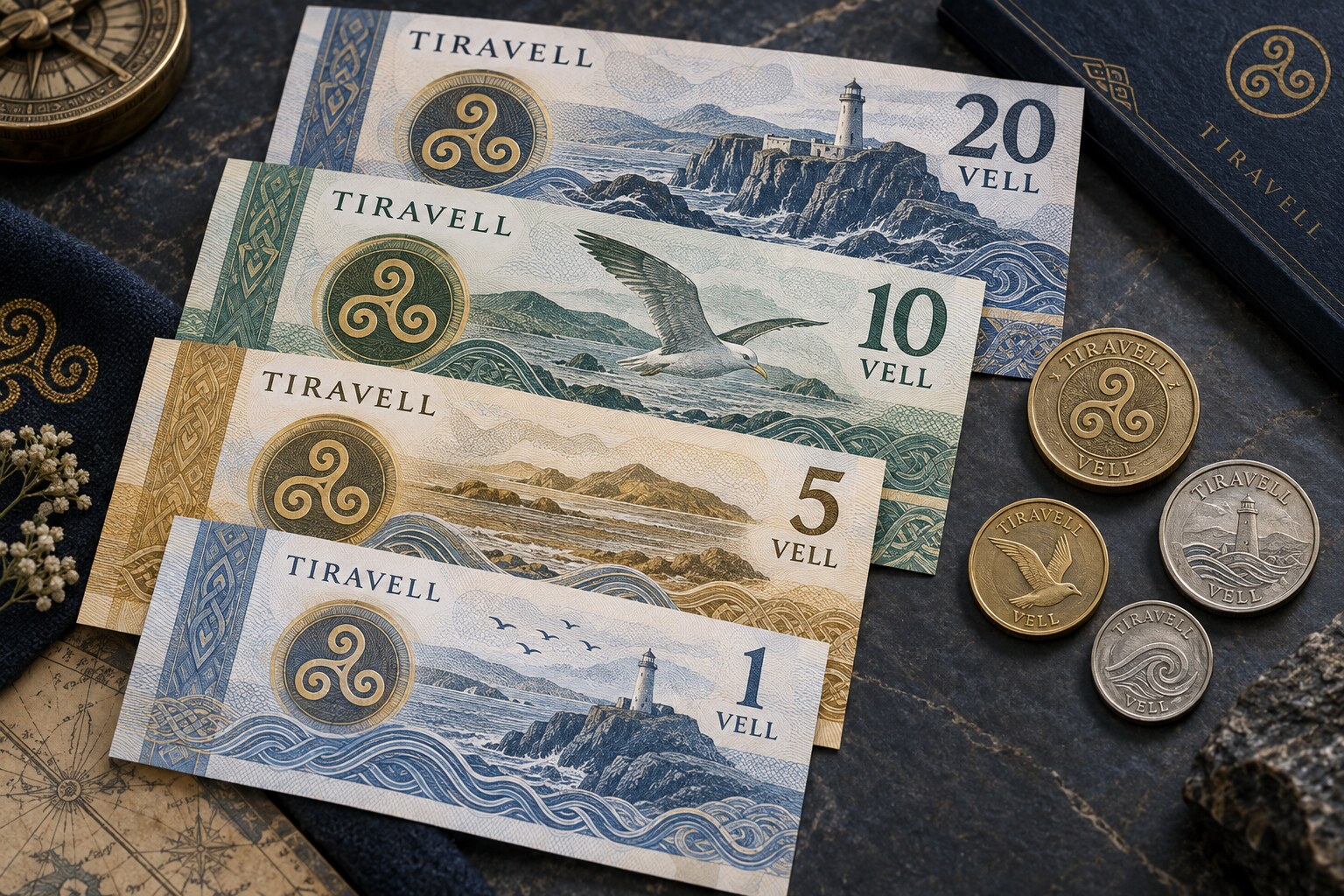
The national currency is the vell, issued in 1, 5, 10, and 20 vell notes alongside a small series of coins. One vell is divided into one hundred tides.

The Royal Treasury and Island Reserve oversees issuance and maintains a conservative reserve of foreign currency and essential commodities. Everyday prices are set in vells, while electronic payments and cash are both accepted throughout the realm.

Currency
Tiravellan vell
Subdivision
100 tides
Issuing authority
Royal Treasury and Island Reserve
Tiravellan vell banknotes and coins decorated with coastal scenes and the national triskele
Vell notes and circulating coinage

Culture & Heritage

Stories carried
across the water.

Tiravellan culture draws on Celtic-inspired music, knotwork, storytelling, coastal craft, and a deep respect for the sea. Community gatherings keep old tales beside new ideas.

Between sea and sky,
we keep the light. — Traditional Tiravellan saying

National Symbols & Traditions

Small emblems.
Deep belonging.

Tiravell's national symbols come from the cliffs, coves, working harbour, and Celtic inheritance of its people.

Bird

Atlantic puffin

Small, steadfast, and perfectly at home on the North Atlantic cliffs.

Flower

Sea thrift

The pink coastal flower that finds a way to bloom in salt wind and thin soil.

Tree

Rowan

A traditional Celtic symbol of protection, planted beside homes and public buildings.

Animal

Grey seal

A familiar presence in the cove and a symbol of the island's bond with the sea.

Fish

Atlantic cod

The fish that sustained the first settlers and remains central to the harbour economy.

Dish

Cove Stew

Smoked whitefish, potatoes, leeks, carrots, and herbs, served with warm oat bread.

Anthem

Between Sea and Sky

A quiet anthem of endurance, neighbourly duty, and keeping the light for one another.

Motto

Small in Scale, Whole in Spirit

A reminder that the worth of a country is not measured by the space it occupies.

Colours

Navy, white, green & gold

Sea, peace, land, and the unbroken continuity represented by the golden triskele.

National sport

Competitive rock skipping

Known locally as the Cove Cast. Skips are counted first and distance breaks a tie. The annual final is conducted with cheerfully unreasonable seriousness.

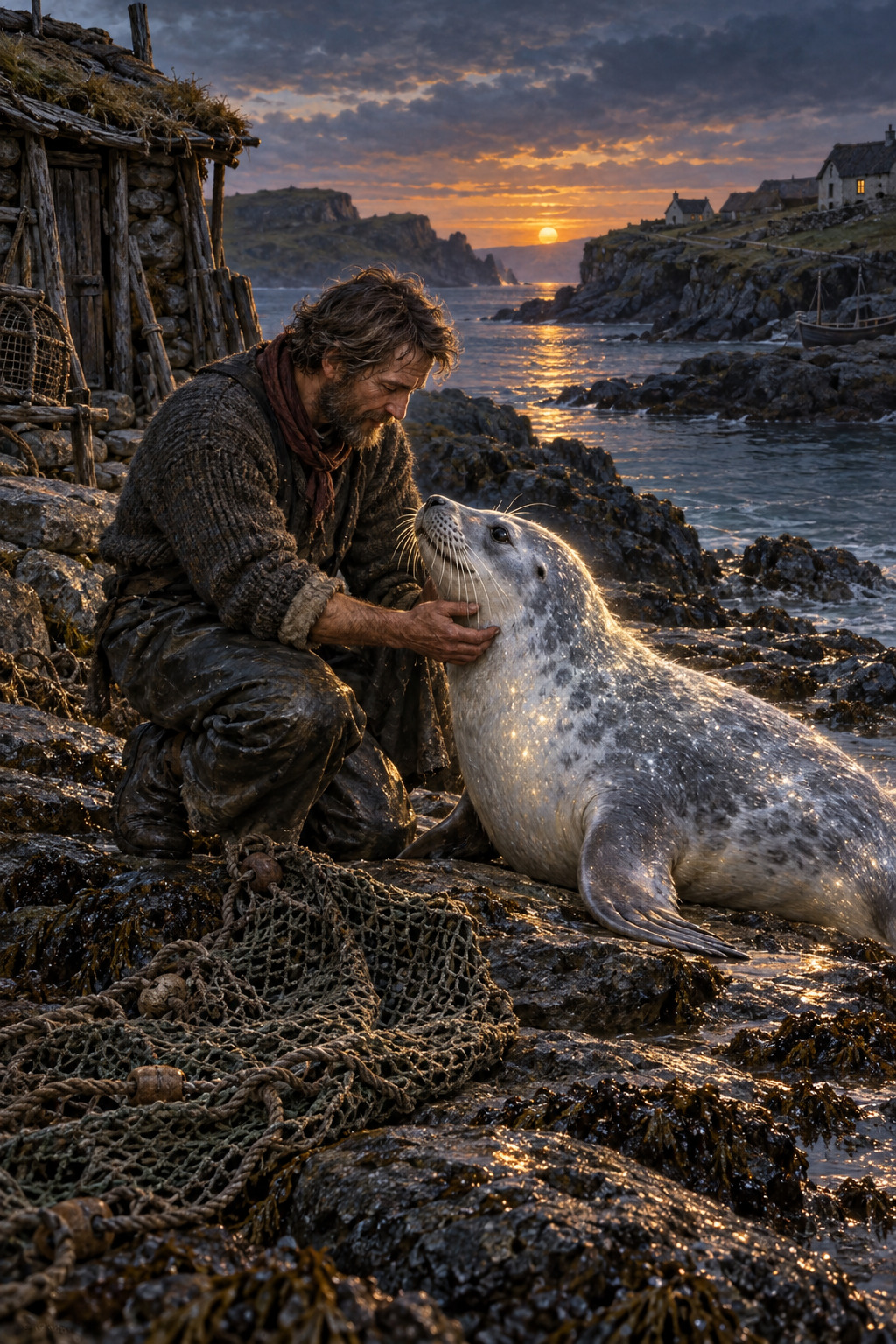
Fiach the fisherman freeing a luminous silver seal from his net in a North Atlantic cove

Tiravellan Folklore

The Fisherman Who
Asked for Enough.

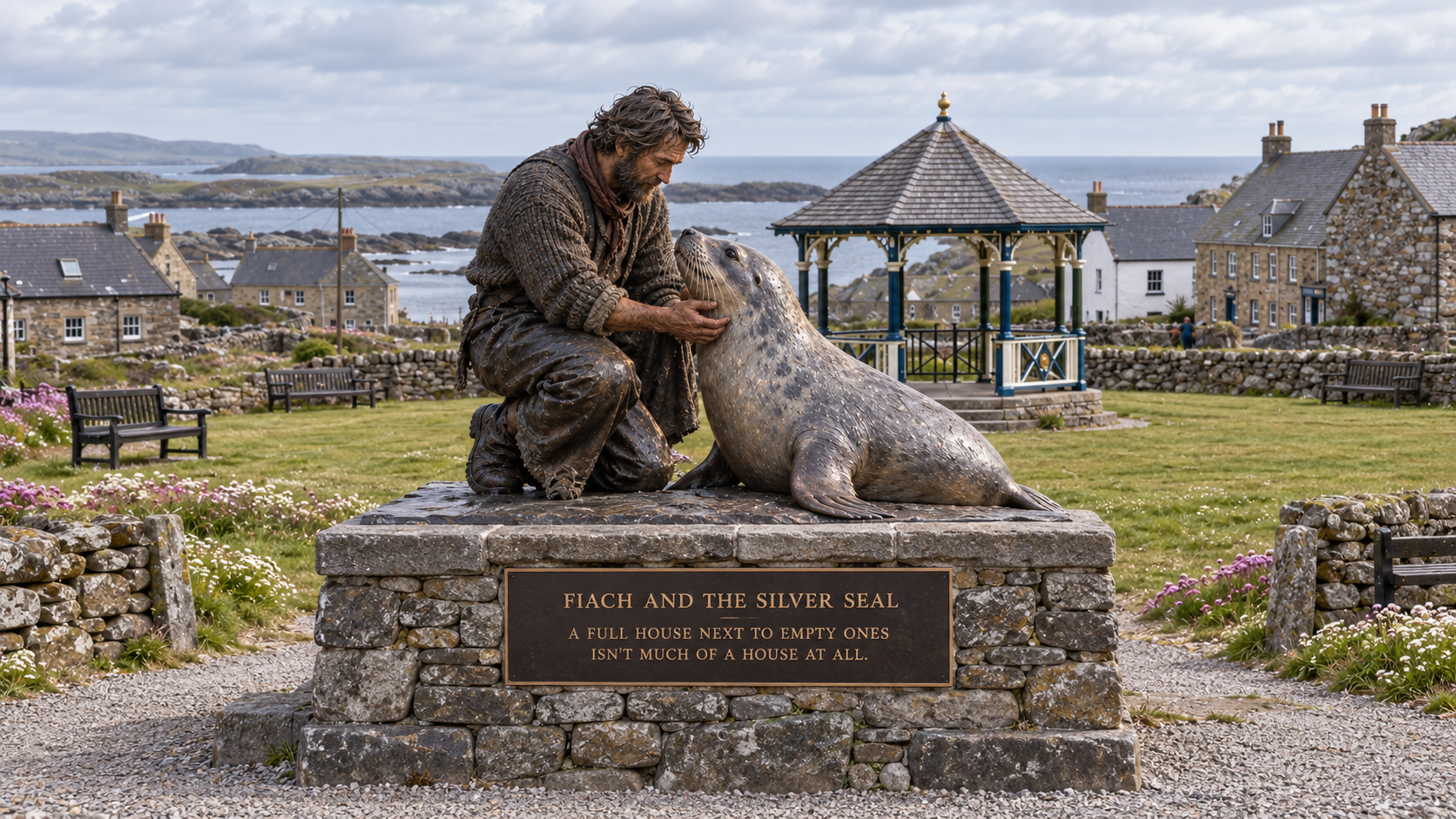
Before Tiravell had a name, a fisherman called Fiach freed a great silver seal and was offered any wish. Instead of asking for a castle or gold, he asked that no one on the shore go hungry through the winter.

The old tale says the seal answered not with treasure but with a lesson: gather the neighbours, bring what each household can spare, and share it. The story is now told beside Tiravellan hearths as an early expression of the promise later written into the Covenant of the Cove.

“A full house next to empty ones isn't much of a house at all.”
Read the complete illustrated tale

The National Anthem

Between Sea
and Sky.

Written in a stately six-eight time, the anthem is sung at Constitution Day, the opening of the Assembly, and the close of Landing Day.

Verse I

From the cove where our forebears came,
Through the storm and silver rain,
Hands together, hearth and harbour,
Guard the shore and keep the flame.

Chorus

Between sea and sky, we keep the light,
Crown and people, equal in right.
Small our island, strong our care,
Tiravell, our home, forever fair.

Verse II

Rowan bends above the headland,
Puffins wheel on northern air,
Every voice within the Assembly
Builds the common future there.

Final Chorus

Between sea and sky, we keep the light,
Crown and people, equal in right.
Small our island, strong our care,
Tiravell, our home, forever fair.

National Broadcasting Service

Radio Tiravell.

Listen here for music, island stories, public notices, Assembly coverage, and programmes from Caeravell. The player carries the live broadcast whenever the station is on air.

Radio Tiravell is the island nation's only radio station. Tiravell does not operate a national television station; residents instead receive television broadcasts from various English-speaking nations.

Radio Tiravell · LivePress play to listen

Not hearing a programme? The station may be off air between scheduled broadcasts.

Caeravell & Island Life

One village.
One shared home.

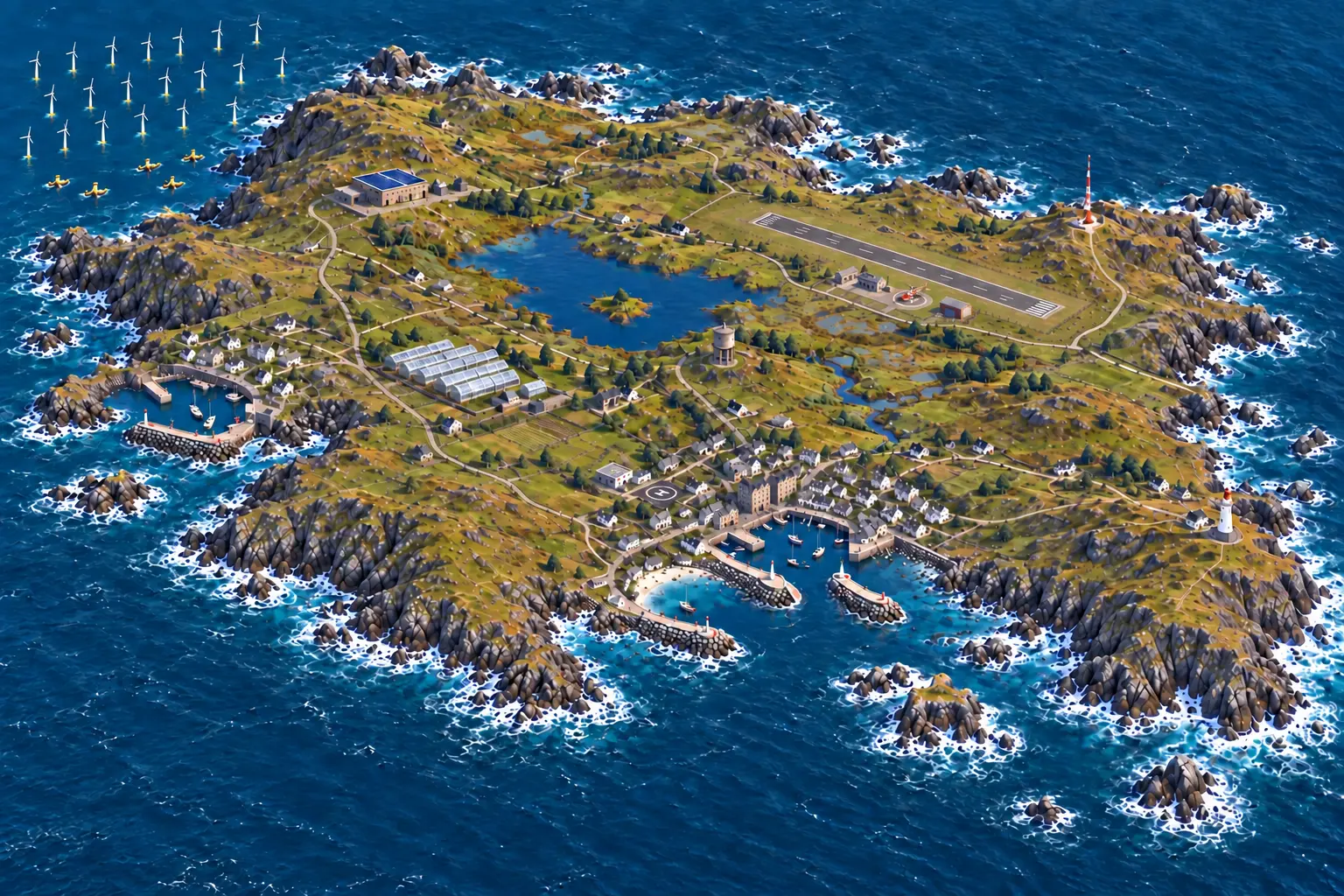
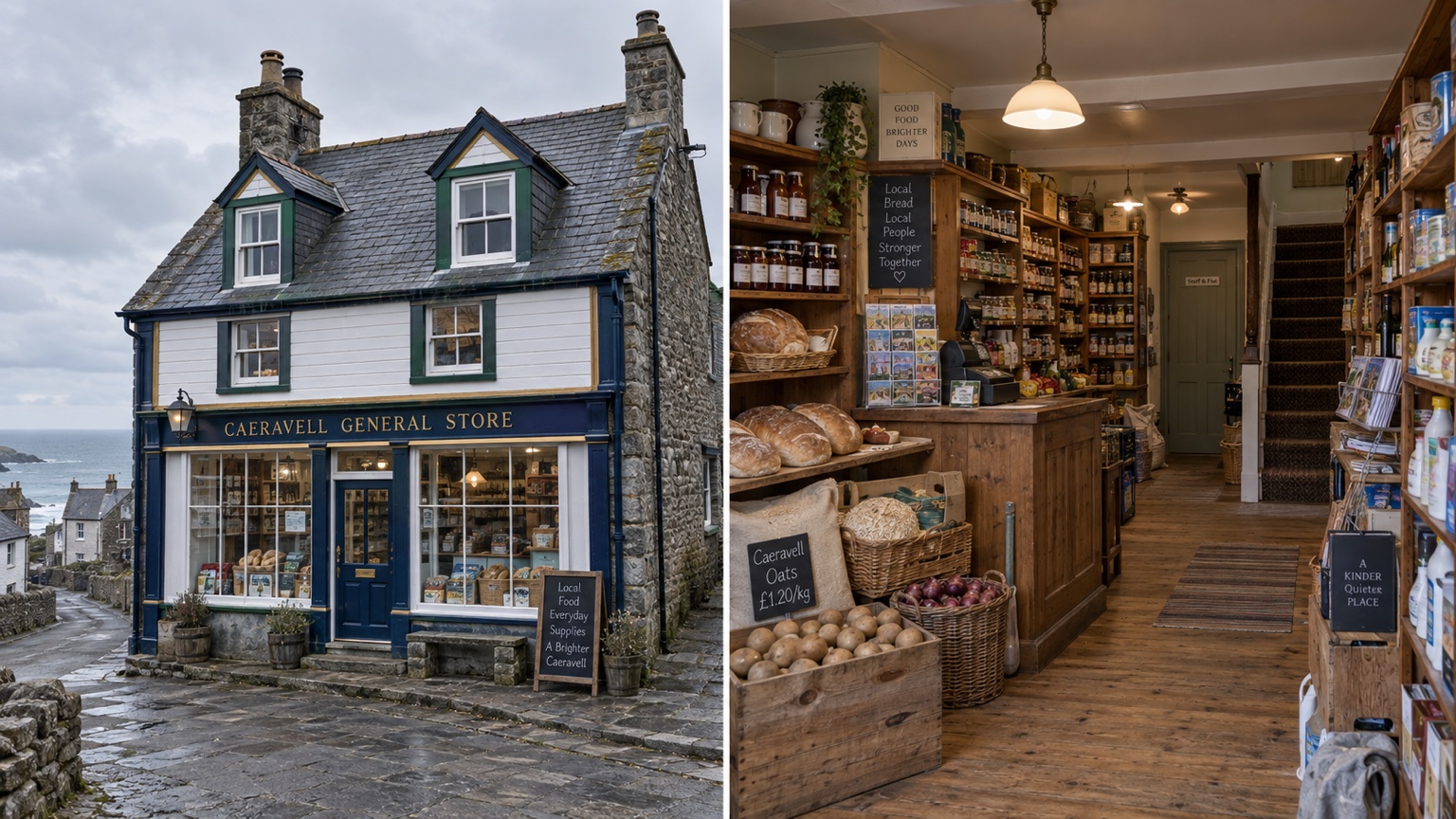
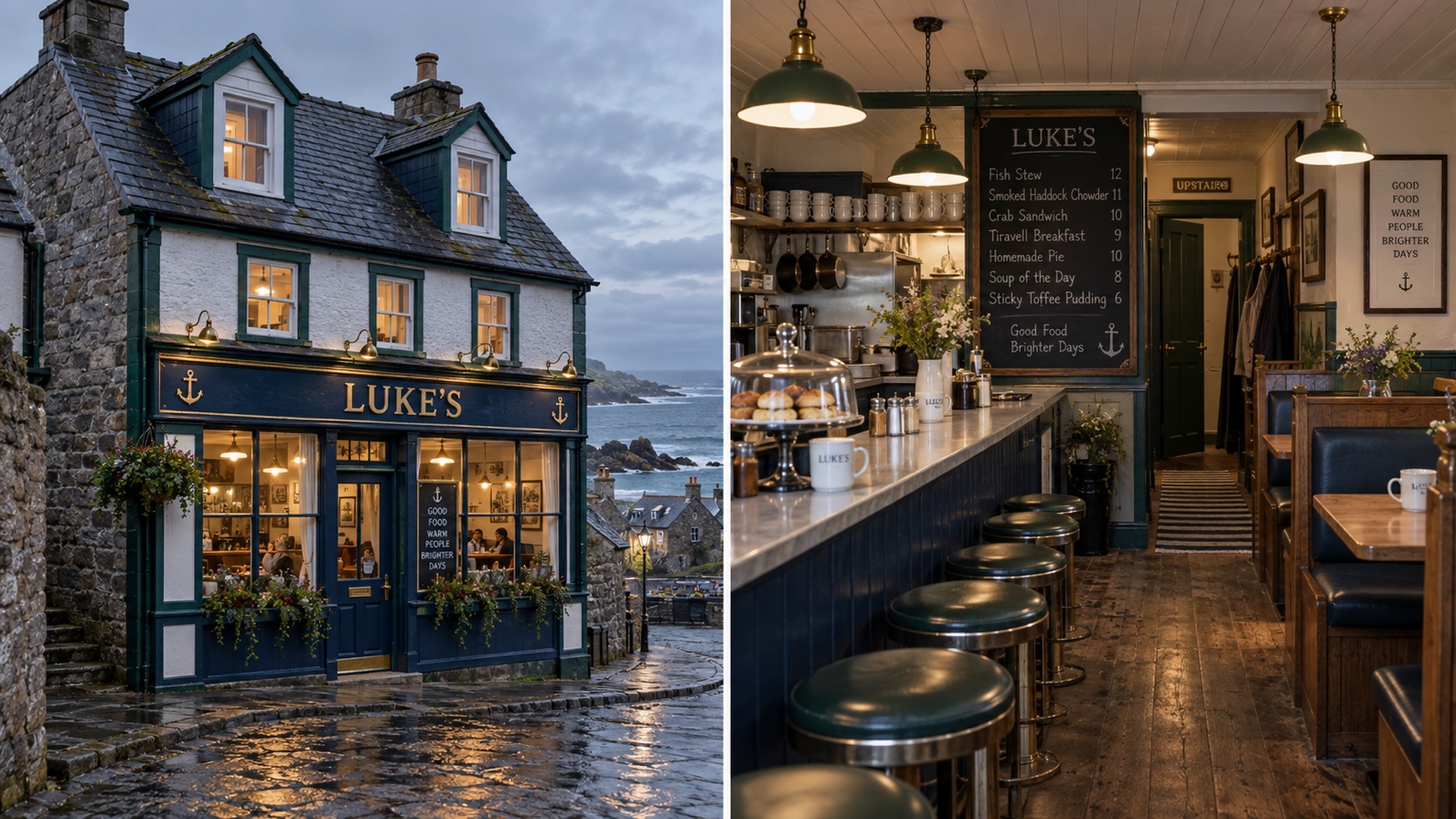
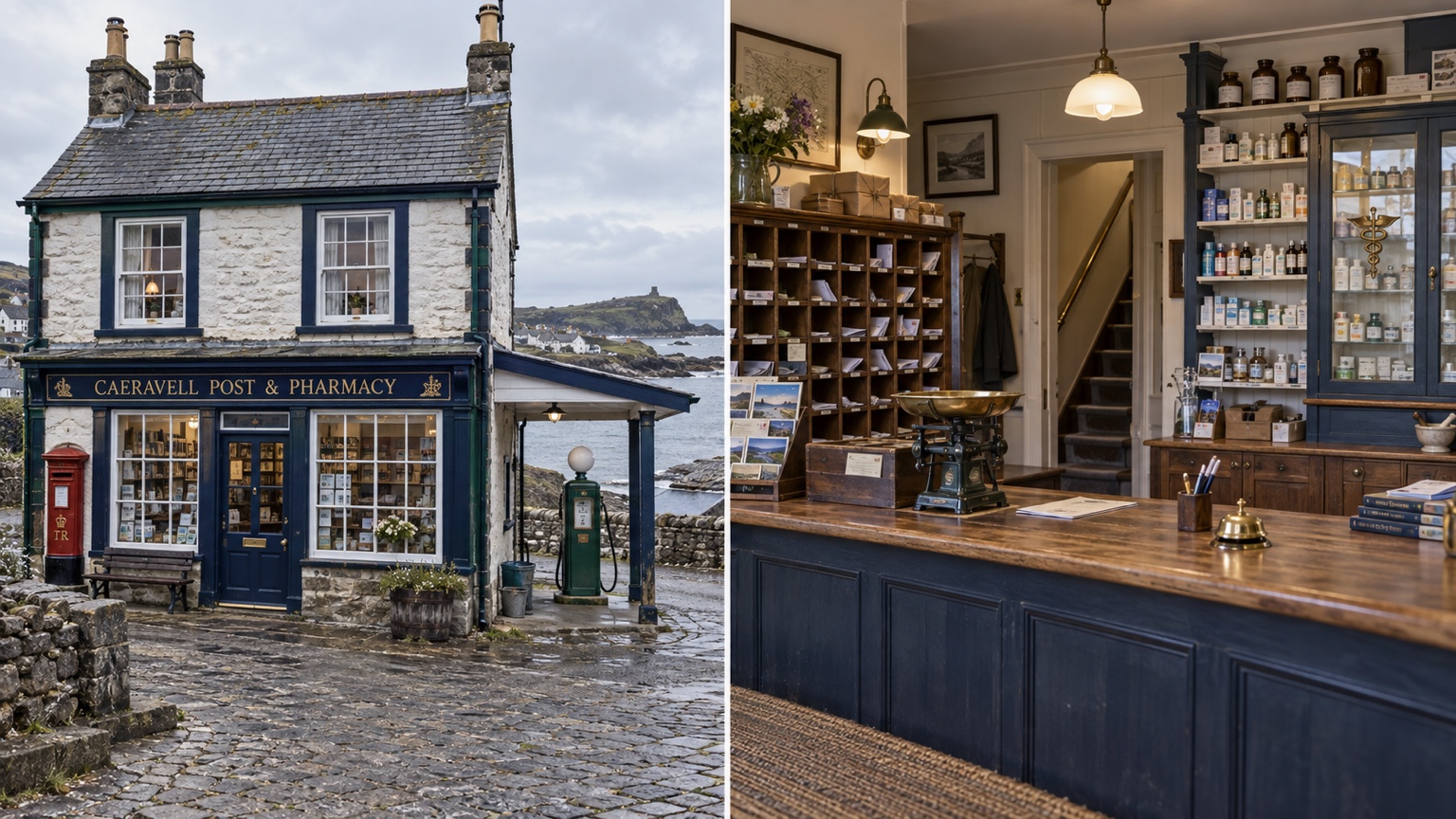
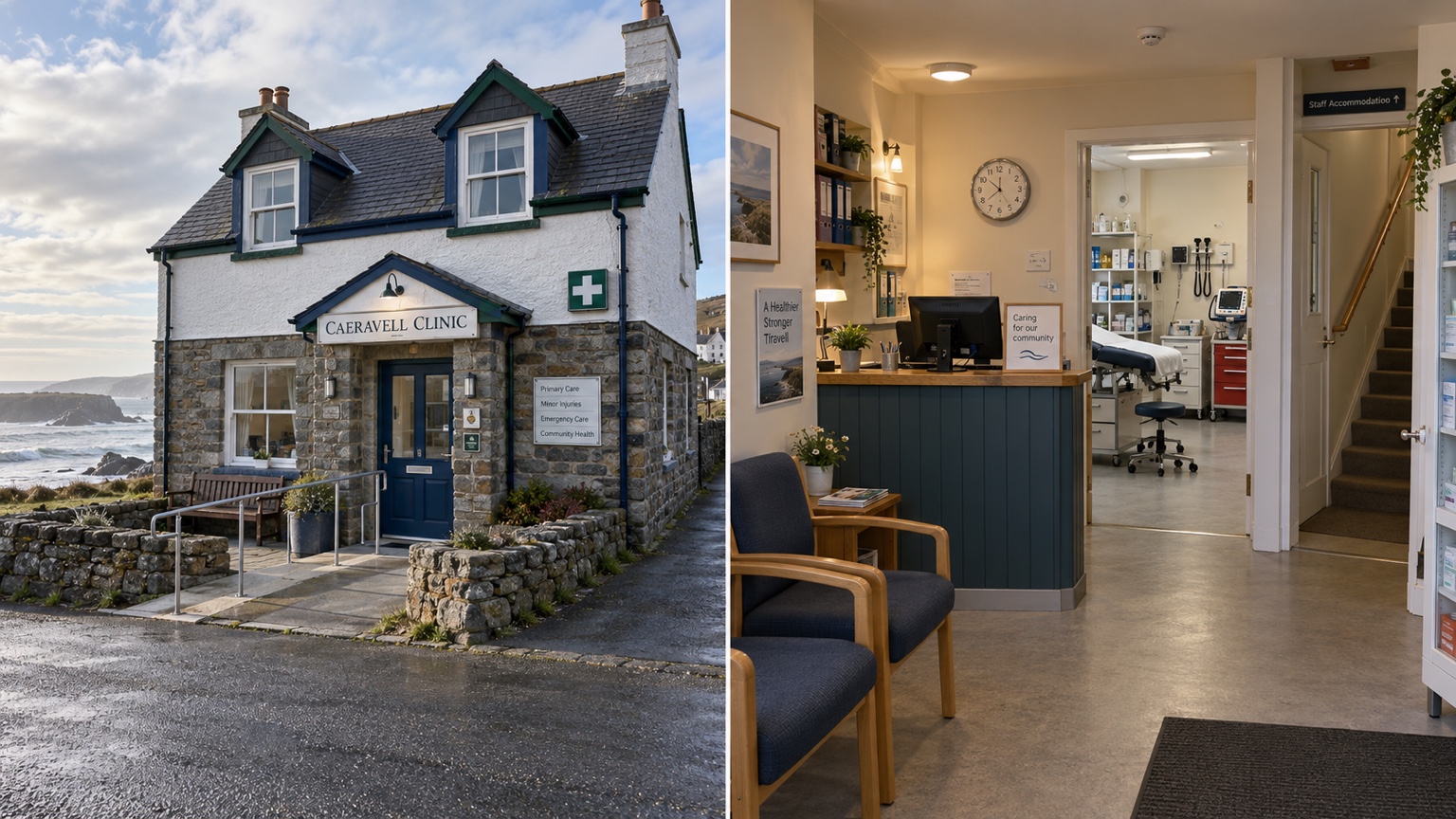
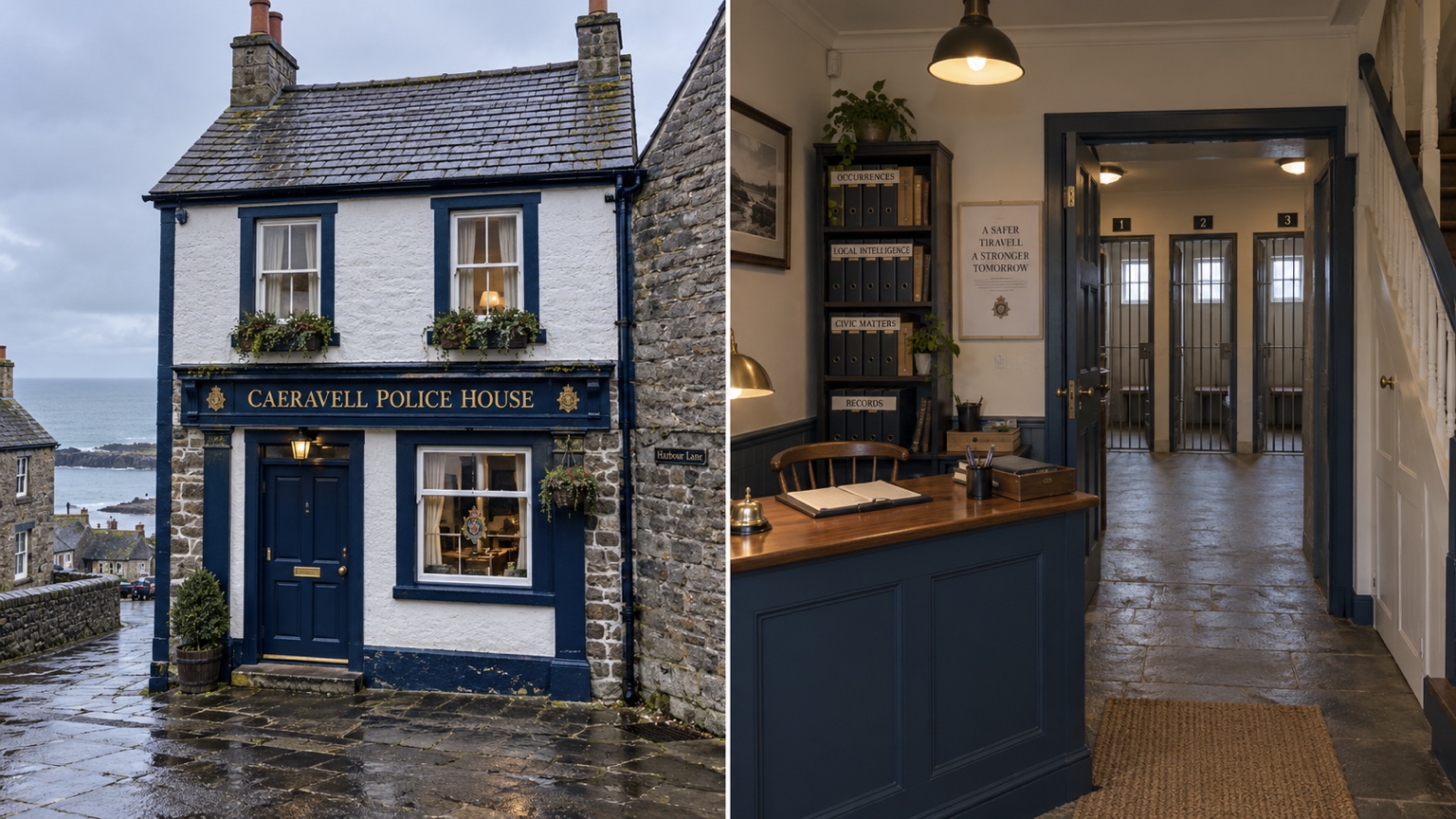
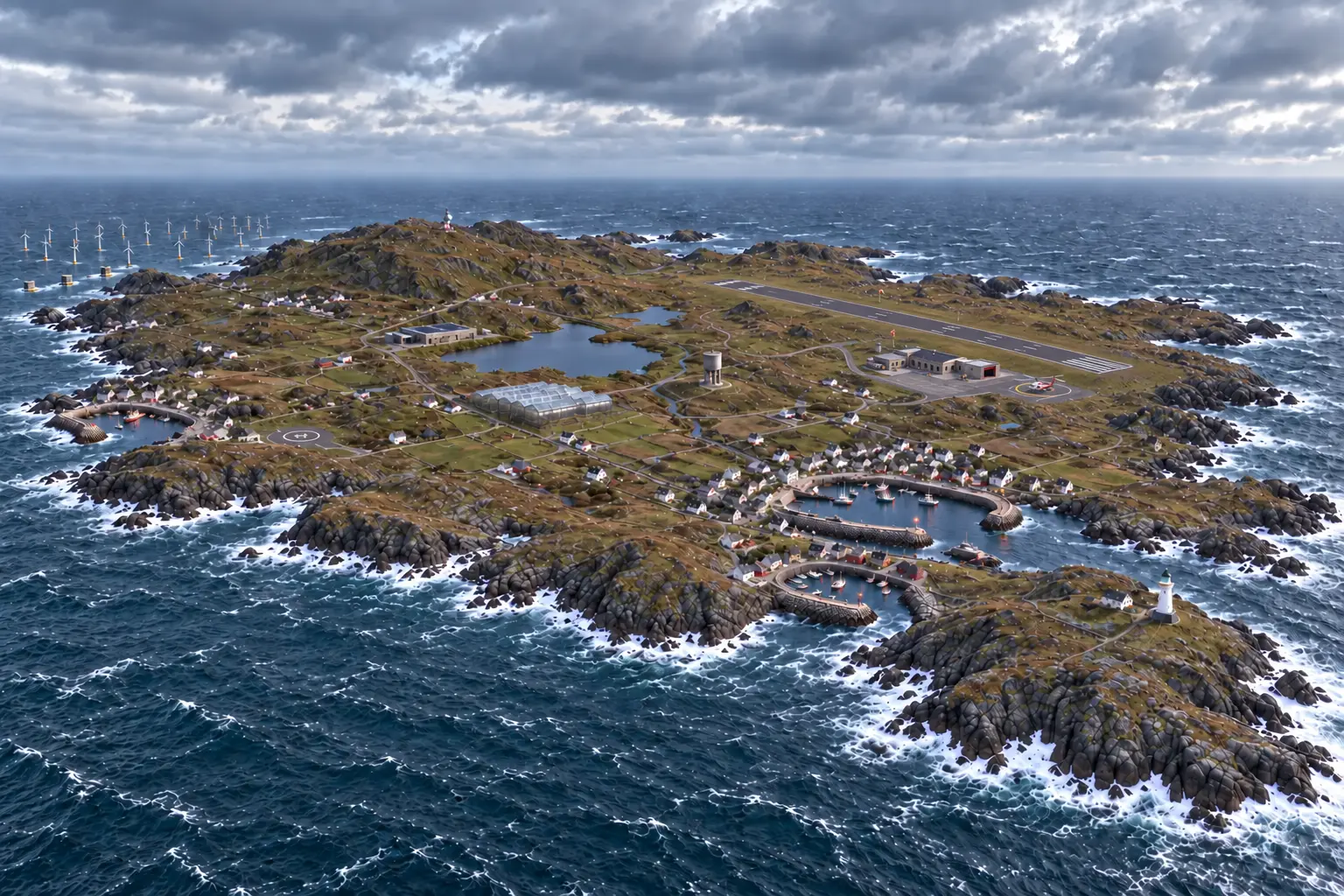
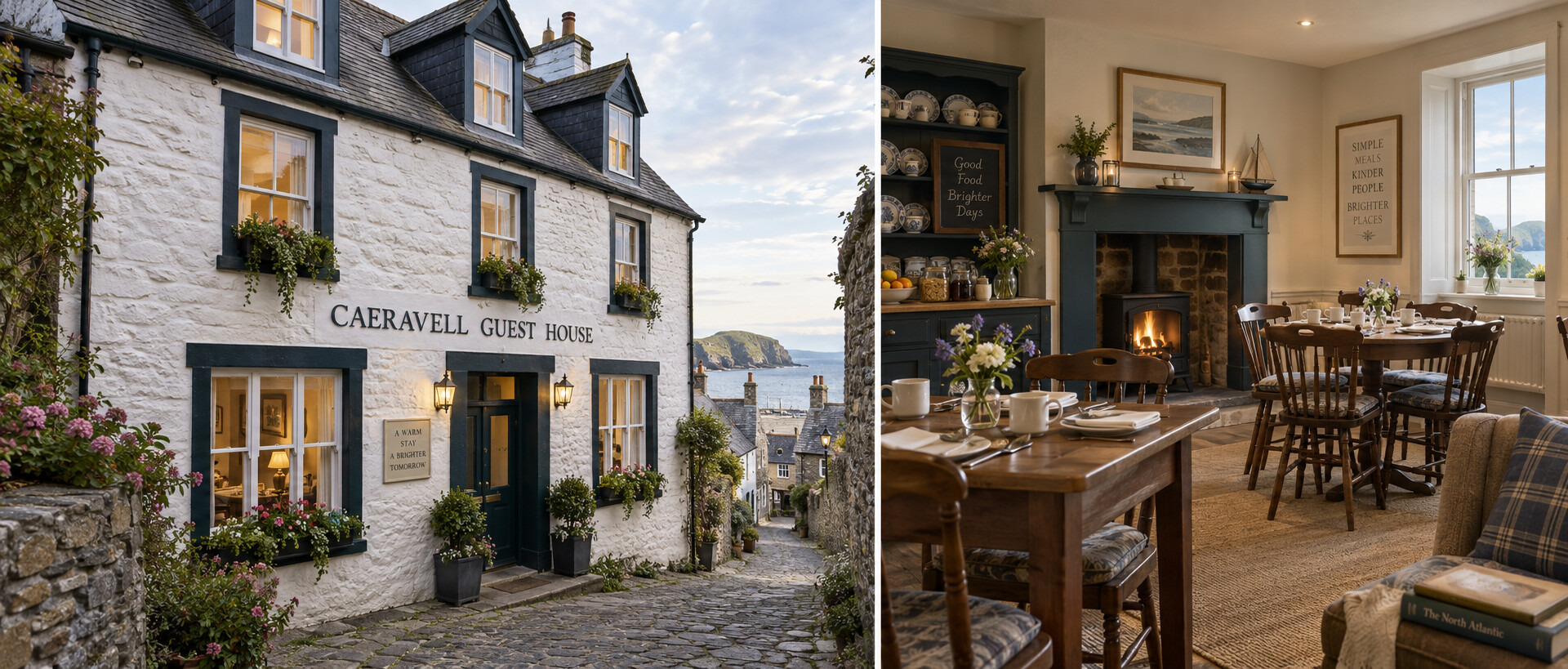
Caeravell is Tiravell's capital, harbour, and only true village. Homes, Government House, the school, clinic, cooperative store, and post office all stand within walking distance of the water. Just uphill lies Loch Solais, the small freshwater lake that has supplied the settlement since its founding.

School

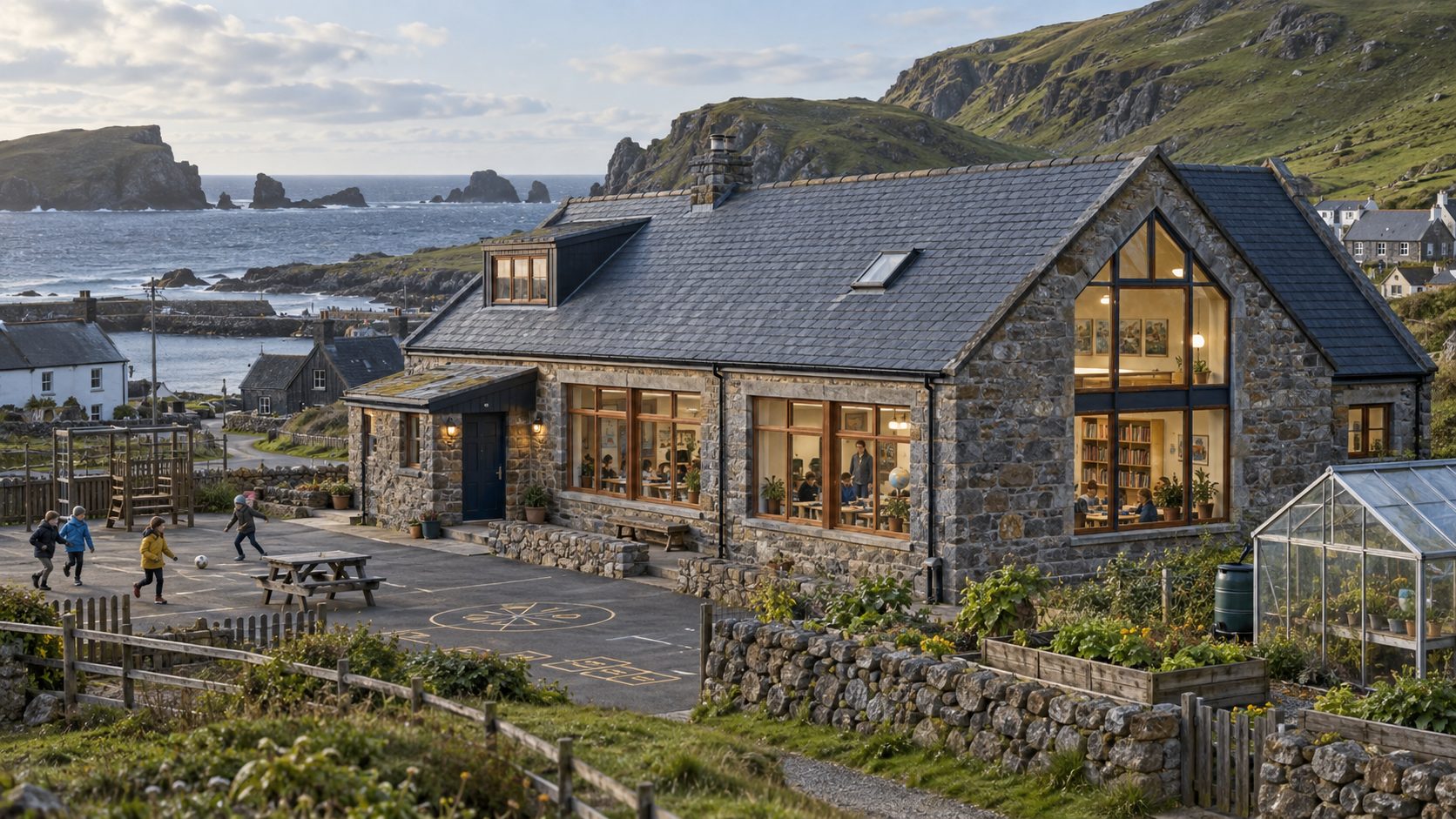
One community school teaches small mixed-age classes, practical seamanship, island history, and the responsibilities of Assembly membership.

Getting about

Most journeys are made on foot or bicycle. Small electric carts carry supplies, and harbour boats connect the coves.

Weather

Cool summers, salt wind, fast-changing skies, long summer light, and dark winters shape the rhythm of work and gathering.

Fresh water

Rain and hillside springs feed Loch Solais. The narrow Solais Stream carries its overflow through the village valley and into Caeravell harbour.

The common table

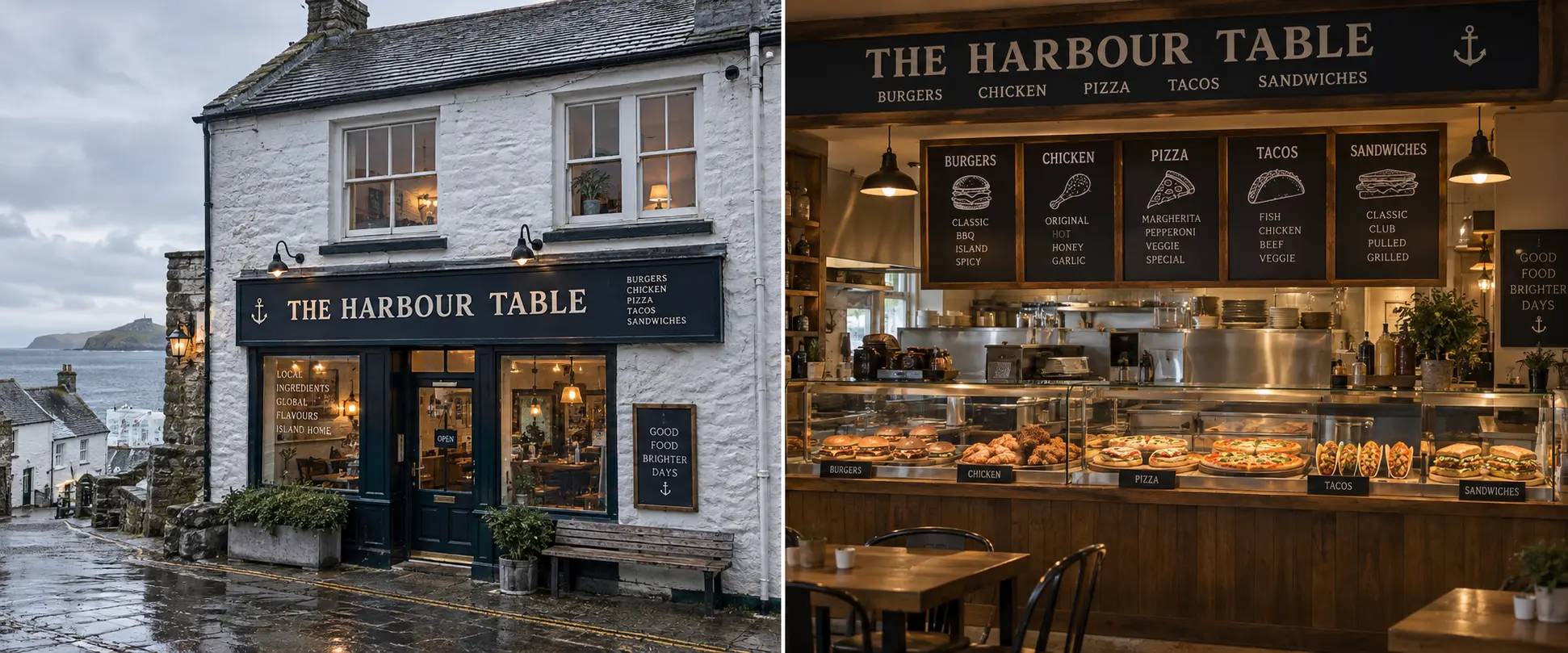
Cove Stew, oat bread, smoked fish, potatoes, and preserved berries appear often at shared meals.

Aerial view of Tiravell with Loch Solais, its stream, Caeravell harbour, Covenant Cove, Rowan Hill, and Keeper's Light marked Rowan Hill Loch Solais Caeravell Covenant Cove Keeper's Light
The principal places and freshwater of Tiravell

The National Year

Days held in common.

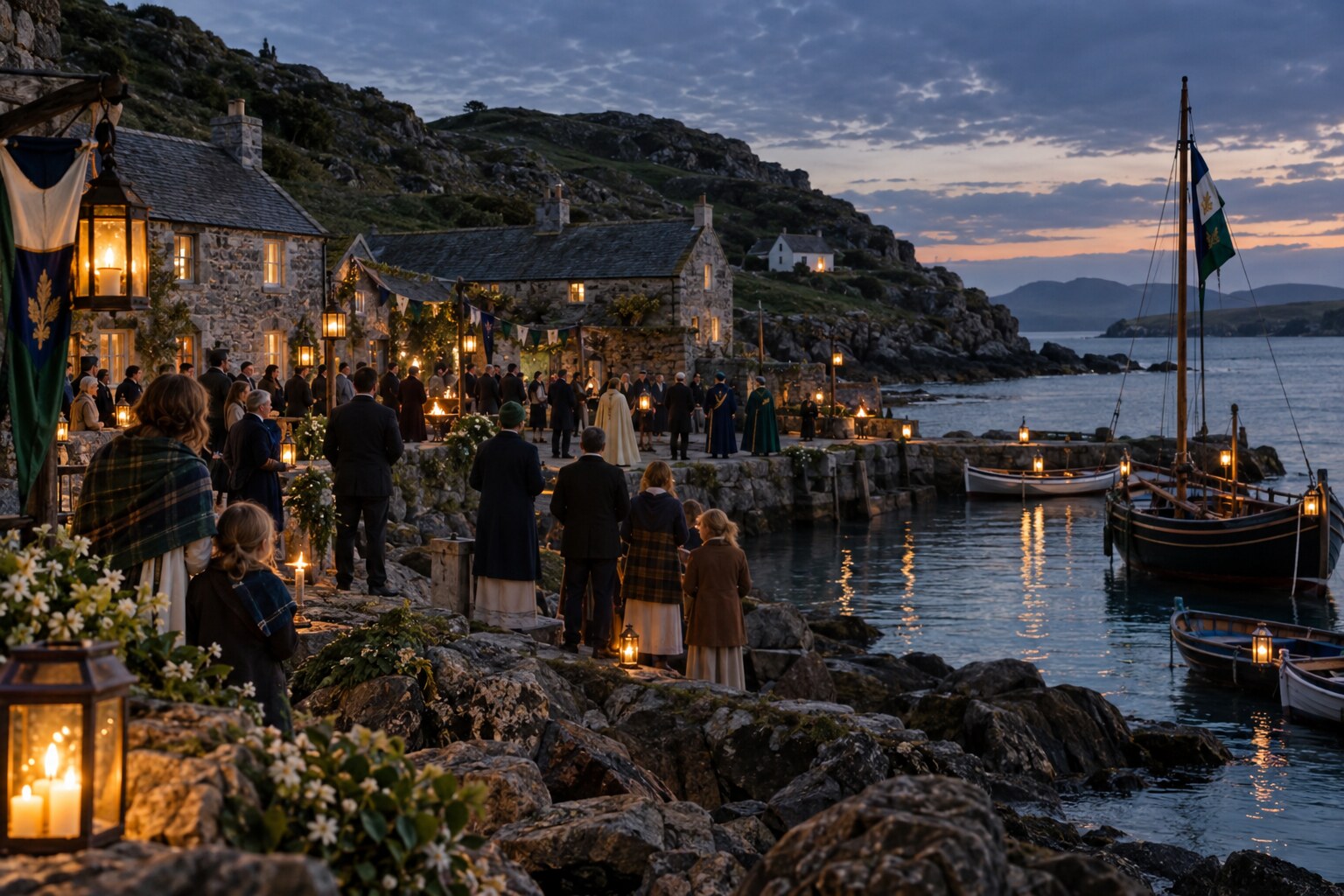
The people of Tiravell marking Landing Day with lanterns at Covenant CoveMay 12 · Principal Holiday

Landing Day

The arrival of the first settlers is remembered at Covenant Cove. The founding families are named, lanterns are launched at dusk, and the final of the Cove Cast is held on the harbour stones.

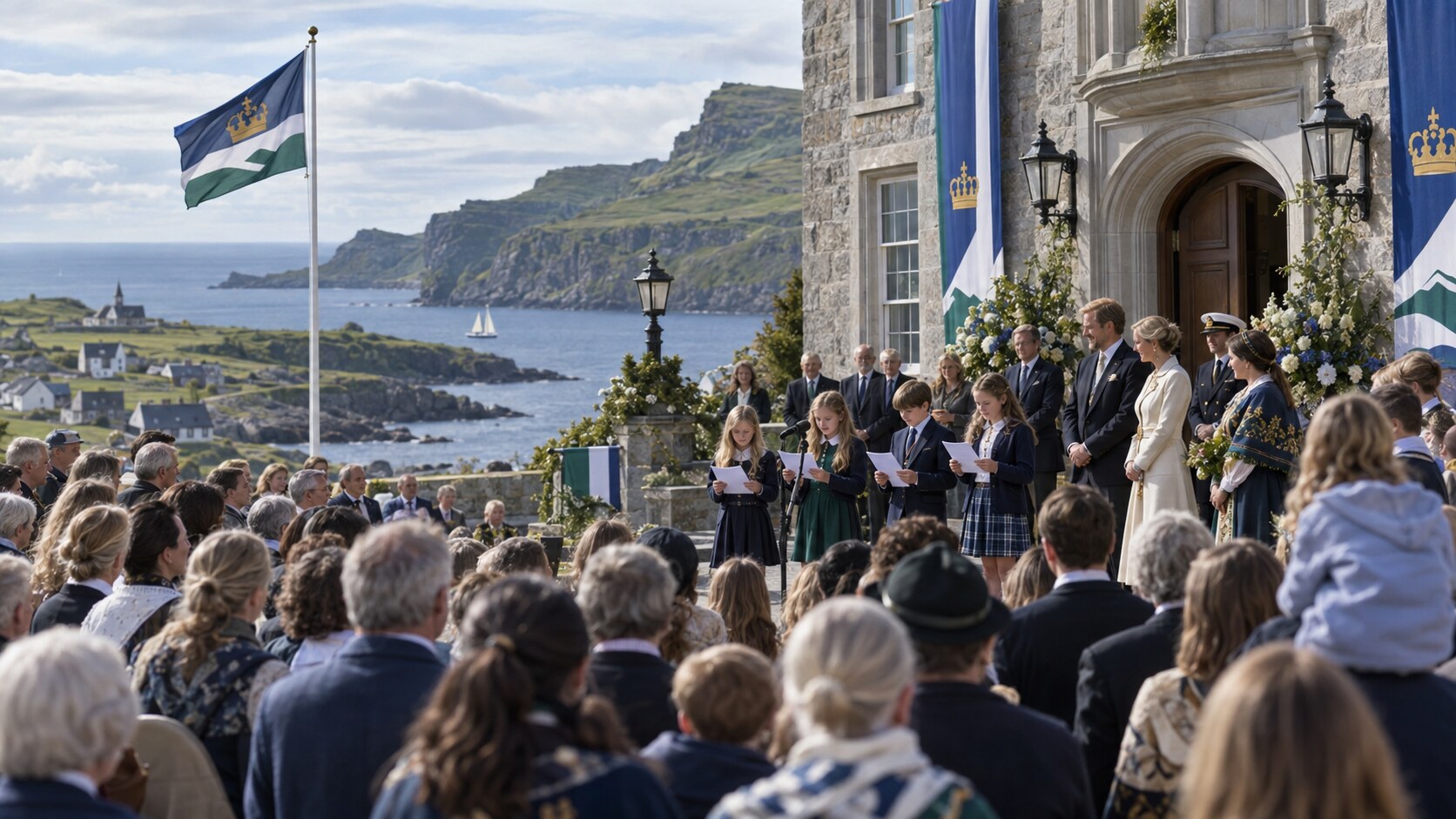
Tiravellans gathered for Constitution Day outside Government HouseAugust 5 · Principal Holiday

Constitution Day

The Assembly meets in public session, schoolchildren read from the Constitution, and the Crown hosts a simple evening reception celebrating government by consent.

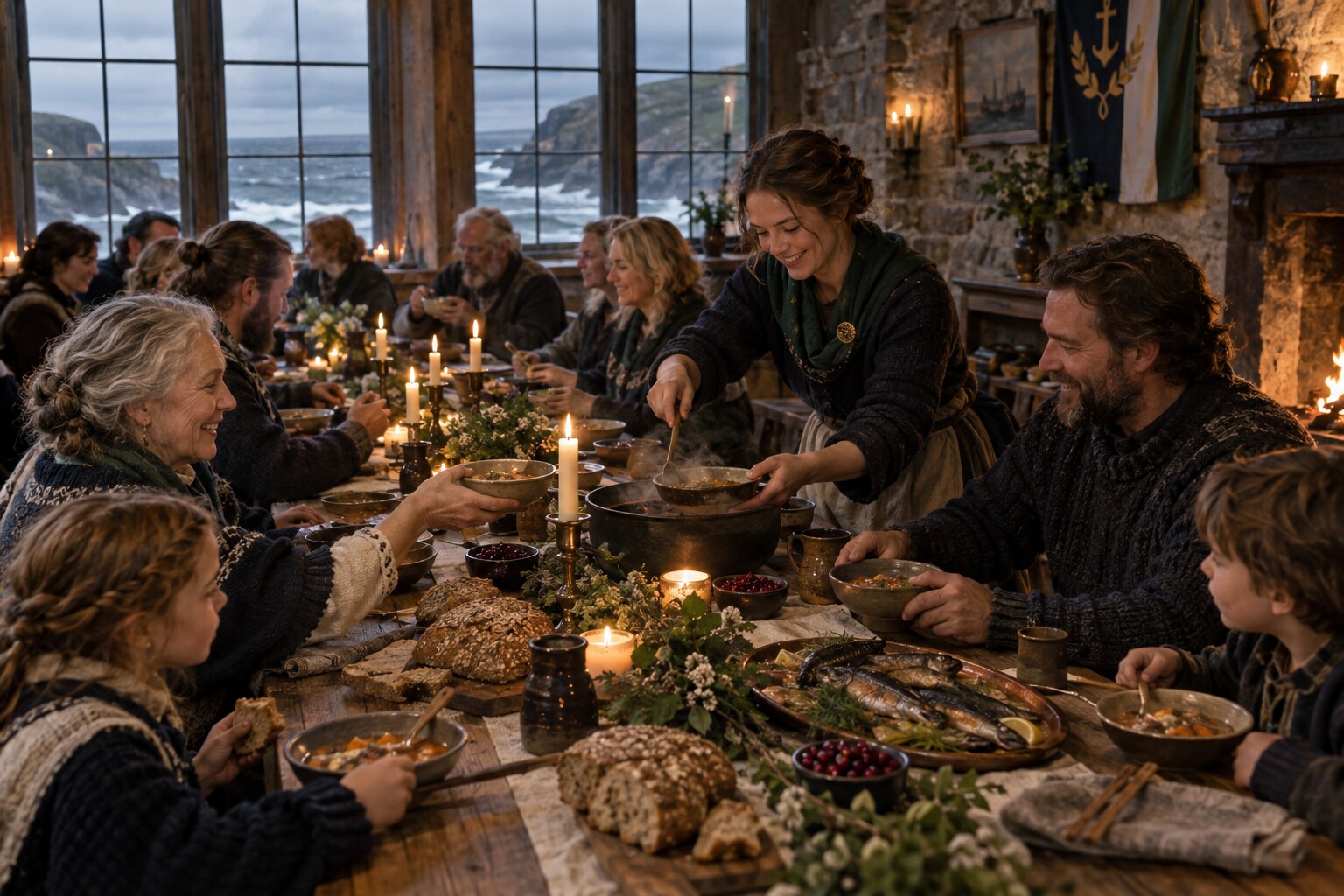
Residents sharing the Tiravellan Day of Shared Thanks around one long communal tableNovember 7

Day of Shared Thanks

Tiravell's harvest thanksgiving gathers the village around one common table to give thanks for the sea, the soil, the year's work, and the neighbours who carried one another through it.

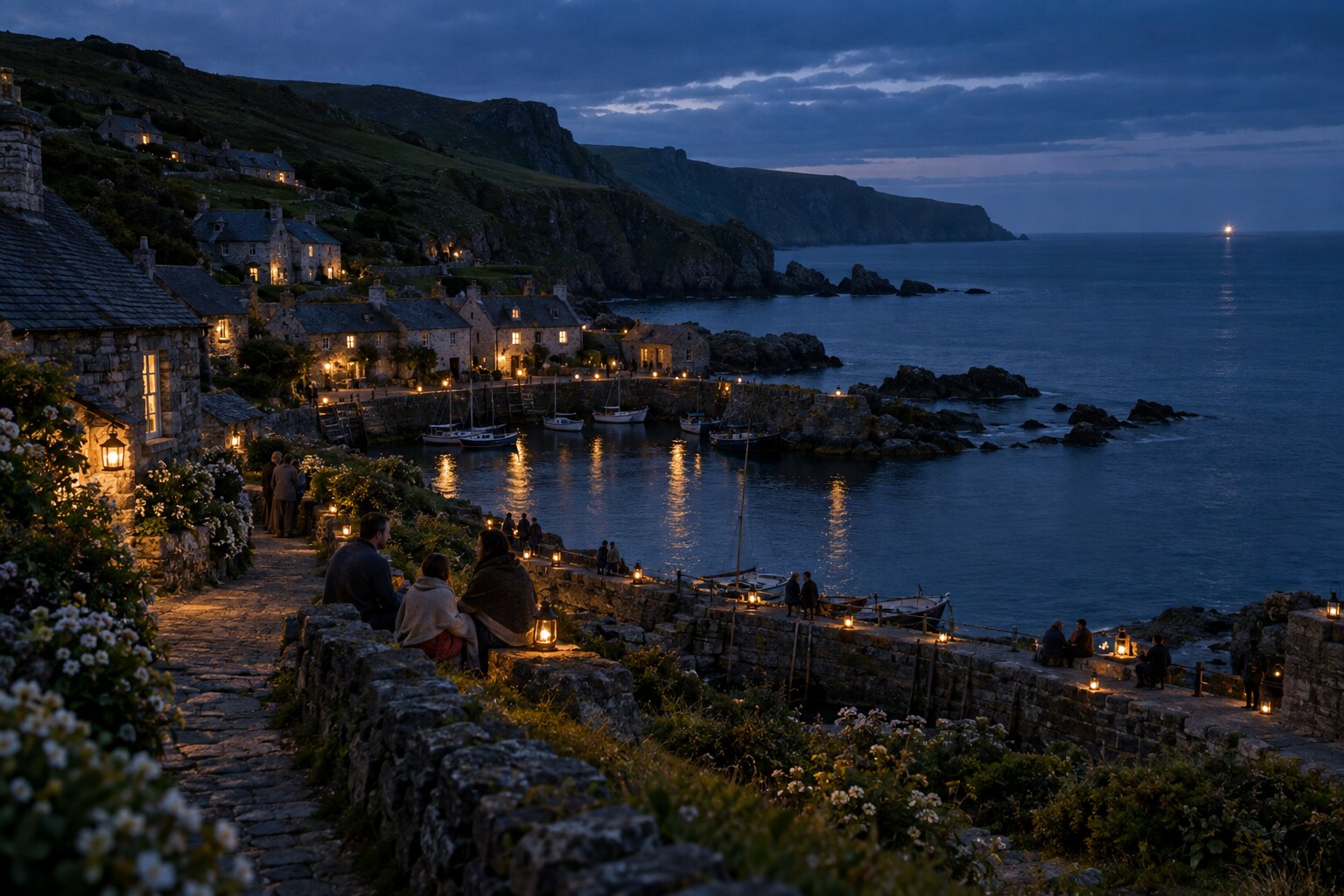
Lamps glowing in windows and along Covenant Cove on the Night of LampsMay 11

The Night of Lamps

On the eve of Landing Day, lamps are placed in windows and along the cove. Families share quiet stories of journeys, welcome, and the light kept for anyone still at sea.

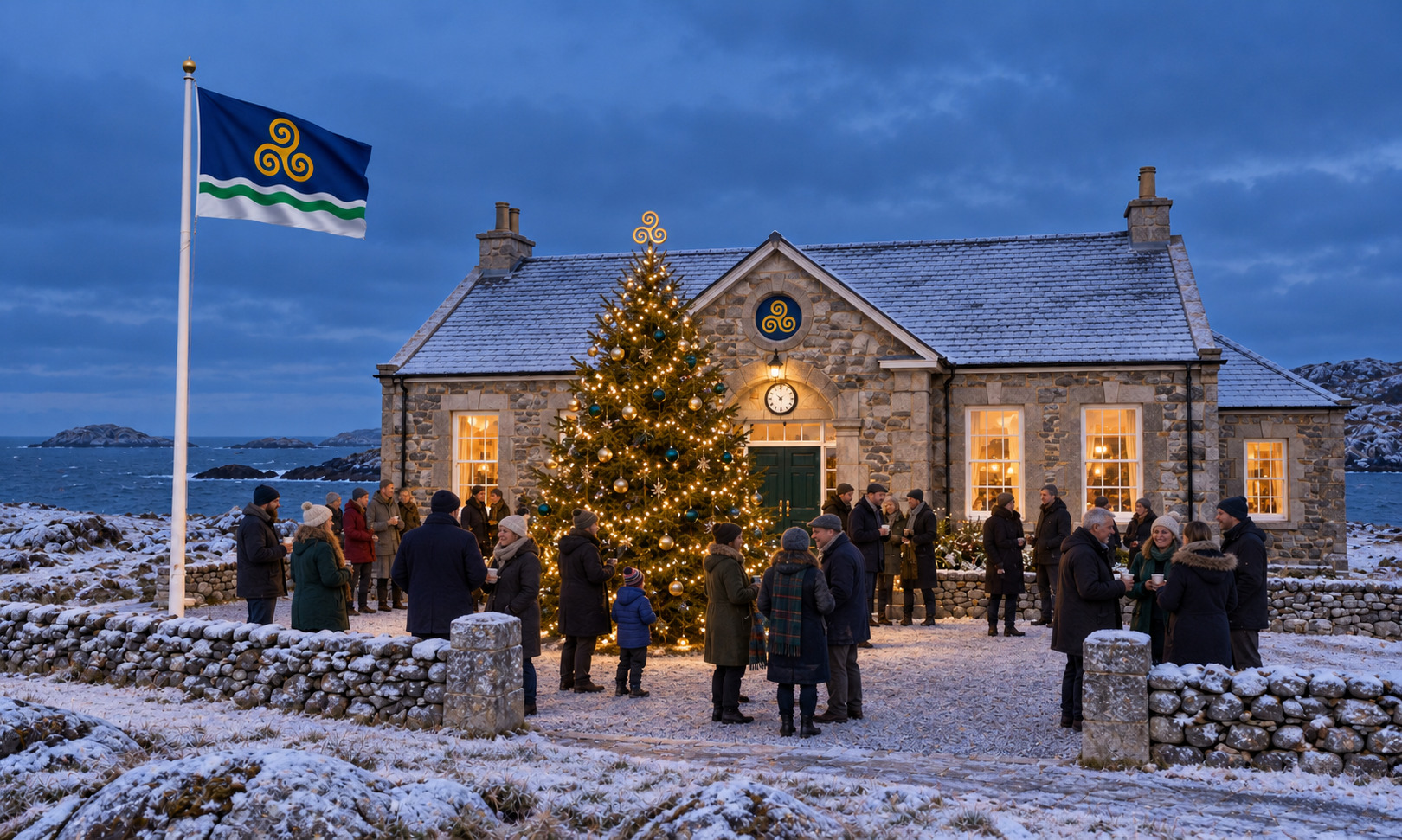
Residents gathered beside the illuminated national Christmas tree outside Government House in Caeravell
Christmas in CaeravellThe village gathering outside Government House, last year

Each December the people decorate one great tree in navy, green, and gold. Carols, hot berry cordial, oat cakes, and a reading for children bring the village together before the winter's longest nights.

Marks of State

01

Coat of arms

A navy shield bearing the golden triskele above white and green waves, framed by two branches of rowan.

02

The Great Seal

A circular seal showing Keeper's Light above three waves and the words Crown · Assembly · People.

03

Passport & citizenship

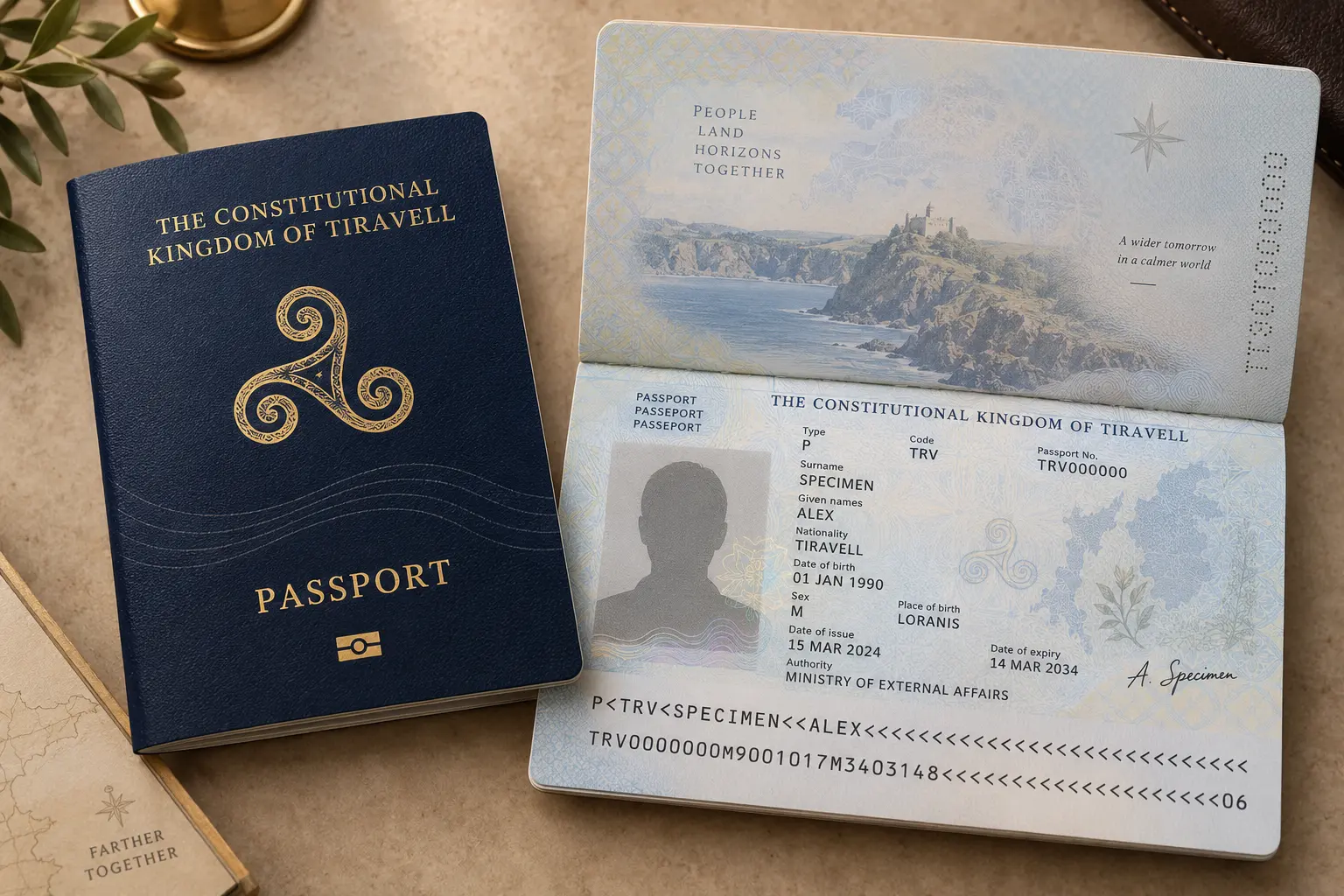
The navy passport carries the triskele in gold. Full citizenship certificates bear the Great Seal and the recorded vote of the Assembly.

04

Postage stamps

Small issues honour puffins, sea thrift, the lighthouse, the Royal Home, and important moments in Tiravellan history.

Embassy of Tiravell

A door to the realm.

Embassies and consulates represent Tiravell abroad. This website does not identify a private home as a diplomatic mission or publish a residential address.

chancellor@tiravell.org
Read A History of Tiravell (PDF)
Download the complete national guide (PDF)