Official portal of the realm
Radio Tiravell · Live

Crown · Assembly · People

A tiny nation.
A living tradition.

Settled in the nineteenth century, Tiravell has governed by civic consent since the Crown's settlement of 1912. Its Constitution and present national name were formally adopted on August 5, 2009.

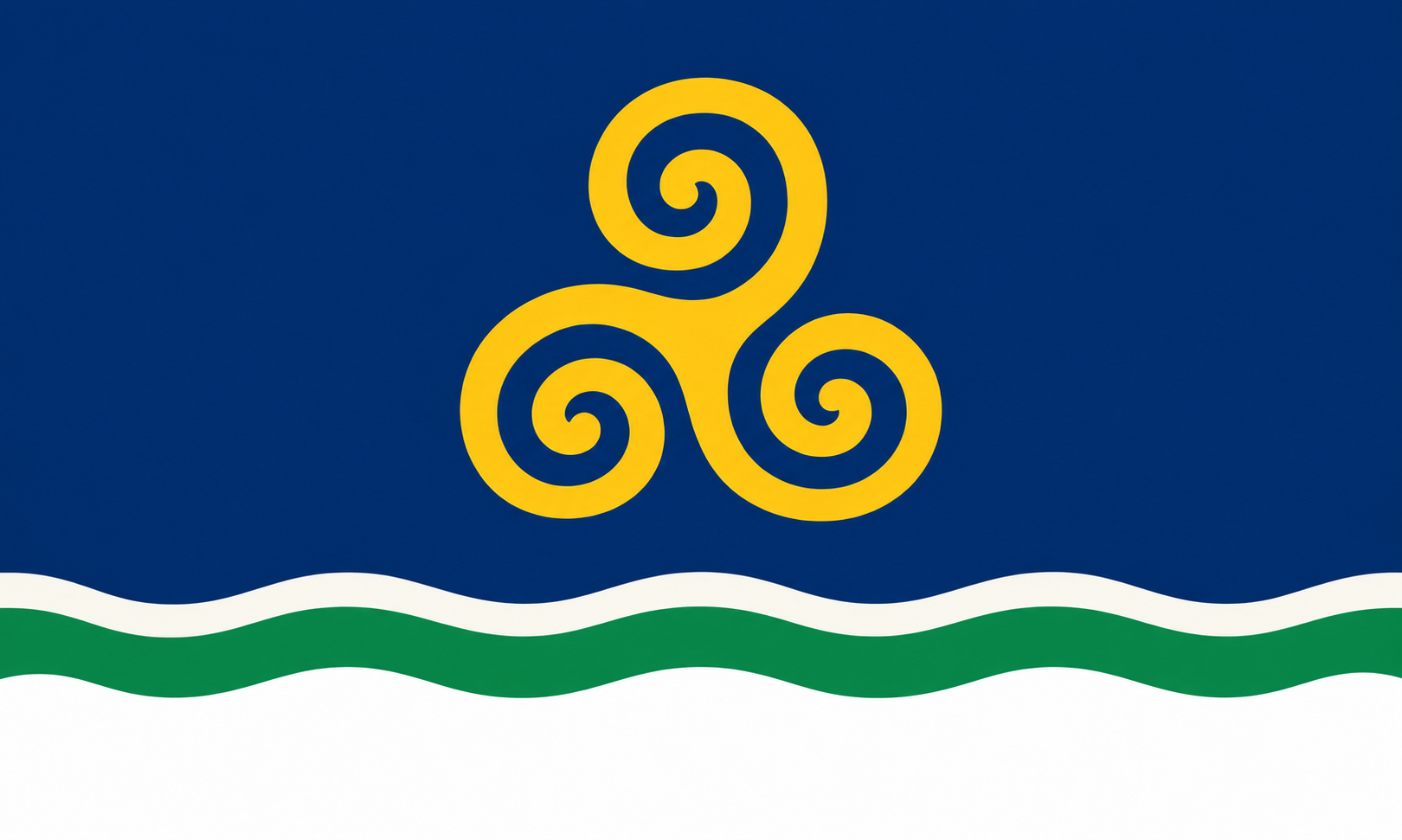
Flag of Tiravell, with navy, white, and green fields and a gold Celtic triskele
National flag Sea, peace, land, and continuity

Live from Tiravell

Local time, date, and model-based conditions for the island.

Tiravell Standard Time --:--:-- Sunday, 13 September 2026 · TVT · UTC−2
Weather in Tiravell
--°F · --°C Loading local conditions…
Feels like
—
Wind
—
Today
—
Precipitation
—
Model-based conditions for Tiravell at 61.5°N, 34.0°W · Open-Meteo

Living National Noticeboard

What’s New
on the Isle

Projects, openings, services, and community developments from across the isle.

Open What’s New in Google Docs

Community Stories

Voices of Tiravell

A growing collection of short stories, memories, reflections, and everyday moments shared by Tiravellan citizens—from ordinary days in Caeravell to family traditions, work, celebrations, and life beyond the village.

Open the Community Story Collection

The Realm

Small in scale.
Whole in spirit.

The Tiravellan island community traces its settlement to the Landing of 1847. The royal house ceased exercising governing power under the civic settlement of 1912; citizens, including members of the royal family, formally adopted the Constitution and the name Constitutional Kingdom of Tiravell on August 5, 2009. Its sheltered coves, treeless green-brown headlands, and seafaring traditions remain the heart of island life.

Official name
The Constitutional Kingdom of Tiravell
Government
Parliamentary constitutional monarchy
Capital
Caeravell
First settlement
1847
Constitution adopted
August 5, 2009
Population
View live population ↓
Island span
About 8⅓ km long and 7¼ km wide
Climate
Cool, windy maritime sub-Arctic
Legislature
Assembly of the Isle
Head of government
First Minister
Demonym
Tiravellan
Language
English

Practical Information

The realm,
in useful detail.

Tiravell keeps its public standards simple and suited to a small North Atlantic island. These facts provide a common reference for residents, visitors, public offices, and correspondence.

Country
Tiravell — pronounced TEER-uh-vell
Capital
Caeravell — pronounced CARE-uh-vell
Demonym
Tiravellan; plural Tiravellans
Time zone
Tiravell Standard Time (TVT), UTC−2, observed throughout the year
Location
Approximately 61.5°N, 34°W in the Irminger Basin between Southeast Greenland and Iceland
Dimensions
About 8⅓ km long and 7¼ km at its maximum width
Land area
Approximately 44 km² (17 square miles)
Coastline
Approximately 35 km, including the principal coves and headlands
Electricity
120 volts, 60 hertz; Type A and Type B plugs
Postal zones
TV1 for Caeravell; TV2 for rural and service districts; TV3 for New Galway
Internet access
Island-wide fibre and wireless service for every household, farm, business, and public building, with satellite and microwave backup
Telephone code
+296; landlines use 2 XXXX and mobile numbers use 3 XXXX
Emergency number
112 for police, fire, ambulance, and immediate danger

National Communications

Telephone and
numbering plan

Tele-Tiravell administers a single national calling area. Standard numbers contain a one-digit service prefix followed by four subscriber digits: 2 XXXX for landlines and 3 XXXX for mobile service. Tiravell reserves +296 as its national calling designation, while 112 is the unified emergency number.

The complete plan records international and domestic formats, number allocations, essential-service short codes, network testing, and future capacity.

For more information on the numbering system, click here

The People of Tiravell

A close-knit island community.

Tiravell's population remains small but is now shared between two settled communities. Most Tiravellans live in and around Caeravell; New Galway forms a distinct west-coast settlement, while a smaller number occupy farms, cottages, and keeper's homes elsewhere. The live national record below gives the current total and distribution.

Across the Realm

A nation of modest scale.

Tiravell's landscape is maritime sub-Arctic rather than barren: treeless headlands carry wind-bent grass, moss, sedges, berry heath, sea pinks, and low scrub through the short summer. Simple stone homes and compact settlements remain close to sheltered water, while substantial food growing takes place under glass.

The Tiravellan Story

A wee nation
made by the sea.

1847 · Landing

The Ten Families

Ten families from Galway, Clare, and Donegal reached Covenant Cove in a storm. Most survived their first year, though some died. Loss and arguments could have broken the settlement; the families shared supplies and settled disputes. Survivors later returned to Ireland for relatives when the island was more stable.

1848 · Community Covenant

The Covenant of the Cove

The households pledged shared care and open decisions, even through arguments. Matthew and Eliza's young family organized stores and repairs and helped unite the settlers; their family became Tiravell's royal line. Later tensions were worked through together.

1912 · First Great Tension

The Governing Throne Yielded

Islanders loved the royal family but resented royal rule. As disputes neared civil war, James and Violet voluntarily gave up governing power. Public decisions passed to the Assembly; the Crown kept a ceremonial place. The customary surrender was not yet a binding written bar on restoring royal power.

2001 · Renewed Fear

Could the Crown Return?

Around 9/11, fear of a royal return to full power resurfaced and kept returning. Queen Maureen was the direct descendant and retained the Crown's standing after her husband, James, left. Older custom had treated heir and spouse as joint rulers; some feared James would fight to regain power and feared him personally.

2008 · Maureen's Incapacity

A Written Limit Needed

Maureen's physical incapacity revived the fear. She chose a binding Constitution and a new reign to begin at its signing.

August 5, 2009 · Formal Adoption

The Written Constitution

Citizens and members of the royal family adopted the Constitution and national name. Maureen passed the ceremonial Crown to King Kevin and Queen Shannon. No monarch could decree a return to governing power.

2026 · National Works

Dedication and Opening

After years of phased public works, Tiravell dedicated its infrastructure and opened the completed wind, wave, and solar district on July 2. The Gazette and national website opened in September.

The Constitutional Compact

Tradition held
in democratic trust.

Formally adopted on August 5, 2009, Tiravell's Constitution made the 1912 surrender of royal rule legally binding after decades of uncertainty: a ceremonial Crown, government by the people, and a strong social commonwealth. No monarch can decree a return to governing power.

01

The Crown

The monarch serves as ceremonial head of state, representing continuity, public service, and the unity of the realm.

02

The Assembly

Every resident aged sixteen or older belongs to the Assembly and holds one equal vote on the laws and public measures of Tiravell. Debate is held publicly, while secure ballots may be cast from home or at an assisted voting station.

03

The First Minister

The Assembly chooses an eligible Tiravellan citizen older than thirty to lead the government for a three-year term and remain accountable to the people. Royal family members may stand on the same terms, but must suspend royal duties while serving.

04

The Court

Three judges, elected directly by the people, administer justice independently and may be removed by a two-thirds vote of the full Assembly.

Supreme Law of the Realm

The Constitution of Tiravell

We, the people of Tiravell, joined by mutual care and equal dignity, establish this Constitution so that liberty may be protected, power may remain answerable to the people, the necessities of life may be shared fairly, and the island may be preserved for those who follow.

Open the Living Constitution · Google Docs
Article I

The Realm and Its Sovereignty

Under the Constitution adopted on August 5, 2009, Tiravell is a parliamentary constitutional kingdom and a democratic socialist commonwealth. Sovereignty belongs equally to the people. The Crown, Assembly, First Minister, courts, and every public body possess only the authority granted by this Constitution.

Article II

The Assembly of the Isle

Every resident of Tiravell who is sixteen years of age or older is a voting member of the Assembly of the Isle. Each member holds one equal vote. This civic franchise does not otherwise confer adulthood: for all other purposes a person becomes an adult at eighteen, subject only to carefully limited laws on matters such as medical consent, education, employment, emancipation, and safeguarding.

Eligible members of the Royal Family vote on exactly the same basis as every other member. A royal title confers no additional vote, weighted vote, or authority to override the Assembly.

For each formal ballot, an eligible member receives a secure, single-use voting code and may vote electronically from home. Identity verification is separated from the secret ballot, and the published count is independently checked. Government House provides accessible voting terminals and assistance, while sealed paper ballots and a paper register remain available during outages or whenever a member prefers them.

Article III

The First Minister

The Assembly collectively elects the First Minister from among the citizens of Tiravell who are older than thirty years of age. The First Minister directs the government, carries out the Assembly's decisions, and remains accountable to it. Each term lasts three years. No person may serve more than three three-year terms, whether consecutive or separate.

A member of the Royal Family may be elected First Minister if otherwise eligible, with no preference arising from title. Upon taking office, that person must suspend all ceremonial royal duties and privileges for the term, exercise no authority by reason of royal title, and not act for the Crown. Royal duties pass temporarily to the next eligible family member or another person designated by law.

If no willing and qualified citizen older than thirty remains who has served fewer than three terms, the Assembly may, by a two-thirds vote, permit a former First Minister to serve one additional three-year term. This exception must be reconsidered before every additional term and ends as soon as another eligible candidate is available.

Article IV

The Crown

The Monarch is the ceremonial Head of State and a guardian of continuity, culture, and public service. The Crown does not govern, veto the democratic will, set taxes, or command public funds. Royal duties must be performed in accordance with this Constitution and the decisions of the Assembly.

Article V

The Social Commonwealth

Land, water, energy, harbours, fisheries, communications, and other resources essential to the common life shall be protected for public benefit. Essential services shall be publicly or cooperatively owned wherever practical. Personal property and small private enterprise are protected, provided they do not exploit labour, endanger the island, or place private power above the common good.

Article VI

Rights and Equal Dignity

All people are equal in inherent dignity and before the law. Tiravell welcomes people of every origin, identity, family, appearance, ability, relationship, belief, and lawful way of life, whether or not they resemble the founders or present majority. A lawful private life that causes no unlawful harm to another cannot be a basis for punishment, exclusion, discrimination, or diminished rights.

Although most Tiravellans shared a Catholic or other Christian faith when the Constitution was adopted, no faith is established or given civil preference. Every faith—and every person of no faith—is equally welcome and protected.

The public celebration or broadcast of Christmas music and other seasonal traditions, including through Radio Tiravell, is cultural expression and does not establish or imply an official religion or religious affiliation of the realm.

Article VII

Social Guarantees

Every resident has a right to healthcare, education, safe housing, sufficient food and water, basic energy, care in childhood and old age, and assistance in disability or hardship. These guarantees are public duties and may not be withheld for inability to pay.

Article VIII

Work and the Economy

Workers have the right to fair pay, safe conditions, collective organization, and a democratic voice in their workplaces. The realm shall favour cooperatives, local production, shared prosperity, and useful work over monopoly or the accumulation of excessive private wealth. Taxation shall be progressive and openly accounted for.

Article IX

Justice

The judicial branch consists of three judges elected directly by the people of Tiravell. Judges serve staggered nine-year terms and may serve no more than three terms in total, allowing a maximum of twenty-seven years of service. Each judge must decide matters independently, impartially, and according to this Constitution and the law. A judge may be removed from office by a two-thirds vote of the full Assembly of the Isle.

Every accused person is presumed innocent, entitled to counsel, and entitled to a fair and public hearing. Justice shall respect human dignity and favour restoration, public safety, and reintegration.

Article X

Stewardship of the Island

The sea, coast, wildlife, climate, and cultural inheritance of Tiravell are held in trust for future generations. Public decisions must consider ecological limits, long-term resilience, and the duty to leave the realm whole and habitable.

Article XI

Emergency Powers

Emergency authority must be necessary, limited, and publicly declared. It expires after thirty days unless renewed by a two-thirds vote of the Assembly. Elections, equal protection, access to the courts, and the prohibition of cruel treatment may never be suspended.

Tiravell has no standing military and permits no conscription. Under lawful civilian authority, every person may choose whether to volunteer for defense or civil protection, or to decline, without punishment, discrimination, condemnation, or loss of rights.

Article XII

Amendment and Supremacy

This Constitution is the highest law of Tiravell. An amendment requires public notice, at least thirty days of open debate, and approval by two-thirds of the full Assembly. No amendment may abolish equal voting, democratic government, human dignity, or the people's ultimate sovereignty.

Article XIII

Citizenship

A child is a citizen from birth if, at the time of birth, at least one parent is a Tiravellan citizen ordinarily resident in Tiravell. A temporary absence from Tiravell—including travel, vacation, government service, or employment abroad under a temporary work visa—does not interrupt that residence or the child's citizenship. A child born in Tiravell who otherwise would be stateless is also a citizen from birth.

Full citizenship may be granted by a majority vote of the Assembly following a public petition. Each member of the Royal Family may nominate no more than three persons per calendar year; a royal nominee receives full citizenship unless two-thirds of the full Assembly votes to deny the nomination.

Honorary citizenship may be bestowed by the Assembly, but does not confer residency, voting membership, public office, or a claim upon the island's land or public services.
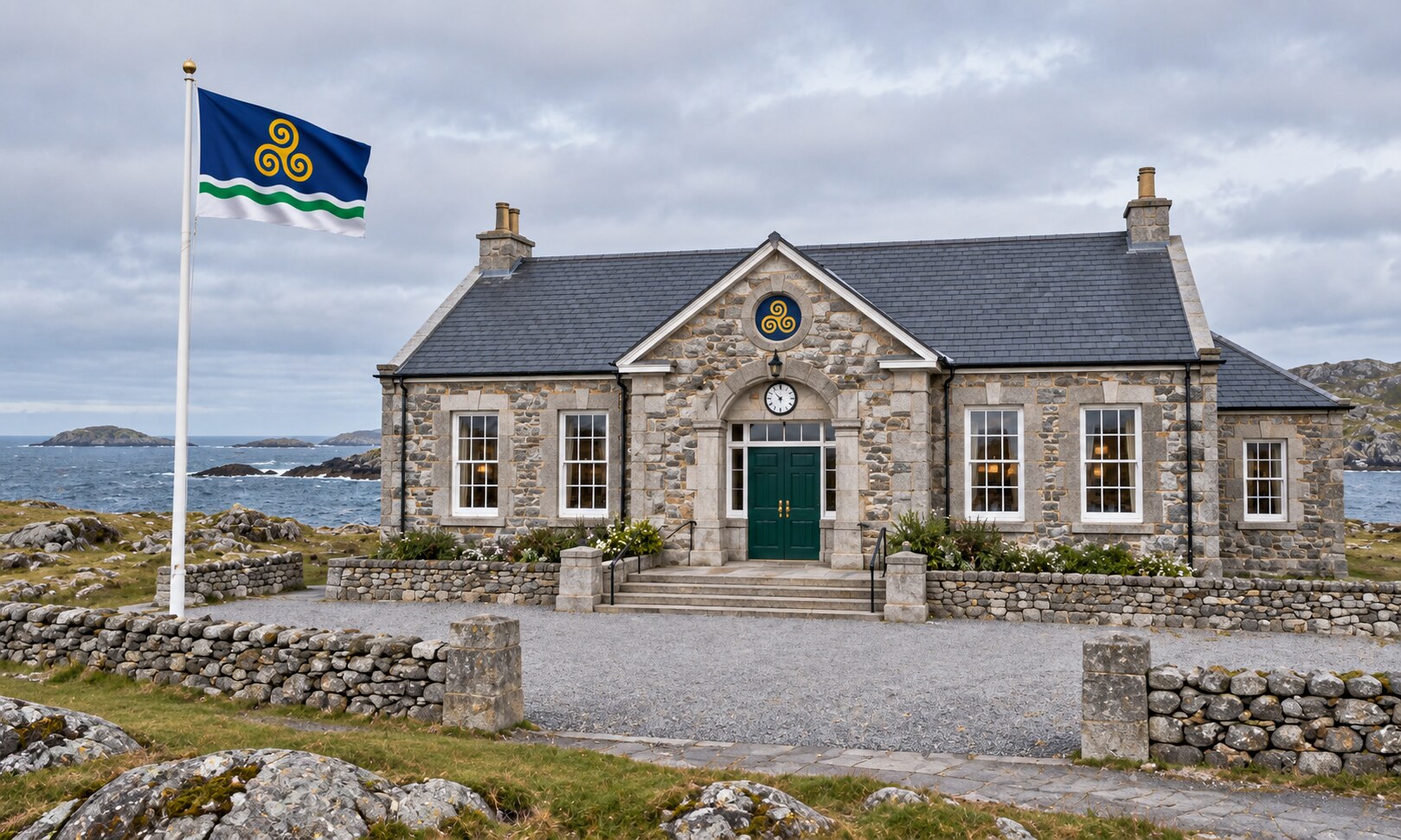
Government House and Court of Tiravell, a modest island civic building beside the North Atlantic

The People's House

Government House
and Court.

This modest civic building contains the public meeting hall of the Assembly of the Isle, the working office of the First Minister, and the courtroom shared by Tiravell's three elected judges. The hall hosts debates and public sessions without requiring every Assembly member to attend in person.

Assembly meetings and court hearings are ordinarily open to the public and carried through the national communications network. Members may debate in person or remotely and cast secure ballots from home using a single-use code; accessible terminals and sealed paper ballots remain available at Government House.

Assembly
All residents aged 16 and older
Voting
Secure home ballot, assisted terminal, or sealed paper ballot
Judicial branch
Three judges elected by the people
Removal
Two-thirds vote of the full Assembly

Open Government

The working records
of the realm.

Explore the realm's offices, laws, notices, treaties, and essential services through its public records.

Live Officials Directory

Public Offices & Officials

The Crown, government, judiciary, and principal public-service officeholders.

Open the living directory in Google Docs ↗
Browse the complete public documents archive

Belonging to Tiravell

Citizenship
and belonging.

Because land, housing, and natural resources are very limited, full citizenship is granted carefully and not often. Every decision must protect both the applicant's dignity and the island's ability to provide for its people.

01

Citizenship from birth

A child is a citizen from birth when at least one parent is a Tiravellan citizen ordinarily resident in Tiravell. Birth overseas during travel, vacation, government service, or employment under a temporary work visa does not change that right. A child born in Tiravell who otherwise would be stateless is also a citizen from birth.

02

Citizenship by public vote

An applicant presents a public petition and a commitment to uphold the Constitution, share in civic responsibilities, and respect the island's ecological limits. The people consider the petition in the Assembly, and a majority vote grants full citizenship.

03

Royal nomination

Each member of the Royal Family may nominate no more than three individuals in a calendar year. A nominee receives full citizenship unless two-thirds of the full Assembly votes to deny the nomination. The Royal Dog holds affection and honour, but no constitutional nominating power.

04

Full civic membership

A person granted full citizenship receives the rights and duties of Tiravellan citizenship. Once residing in Tiravell and aged sixteen or older, that citizen also becomes an equal voting member of the Assembly and may participate fully in government.

05

Honorary citizenship

The Assembly may bestow honorary citizenship for exceptional friendship or service to Tiravell. It is a public honour and does not by itself grant residency, an Assembly vote, public office, or a claim upon the island's limited land and services.
The Royal Household

The Crown
and family.

The royal line began with Matthew and Eliza's young family, whose practical leadership helped unite the first settlers. Before 1912 the direct heir and spouse customarily ruled together. James and Violet voluntarily yielded governing power that year. Queen Maureen, though physically unwell, chose the written Constitution and a new reign: when it was signed in 2009, King Kevin and Queen Shannon took over the ceremonial Crown. The Constitution made the 1912 surrender binding.

Members of the Royal Family retain their family surname in civil life, but use territorial styles in ceremony, such as King Kevin of Tiravell, Queen Shannon of Tiravell, Prince Aaron of Tiravell, and Prince Quinn of Tiravell. They vote as equals with every other eligible Assembly member. A member may become First Minister if otherwise qualified, but must suspend royal duties and privileges throughout the elected term. The ceremonial house name House de Tiravell refers to the royal household of Tiravell and does not erase its earlier predecessors.

Royal Household Register

The Crown and family

The current members of the Royal Household.

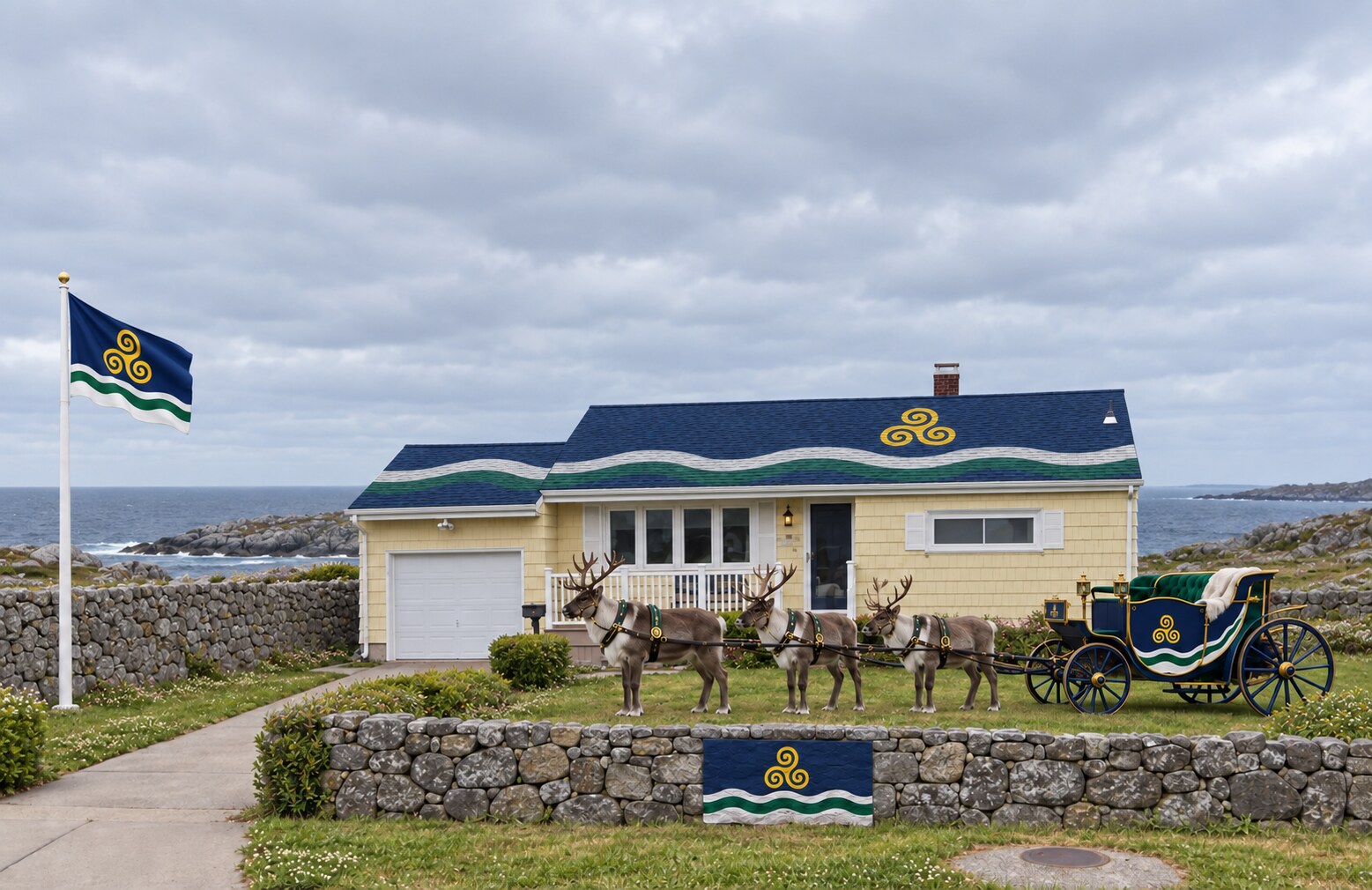
The Royal Home of Tiravell beside the ocean, with a flag-coloured roof, the national flag, a tall stone boundary wall, and reindeer harnessed to the royal carriage
Official ResidenceThe Royal Home of Tiravell

The modest residence of the Royal Household reflects Tiravell's tradition of service without grandeur. The national flag flies above the grounds, while the royal carriage is kept for ceremonial occasions.

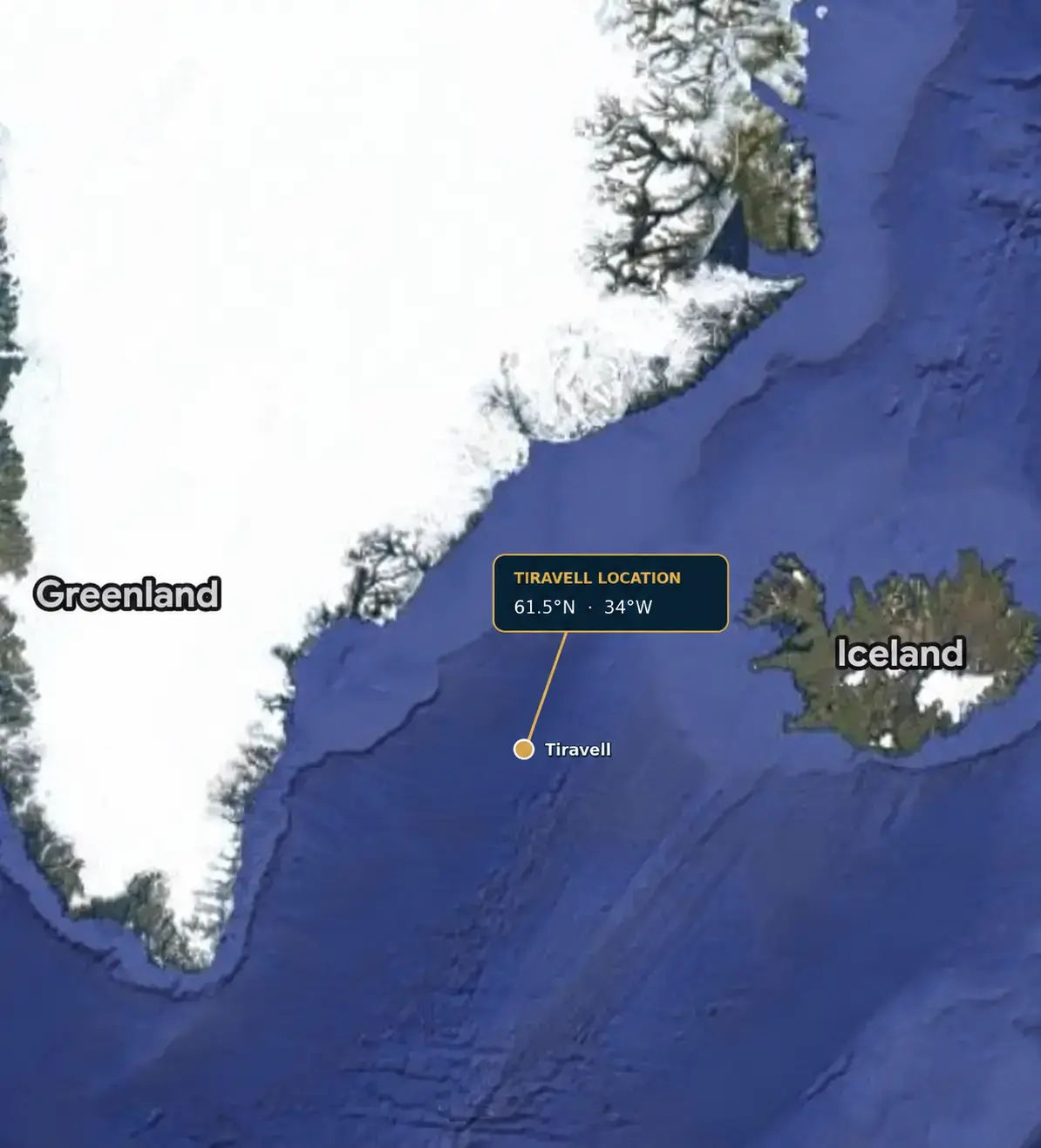
Map locating the Constitutional Kingdom of Tiravell at approximately 61.5 degrees north and 34 degrees west in the Irminger Basin between Southeast Greenland and Iceland
Open the map and zoom in to find the tiny realm.

Irminger Basin · 61.5°N, 34°W

Between Greenland
and Iceland.

Very small and deliberately secluded, Tiravell rests in the Irminger Basin at approximately 61.5°N, 34°W, about 200–250 nautical miles east of Southeast Greenland and west of Iceland. Its position near the western flank of the Reykjanes Ridge places it under greater Atlantic-water influence than the Greenland shelf, moderating the deepest Arctic cold while preserving cool ocean weather, long summer light, dark winter skies, and occasional distant drift ice or icebergs.

Regional location map · marker labelled with the official approximate coordinates

Beyond the Horizon

Open ocean
in every direction.

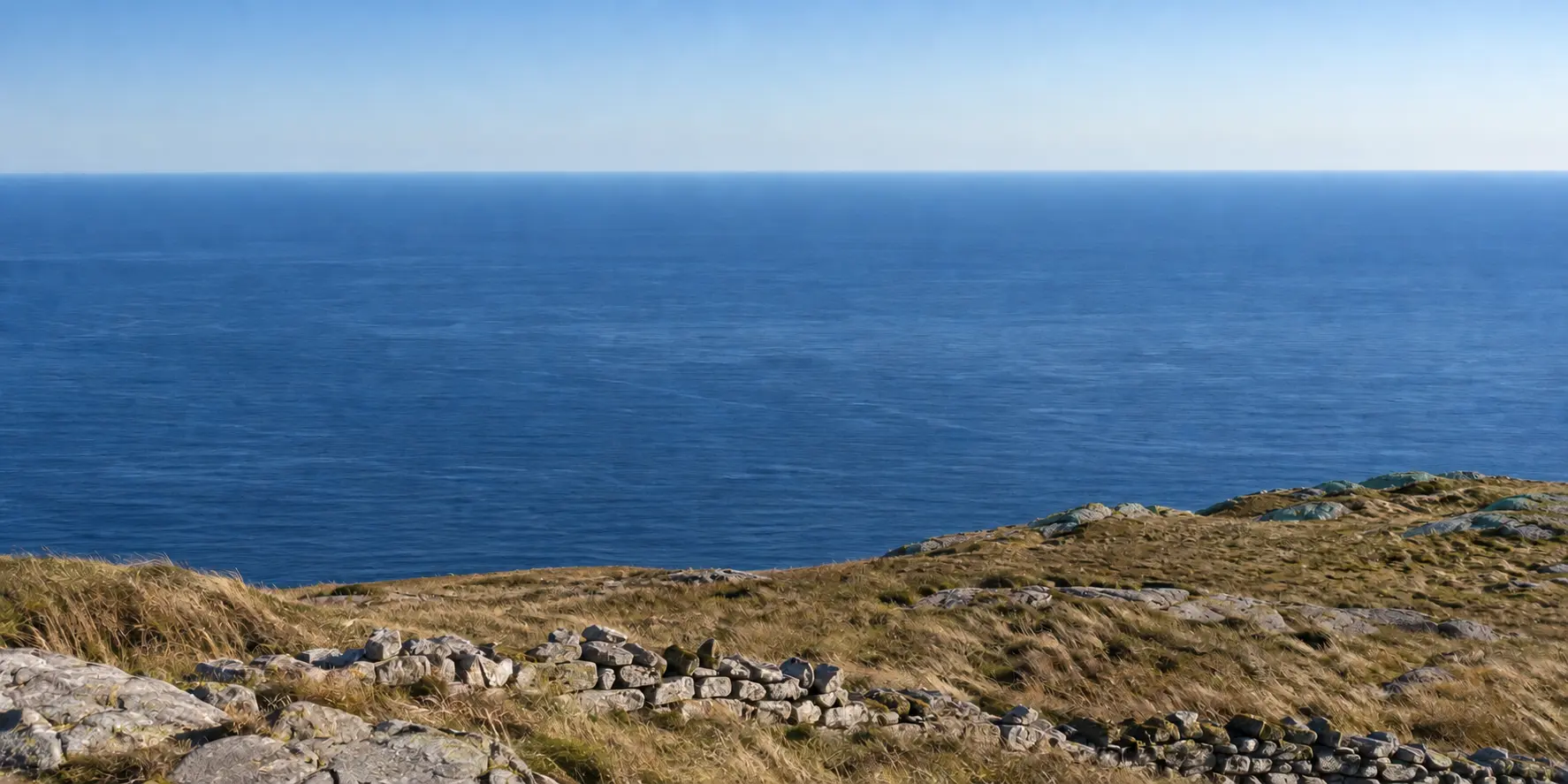
At Tiravell's position in the Irminger Basin, both Greenland and Iceland remain below the horizon even in exceptionally clear air. Christmas Hill offers a wide Atlantic view of sea, weather, migrating birds, passing vessels, and occasional distant ice, but no neighbouring country's coastline is visible from the island.

Illustrative clear-day view from Christmas Hill. Greenland and Iceland both remain beyond the visible horizon.

Within the Realm

A little over eight kilometres
of shared country.

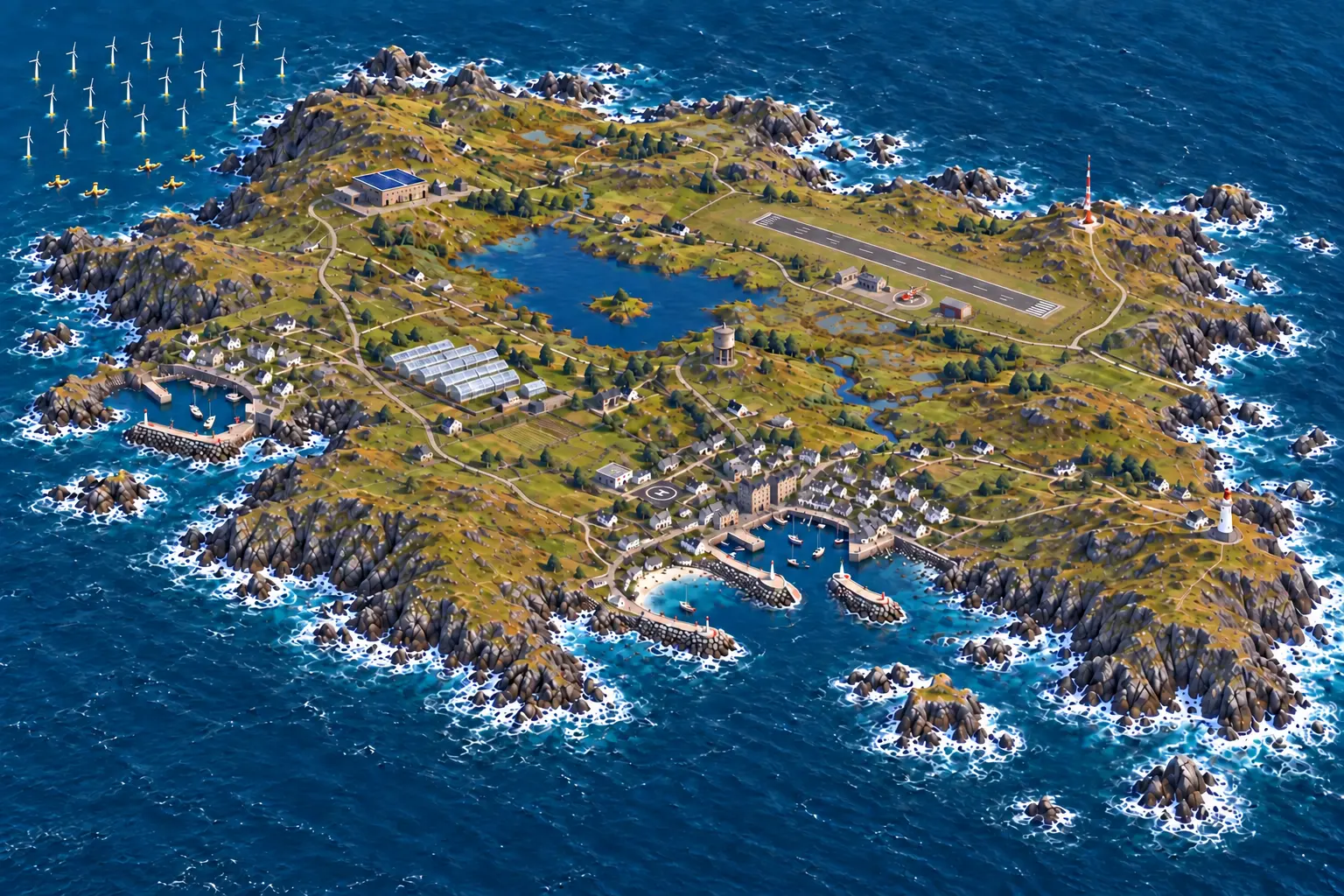
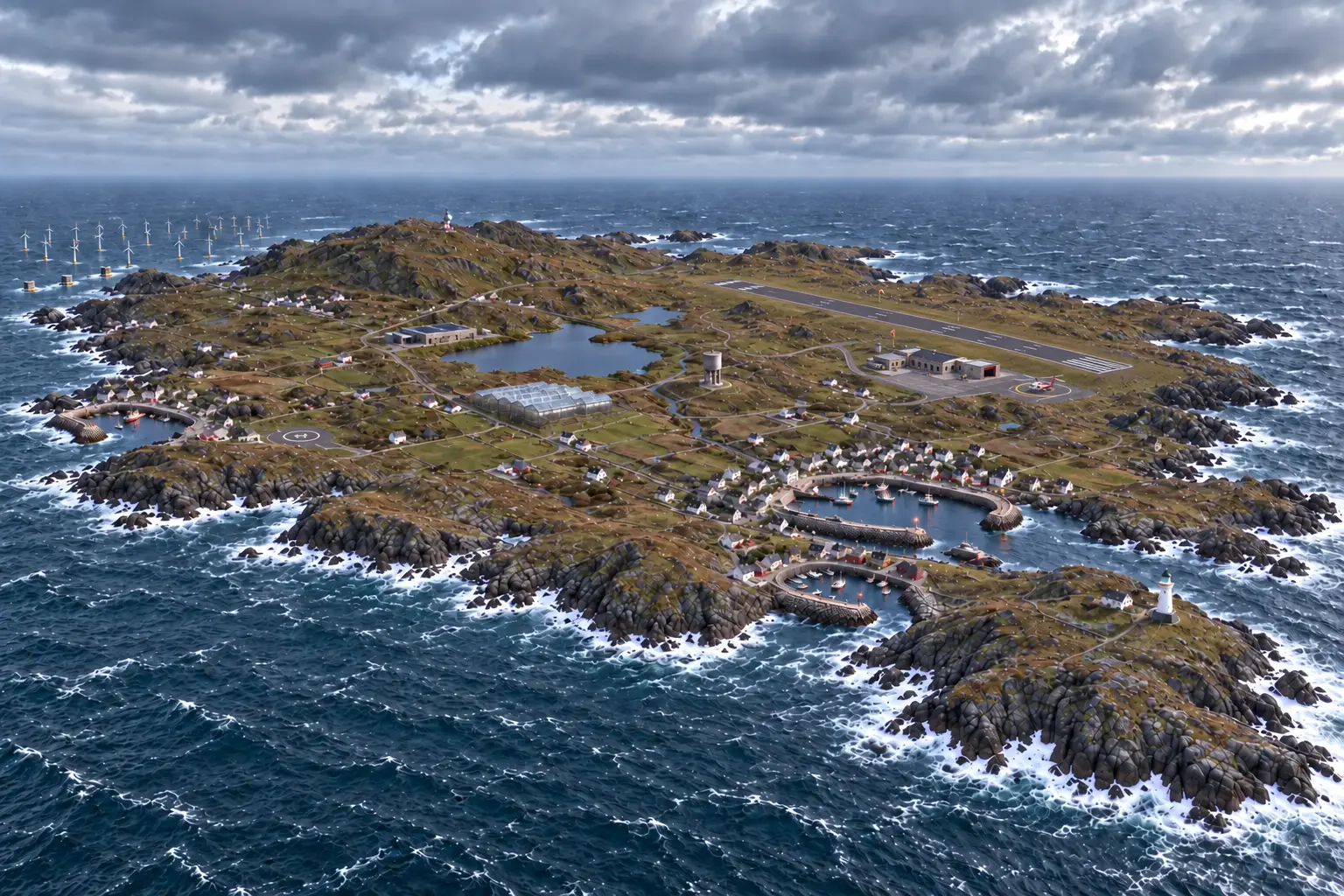
Tiravell is now officially about 8⅓ kilometres long and 7¼ kilometres wide: a broad, irregular island only slightly longer than it is wide. Loch Ireland occupies the protected centre, and the Solais Stream descends toward Caeravell's sheltered harbour. The compact regional airfield occupies an open northeastern plateau, while a second helipad beside the clinic provides direct patient loading near Caeravell. New Galway remains a separate west-coast settlement, with Christmas Hill, farms, glasshouses, scattered cottages, keeper's homes, and conserved open ground distributed between them. Houses and low-rise apartment buildings are grouped symbolically rather than plotted as a house-by-house survey.

Illustrative aerial map of the broader, nearly rounded island of Tiravell showing central Loch Ireland, the Solais Stream, Christmas Hill, Caeravell, New Galway, farms, glasshouses, coastal defences, the compact regional airfield, airport helipad and rescue helicopter, clinic helipad, and the northwest wind-and-wave energy district
Illustrative national map · approximately 8⅓ × 7¼ km · about 44 km² · regional airfield and two helipads shown · buildings shown symbolically · north at top
01

Caeravell

The capital, principal harbour, and home of most Tiravellans.

02

Loch Ireland

The island's central freshwater lake, feeding the harbour by the Solais Stream.

03

Covenant Cove

The sheltered landing place of the first settlers and focus of Landing Day.

04

Christmas Hill

A treeless western height of mossy turf, sedges, low berry heath, exposed rock, footpaths, and a few outlying homes.
05

Keeper's Light

The lighthouse guarding the eastern approaches to the island.

06

Radio Hill

Home of the modest transmitter serving Radio Tiravell.

07

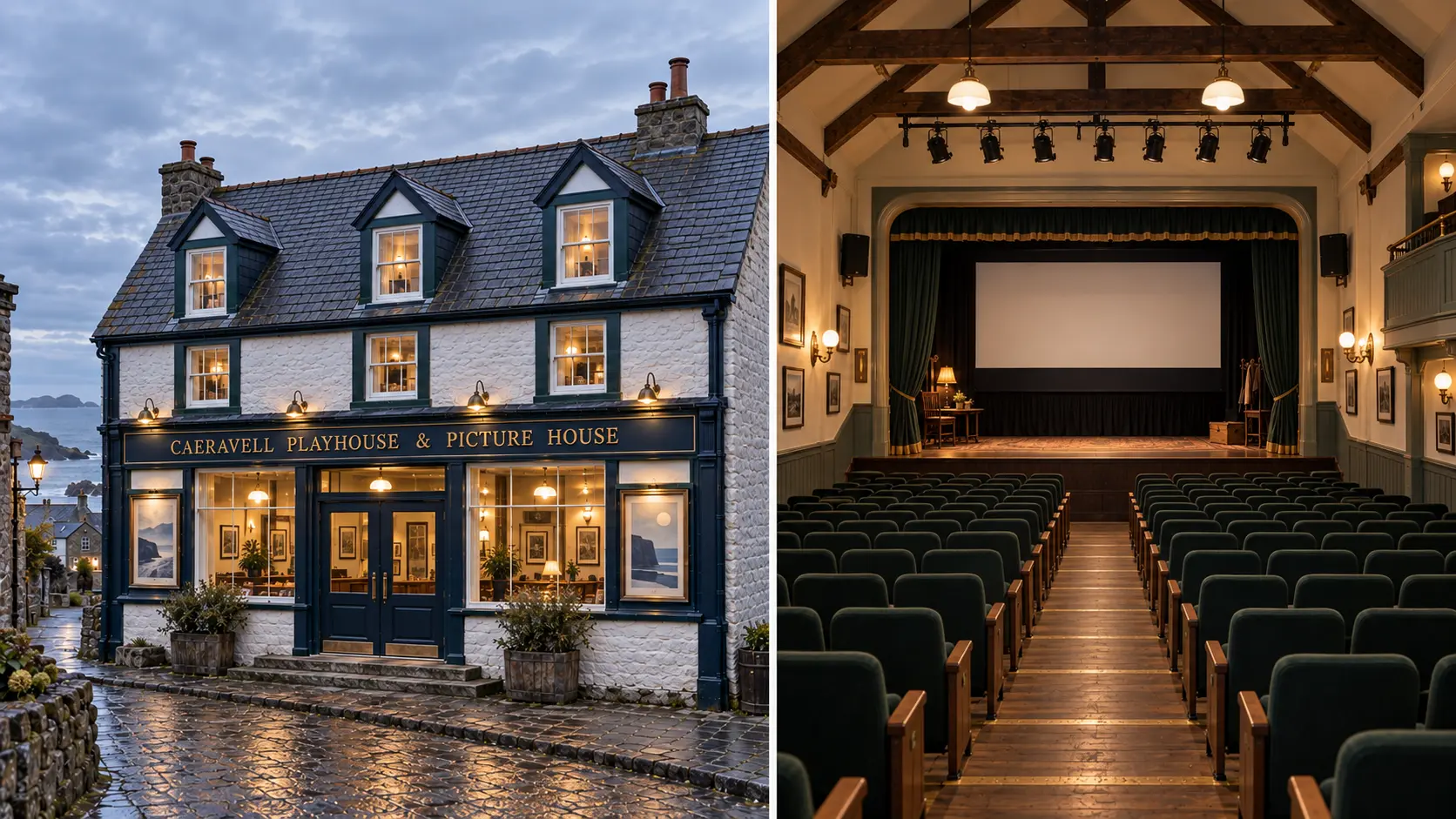
Caeravell Playhouse

The island's 120-seat theatre and picture house, just above the village green.

08

Caeravell Cemetery

A secluded burial ground on the uninhabited western headland, well beyond the capital's settled area.

09

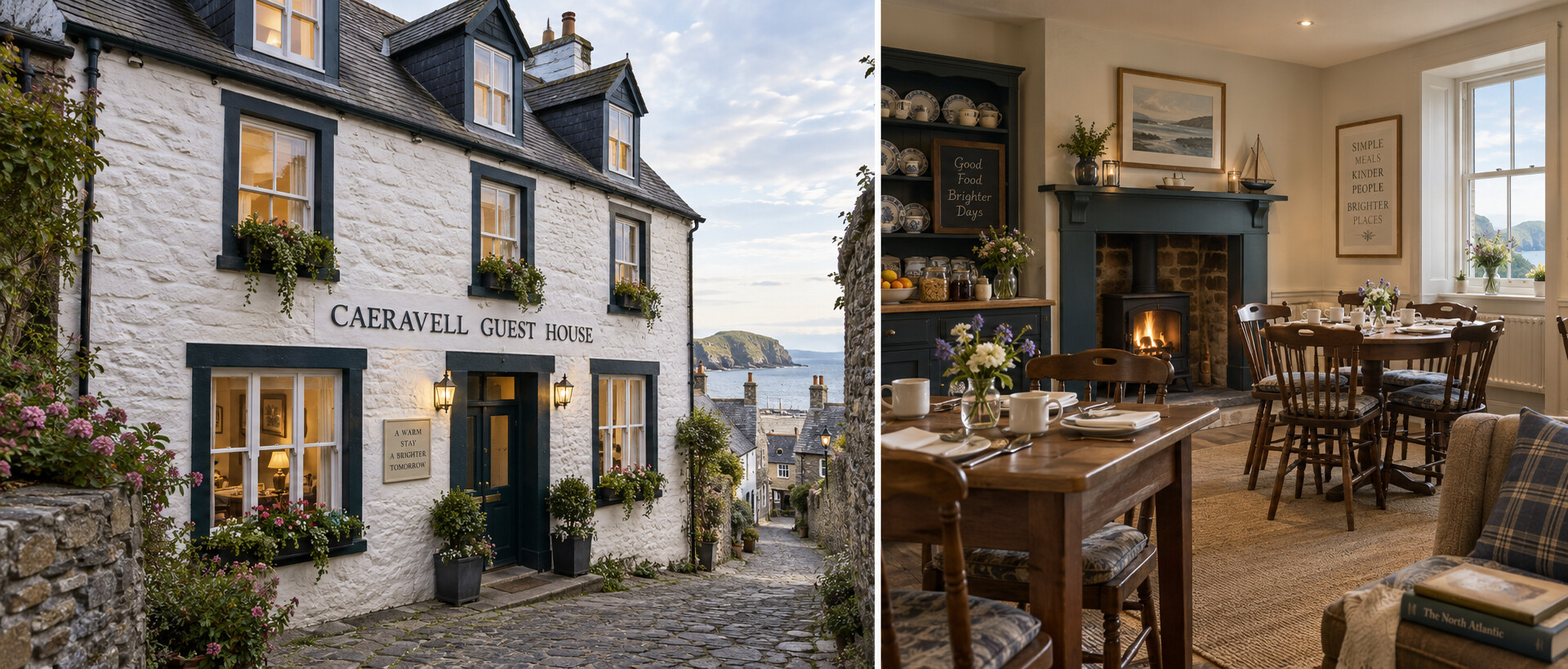
Caeravell Guest House

A ten-room bed-and-breakfast near the harbour for the island's small number of overnight visitors.
10

Northwest Shoals Energy District

Thirty donated offshore turbines and six anchored wave-energy converters share one northwestern energy zone, supplying Tiravell and producing certified green hydrogen and ammonia for export.
11

Caeravell Glasshouse District

The district combines 7.5 hectares of food-production glasshouses with the separate 1.5-hectare public Glasshouse Park, for nine central hectares in all. Additional cooperative growing ranges at outlying farms are not included in that total.

12

Éire Energy House ↗

On the northwest working shore, wind and wave power reaches battery storage, grid controls, water electrolysis, and the safely separated renewable-fuels yard.

13

Loch Ireland Water Works ↗

A compact filtration building beside the protected loch and an elevated water tower on higher ground supply Caeravell and outlying homes.

14

Caeravell Coastal Defences ↗

Twin breakwaters shelter the working harbour. A smaller rubble-mound arm and reinforced shore protect the neighbouring residential inlet without closing it to small boats or the natural movement of water.

15

New Galway (TV3)

A smaller west-coast settlement of houses, modest apartment buildings, and a working quay protected by a short rubble-mound breakwater.

16

Tiravell Regional Airfield ↗

A compact paved runway, weather station, rescue hangar, airport helipad, and clinic-side helipad provide scheduled regional flights, urgent medical evacuation, mail, and light cargo.

Food Security & Island Enterprise

Grown under glass.
Powered by the sea wind.

Tiravell combines protected growing, limited summer grazing, small cooperative farms, and renewable power so that a remote maritime sub-Arctic island can feed itself more reliably, support local work, and earn income beyond its shores.

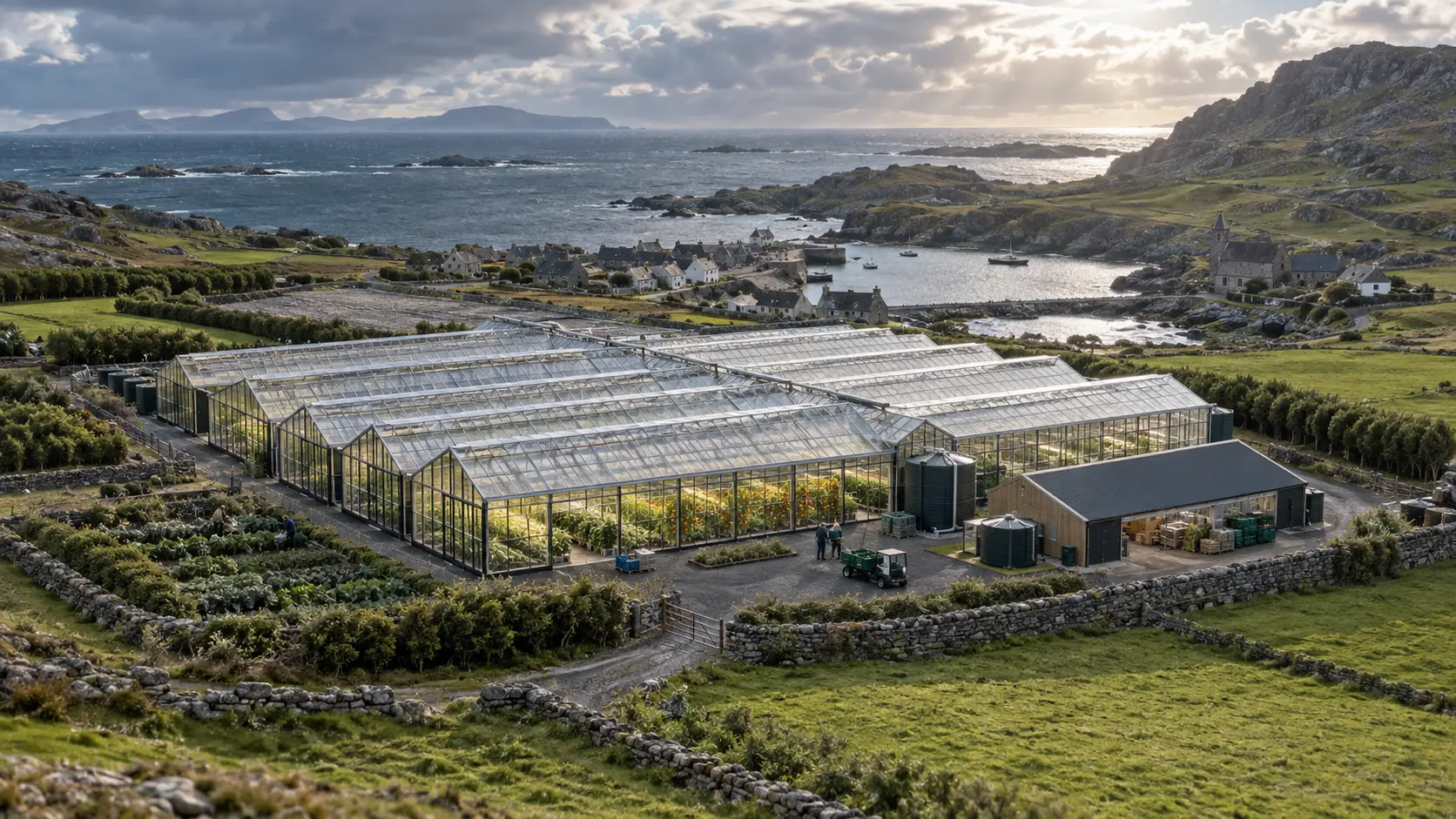
Tiravell's 7.5-hectare food-production glasshouse complex outside Caeravell
National Food ReserveThe 7.5-Hectare Food-Production Glasshouses

Several storm-strengthened growing ranges across 7.5 hectares produce vegetables, greens, tomatoes, berries, herbs, and selected fruit throughout the year. Rainwater collection, careful crop rotation, and climate controls reduce Tiravell's dependence on weather-delayed imports. Smaller farm glasshouses distributed around the island provide additional growing space beyond the central complex.

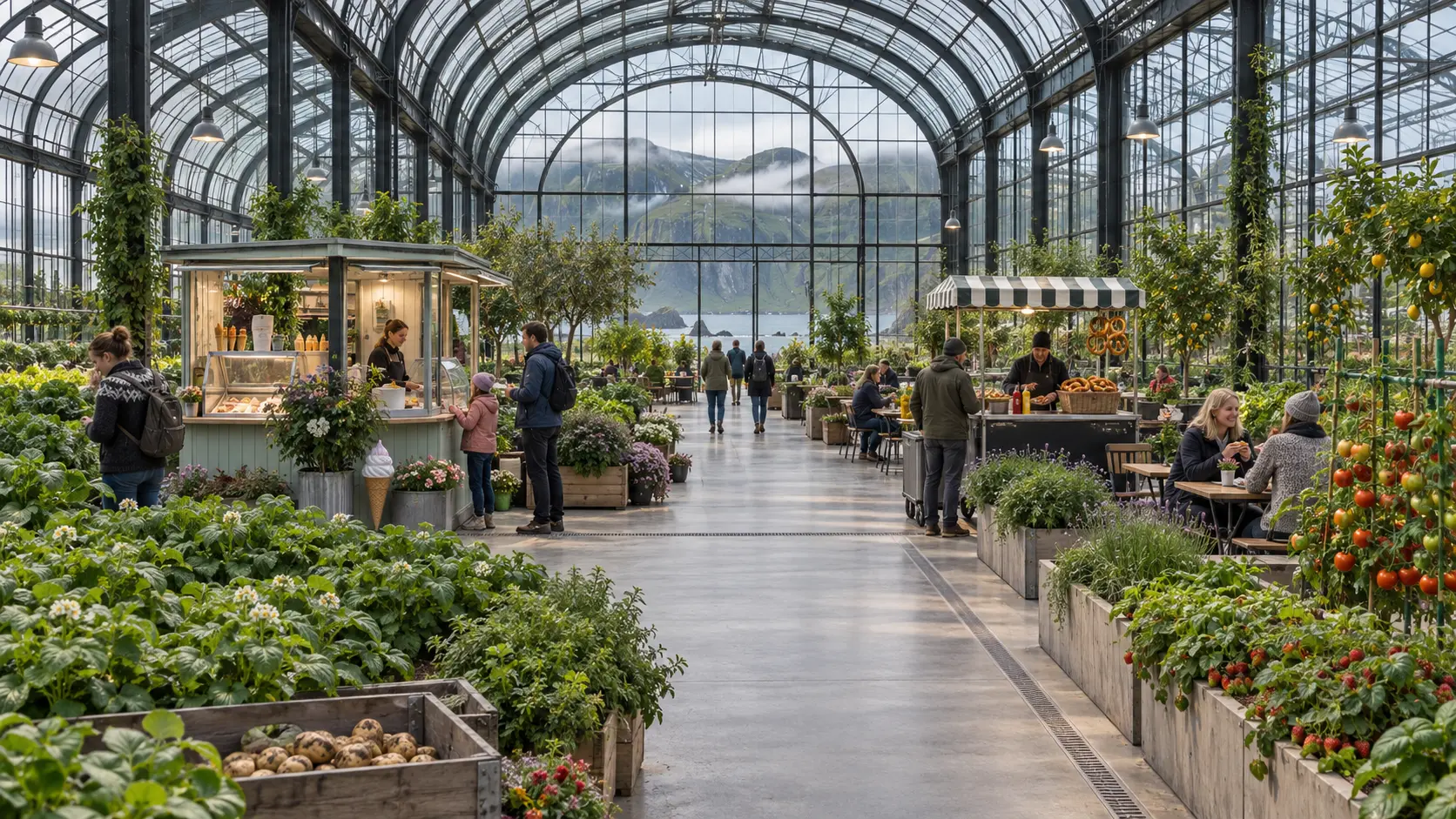
Interior of the separate 1.5-hectare Caeravell Glasshouse Park with gardens, an ice-cream counter, and a hot-dog and pretzel cart
Garden Under GlassCaeravell Glasshouse Park · 1.5 Hectares

A separate 1.5-hectare warm public garden brings food growing and community life together. Residents walk among planted beds, meet through the darker months, and visit its small ice-cream counter and hot-dog and pretzel cart. Its area is not counted within the 7.5-hectare food-production complex.

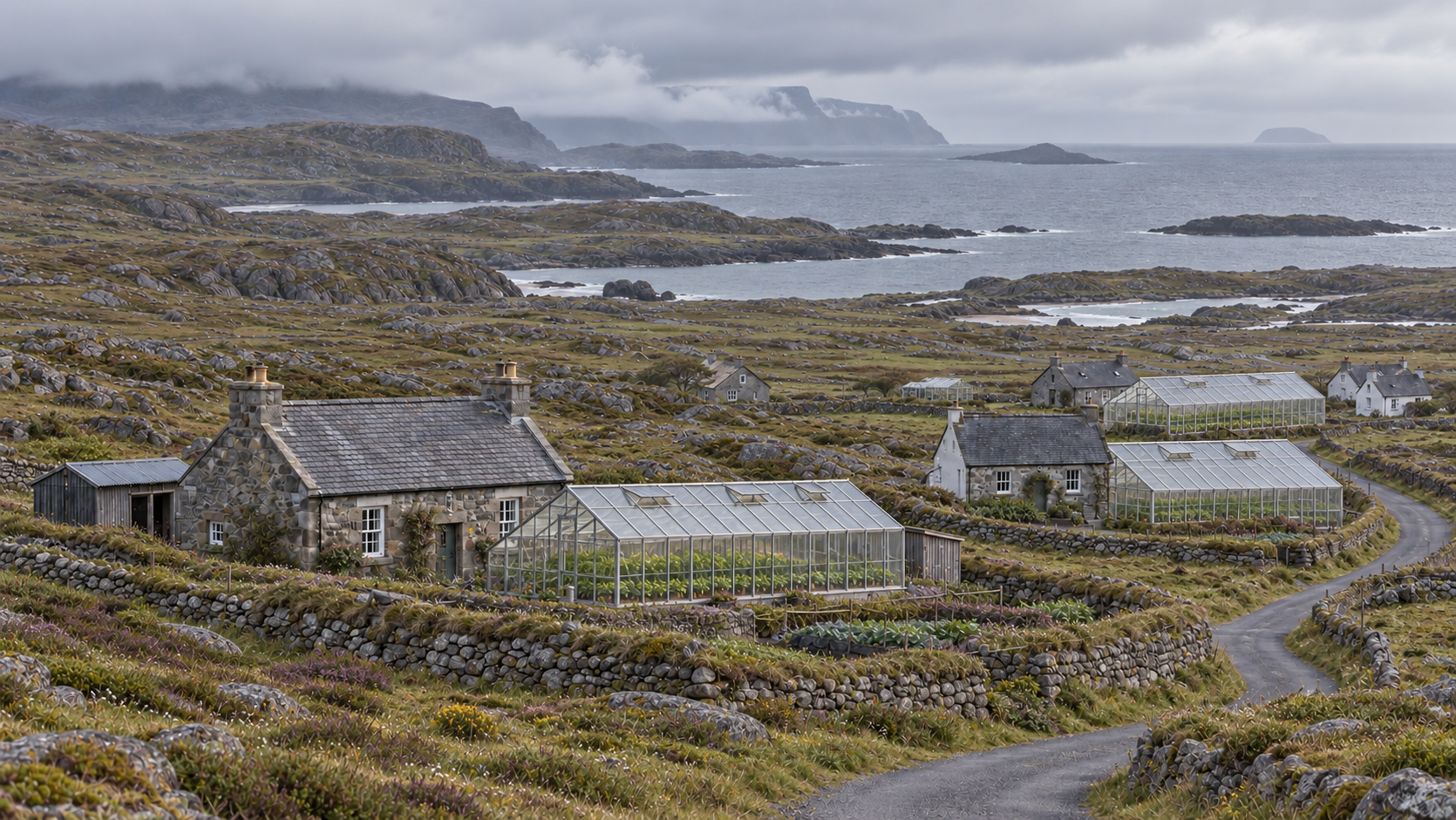
Expanded cooperative farm glasshouses beside scattered stone cottages across Tiravell
Beyond the CapitalIsland Farms and Glasshouses

Storm-strengthened cooperative glasshouse ranges beside outlying farms supply vegetables, berries, herbs, and nursery plants to New Galway and rural households. Outdoors, only small sheltered beds of hardy roots, kale, and herbs are dependable. The greenhouses remain smaller than the national complex near Caeravell but add meaningful capacity and resilience.

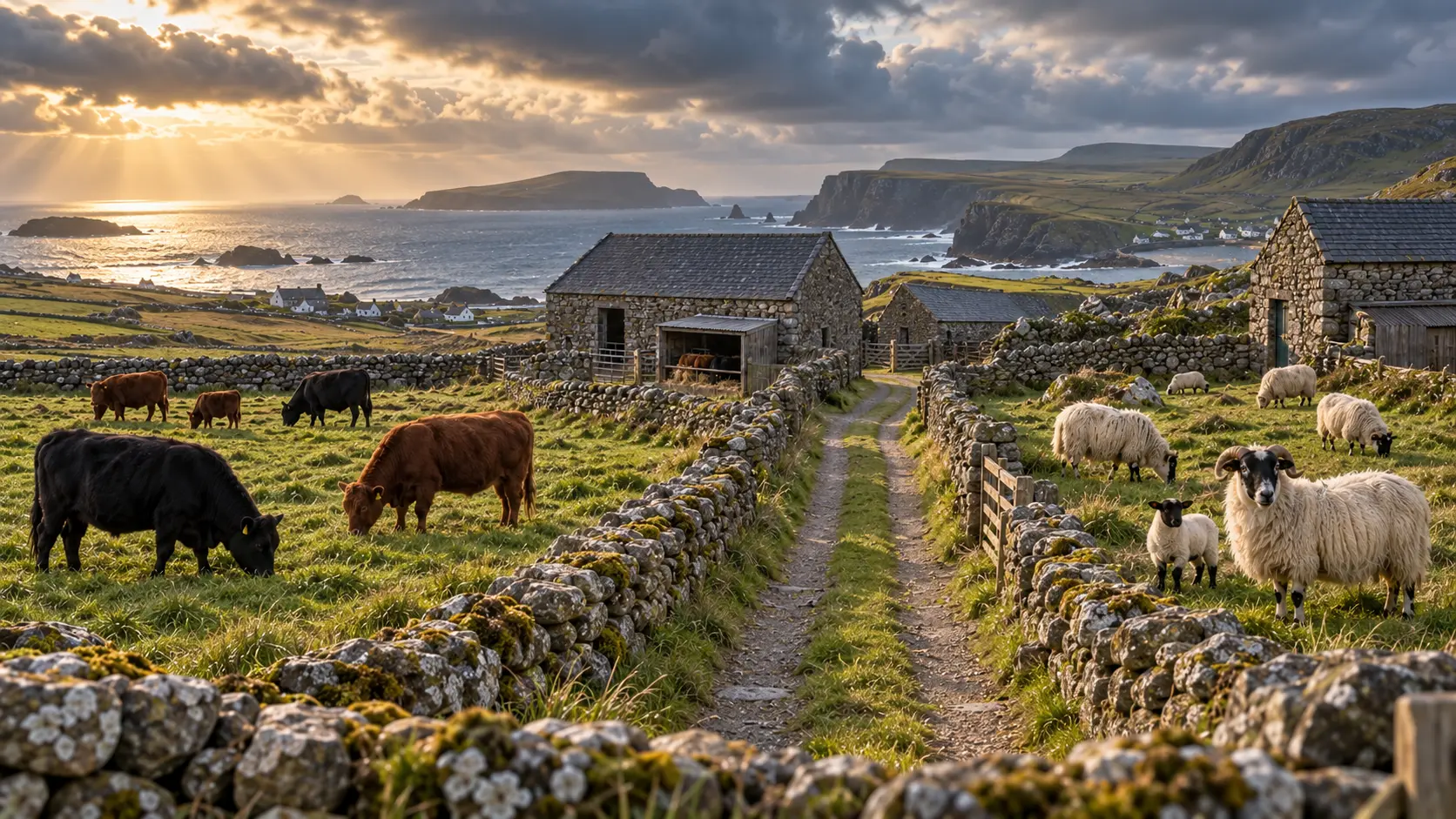
Dexter cattle and hardy sheep grazing in neighbouring stone-walled Tiravellan pastures
Cattle and Sheep

Compact cattle and hardy sheep graze coarse maritime turf during the short growing season, using stone-and-turf windbreaks for shelter. Winter housing, stored silage, and imported reserve fodder keep the herds deliberately small.

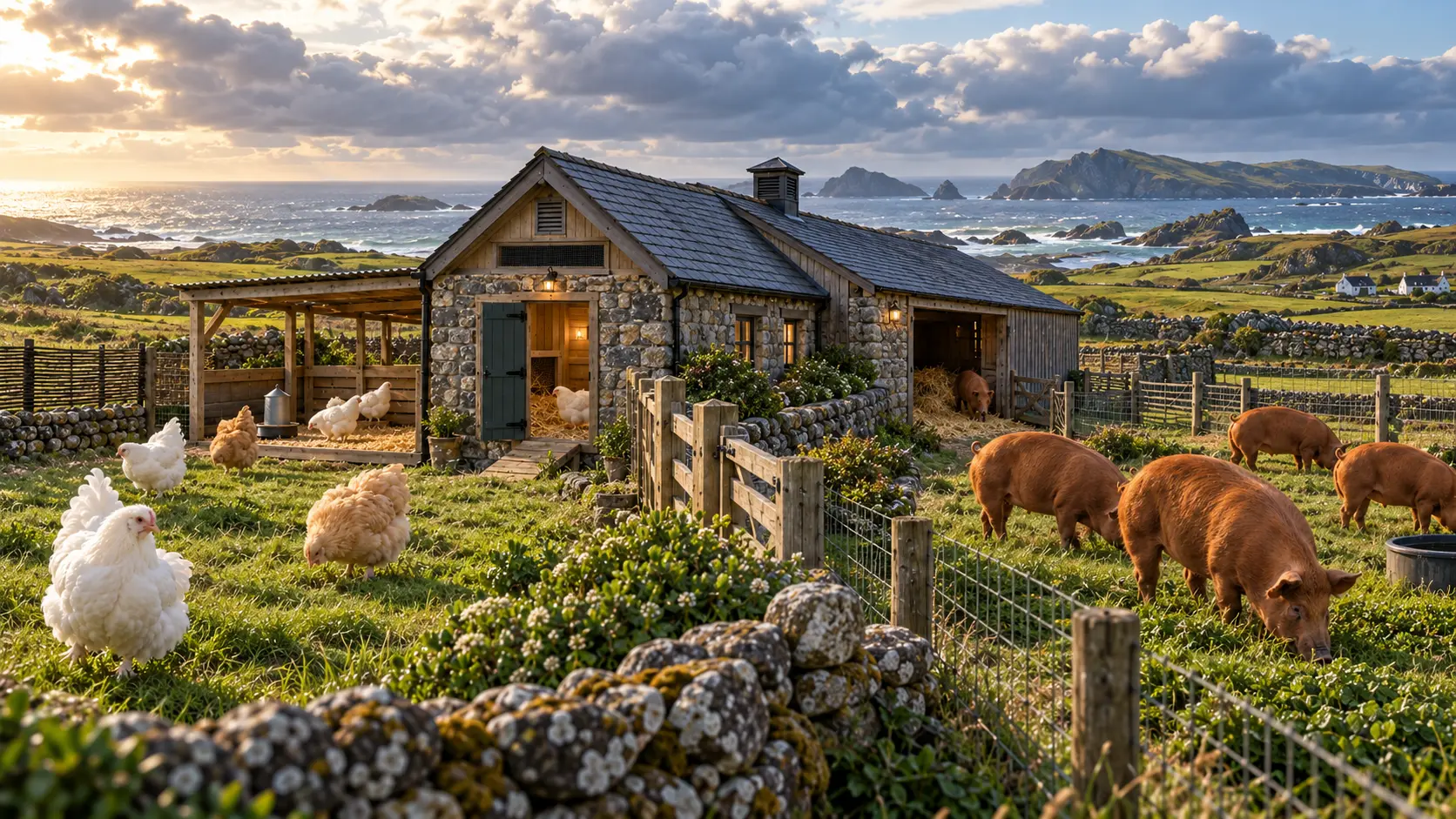
Cold-hardy Chantecler chickens and Tamworth pigs at a sheltered Tiravellan farmstead
Chickens and Pigs

Cold-hardy chickens and pigs spend most severe-weather periods in dry, ventilated housing. Sheltered gravel runs and small rotating paddocks are used when conditions permit; neither species depends on year-round open pasture.

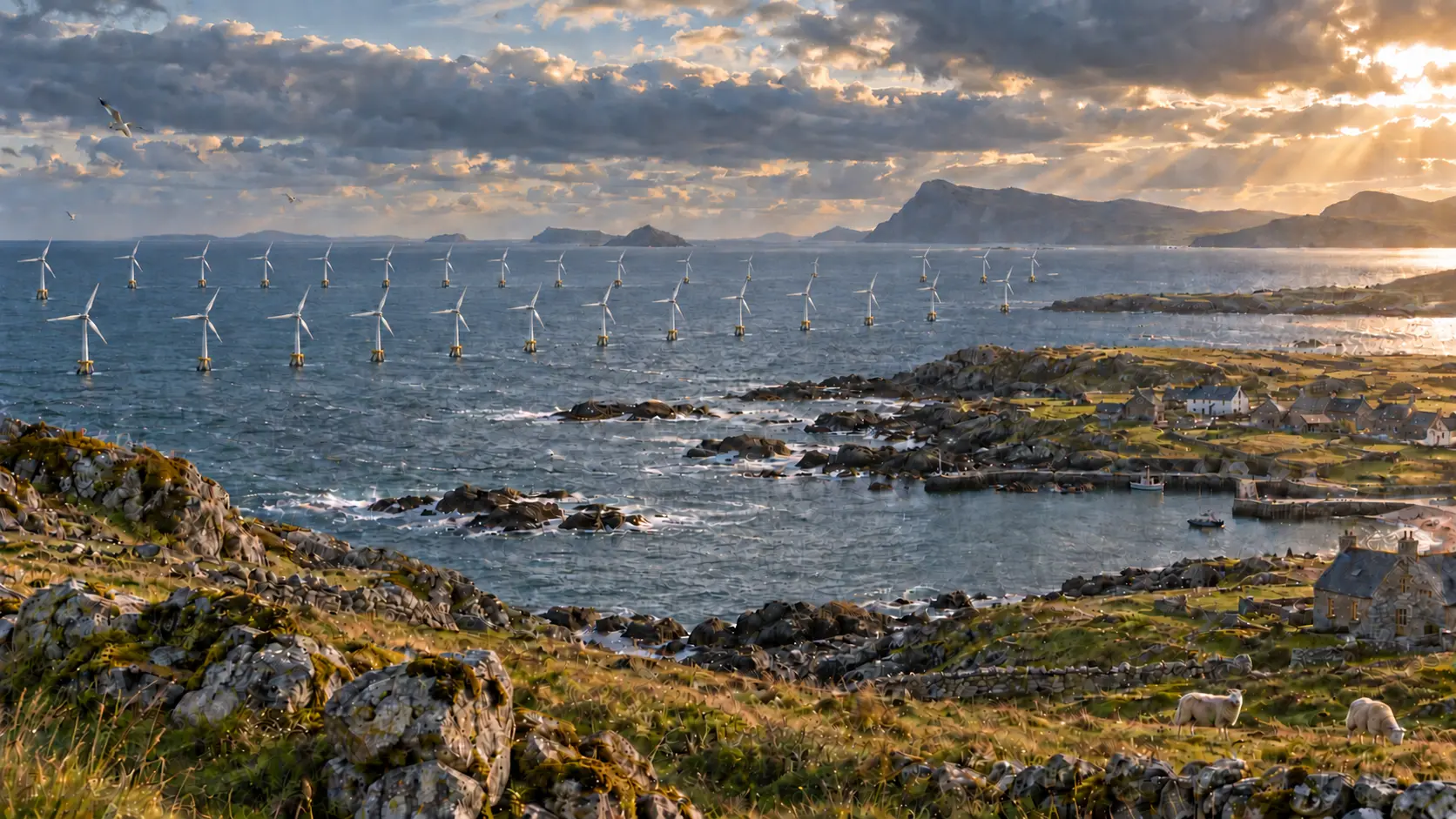
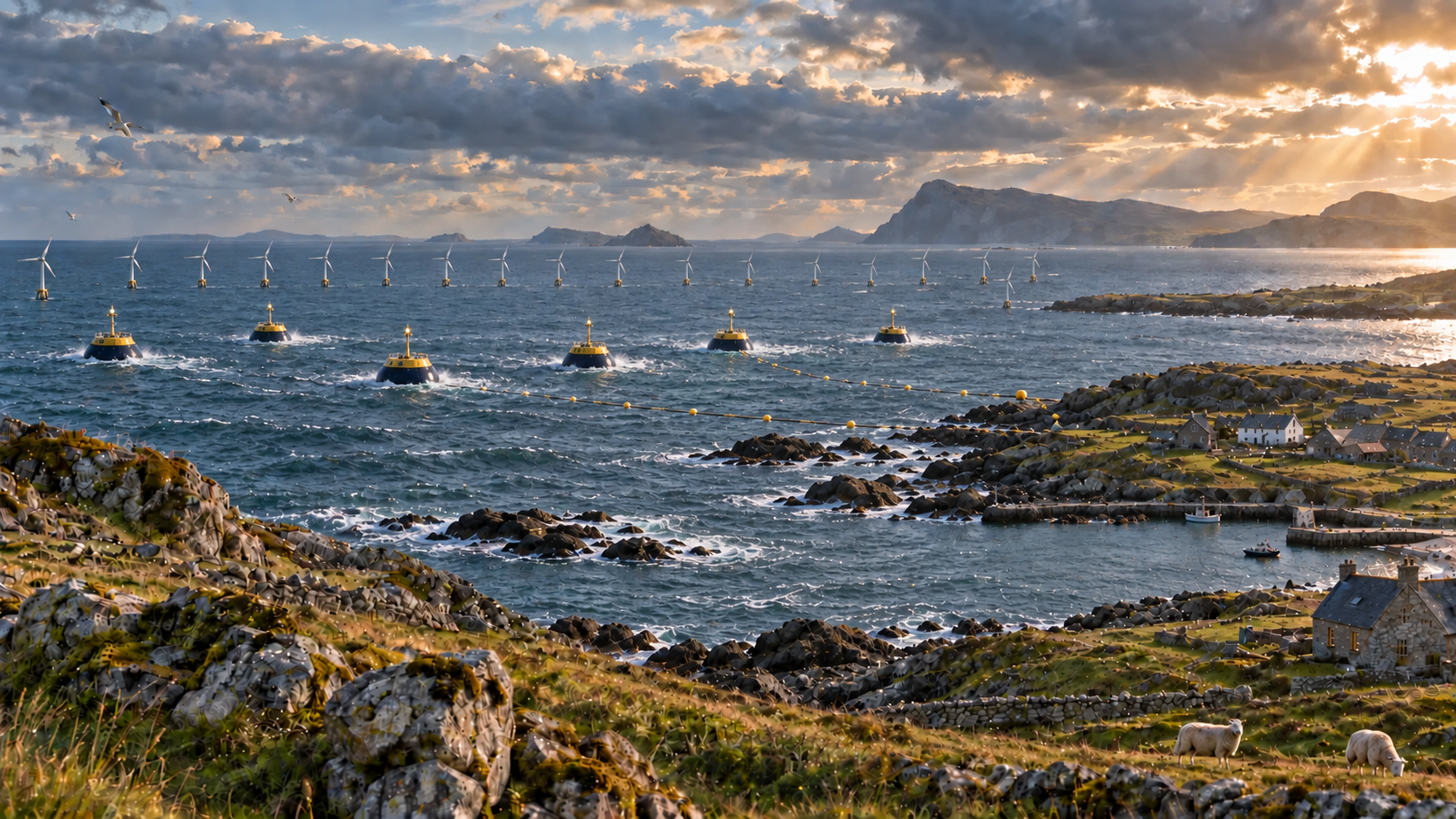
Thirty offshore wind turbines spread across the Northwest Shoals beyond Tiravell's coast

Northwest Shoals

Thirty turbines.
One shared horizon.

Planning and shore works began in 2023. The Northwest Shoals Wind Farm's first fifteen offshore turbines were connected in 2024 and the second fifteen in 2025, with final grid integration in 2026. Gifts from Denmark and Greenland, Iceland, the European Union, the United States, and partnering governments supported the district. Tiravell dedicated the completed wind, wave, and solar programme on July 2, 2026, after commissioning had taken place in stages.

At approximately one megawatt per turbine, the wind farm meets Tiravell's domestic needs, supports greenhouse growing and island electrification, and supplies surplus power to the national renewable-fuels works.

Income from certified green-hydrogen and green-ammonia exports first maintains the wind farm, renewable-fuels works, and island grid and builds an emergency reserve. The remaining proceeds help fund the clinic, school, Island Trolley, and food-growing projects, easing the cost of essential services for island households.

One offshore substation and subsea connection bring generation ashore in the northwest, preserving the southern coast and harbour approaches. Éire Energy House gives priority to island demand and battery reserves before directing genuine surplus electricity to water electrolysis. A safely separated synthesis and storage yard converts most export hydrogen into easier-to-ship green ammonia, while emergency plant protects essential services during calm weather.

Fishing access, seabird movement, navigation, and protected coastal views form part of the project's continuing environmental oversight.

Six anchored wave-energy converters rising and falling with the Atlantic swell beside the Northwest Shoals wind farm

Atlantic Swell

Northwest Shoals Wave-Energy Array

Installed during 2025–2026, six anchored point-absorber converters rise and fall with the exposed northwest swell. Subsea cables carry their electricity to Éire Energy House, where it joins wind and solar generation.

The compact array supplements power during cloudy weather and lighter winds. Its spacing keeps navigation and fishing corridors open, while marine monitoring and seasonal maintenance safeguards protect seabirds and coastal habitat.

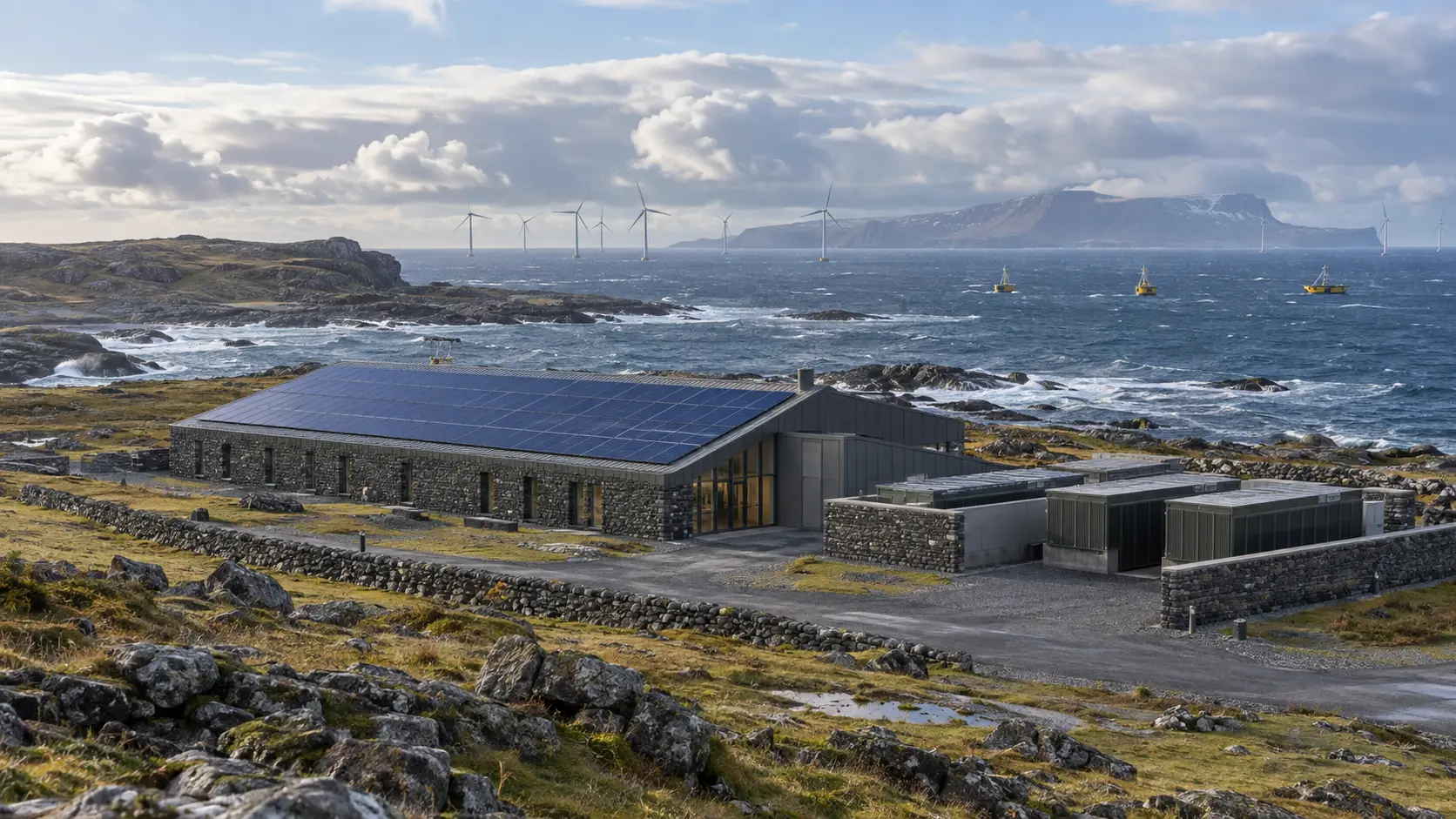
Éire Energy House on Tiravell's northwest shore, with a broad conventional solar-panel roof, separated battery bays, and the offshore wind and wave district beyond

Northwest Working Shore

Éire Energy House

Built during 2025–2026, the long, low, storm-hardened Éire Energy House sits inland from the exposed northwest shore, beside the energy district's landward connection. Its grid-control room, power-conversion equipment, and separately protected battery bays balance wind, wave, and solar output, store short-term reserves, and give island services first claim on every unit of generation.

Surplus electricity powers desalination, purification, and electrolysers that produce certified green hydrogen. Some hydrogen is retained for emergency energy and controlled marine use; most is converted into green ammonia in a bunded, continuously monitored fuels yard separated from homes, farms, and public roads. The ammonia is transferred through a dedicated loading berth to the TSS Tiravell for export as marine and industrial fuel, with fertilizer production providing a second market.

Conventional solar panels were fitted to the broad roof in 2026. Fire detection, gas monitoring, water curtains, remote shut-offs, and a trained industrial response crew protect the site, while the fuels yard remains outside Caeravell's passenger harbour and quieter coastal landscapes.

National Infrastructure & Essential Services

How the island
works.

Tiravell combines generous renewable capacity with compact public systems designed for isolation, severe weather, careful use of land, and the everyday needs of a close-knit population.

Built in stages, 2009–2026

  1. Protected catchments, drinking-water treatment, wastewater works, and essential-service reserves were strengthened.

  2. Harbour berths and winter stores expanded; fibre, wireless coverage, and emergency communications followed.

  3. Outlying farm glasshouses, electric trolley service, the 7.5-hectare food-production complex, and the separate 1.5-hectare Glasshouse Park arrived in successive projects.

  4. Rooftop solar trials and Northwest Shoals shore works began in 2023; the first fifteen turbines connected in 2024.

  5. The second fifteen turbines, six-unit wave-energy array, battery storage, Éire Energy House, green-hydrogen and ammonia works, wider solar-roof programme, regional airfield, and rescue aviation service completed the recent infrastructure buildout.

  6. At Caeravell Harbour, the Assembly, Crown, project crews, farmers, mariners, and schoolchildren honoured years of public works. A symbolic light powered by stored wind, wave, and solar energy marked the opening of the completed renewable district.

01 · Power

Power, storage, and renewable fuels

The thirty Northwest Shoals turbines remain the main national power source, joined by six point-absorber converters that draw energy from the Atlantic swell. Éire Energy House balances wind, wave, and solar output through battery-supported grid controls, then turns genuine surplus generation into green hydrogen and exportable green ammonia. Rooftop solar began with a 2023 pilot and spread through 2026; nearly every structurally suitable permanent building now carries discreet solar slates, solar shingles, or low-profile integrated panels.

02 · Water

Loch Ireland Water Works

Protected catchments and rainwater feed Loch Ireland. The filtration works and elevated tower have been expanded to maintain pressure and a larger treated reserve for Caeravell, New Galway, and outlying homes. Emergency desalination provides a further safeguard. The enclosed wastewater works has likewise gained reserve treatment capacity for population growth and seasonal demand.

03 · Circular use

Waste and recycling

Food and garden waste becomes compost for farms and public planting. A compact refuse-and-recycling vehicle serves both settlements, while a shared utilities vehicle supports water, electrical, road, and storm repairs. Reusable materials are repaired or recirculated locally; specialist and hazardous waste leaves on scheduled supply vessels.

04 · Connection

Internet and public information

Fibre and wireless service reaches every home, farm, business, and public building, with microwave and satellite backup. Radio Tiravell and the national website carry public and emergency information.

05 · Readiness

Harbour and winter reserves

Caeravell Harbour coordinates passengers, freight, medicine, mail, fuel, and food. Expanded strategic stores and distributed emergency cupboards maintain several weeks of essential supplies, with additional winter reserves for healthcare, food, water treatment, transport, and New Galway's response shelter.

06 · Stewardship

Food, transport, and environment

Renewable electricity supports expanded greenhouse heat, food storage, the Island Trolley, emergency vehicles, and small electric service vehicles. Additional cold storage and staple reserves serve both settlements. Infrastructure planning protects farmland, freshwater, fisheries, seabirds, coastal access, and the island's visual character.

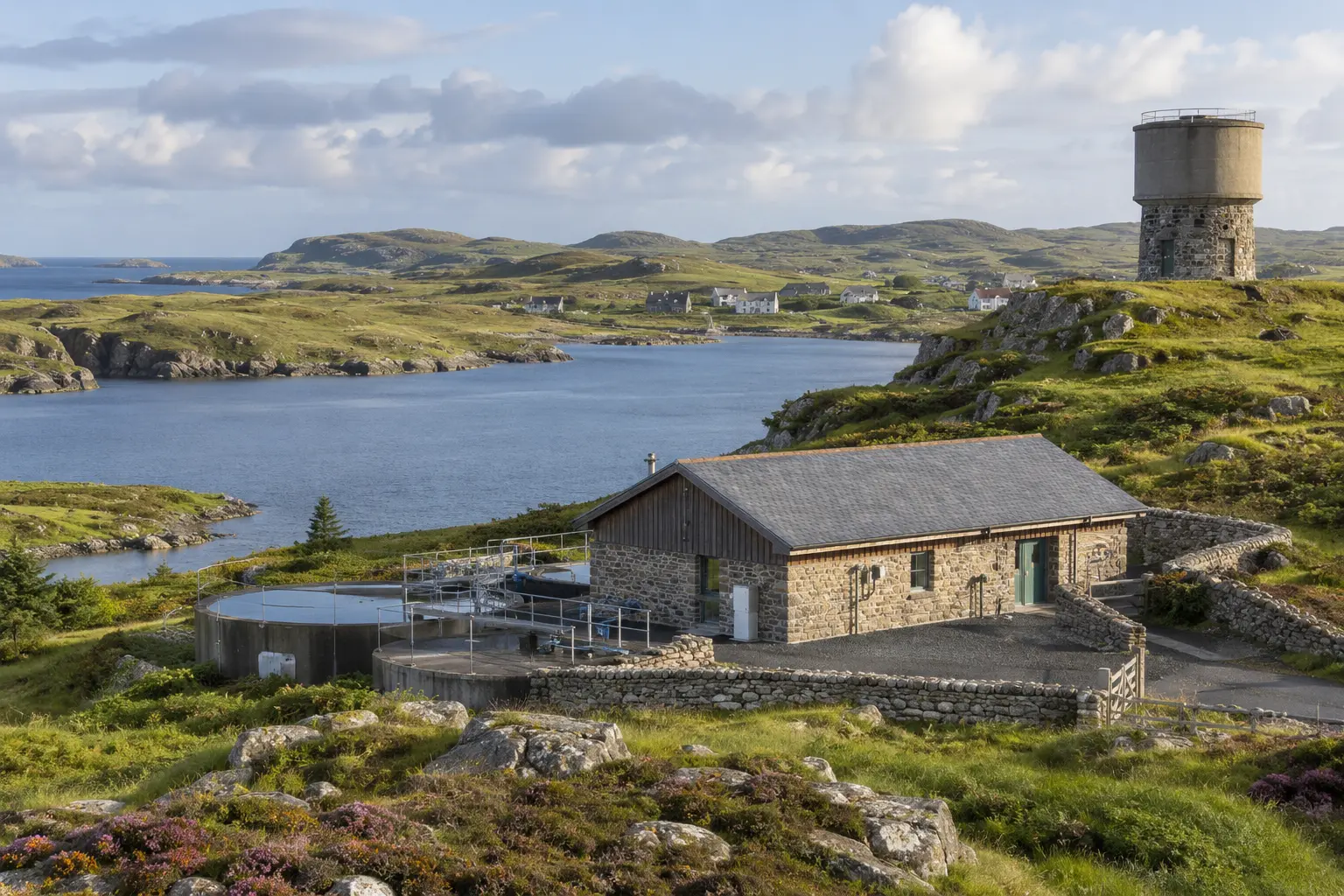
Loch Ireland Water Works: a low stone-clad filtration building by the freshwater loch and a compact elevated water tower on higher ground

Freshwater & Public Health

Loch Ireland Water Works

Water drawn from the protected loch is filtered, disinfected, and regularly checked before it reaches Caeravell, New Galway, farms, the clinic, and the glasshouses. The stone-clad tower above the works stores an enlarged treated reserve and helps keep the island's supply steady during power interruptions and busy harbour days.

Rainwater collection and an emergency desalination unit supplement the system during dry spells. The drinking-water plant is distinct from the expanded enclosed wastewater works, protecting the loch and the harbour while retaining capacity for future growth.

The complete living record explains the island's infrastructure, emergency safeguards, and amendment process in greater detail.

Read the Infrastructure & Essential Services document

Travelling to Tiravell

By air or by sea,
weather decides.

Tiravell Regional Airfield and Caeravell Harbour provide two independent links with the wider North Atlantic. At approximately 61.5°N, 34°W, the island remains closer to Southeast Greenland than to Iceland. Scheduled turboprop services normally connect through Greenland, with a less frequent Iceland link carrying passengers, mail, medicine, and light freight.

The larger national ferries remain the island's dependable heavy-cargo and passenger connection. Flights and sailings are both weather-dependent: the airport authority or harbourmaster may delay departures whenever wind, visibility, icing, or sea conditions make travel unsafe.

01 · Principal air route

Greenland connection

Regional turboprops normally link Tiravell with a suitable Greenland airport several times each week. Passenger places share the aircraft with mail, medicine, urgent parts, and limited light freight.

02 · Longer air route

Iceland connection

A less frequent direct turboprop service links Tiravell with Iceland. It provides an alternate medical, commercial, and onward-travel route when conditions and demand permit.

03 · Sea routes

Passenger and freight ferries

The TSS Aaron and TSS Quinn provide scheduled mixed passenger-and-freight sailings. Their enclosed vehicle and cargo decks carry food, machinery, building supplies, accompanied vehicles, mail, and winter reserves.

04 · On the island

From terminal or quay

The Island Trolley meets scheduled arrivals when practical, while accessible electric taxis handle luggage, clinic journeys, and delayed passengers. Advance booking remains customary because aircraft seats, cabins, and guest rooms are limited.

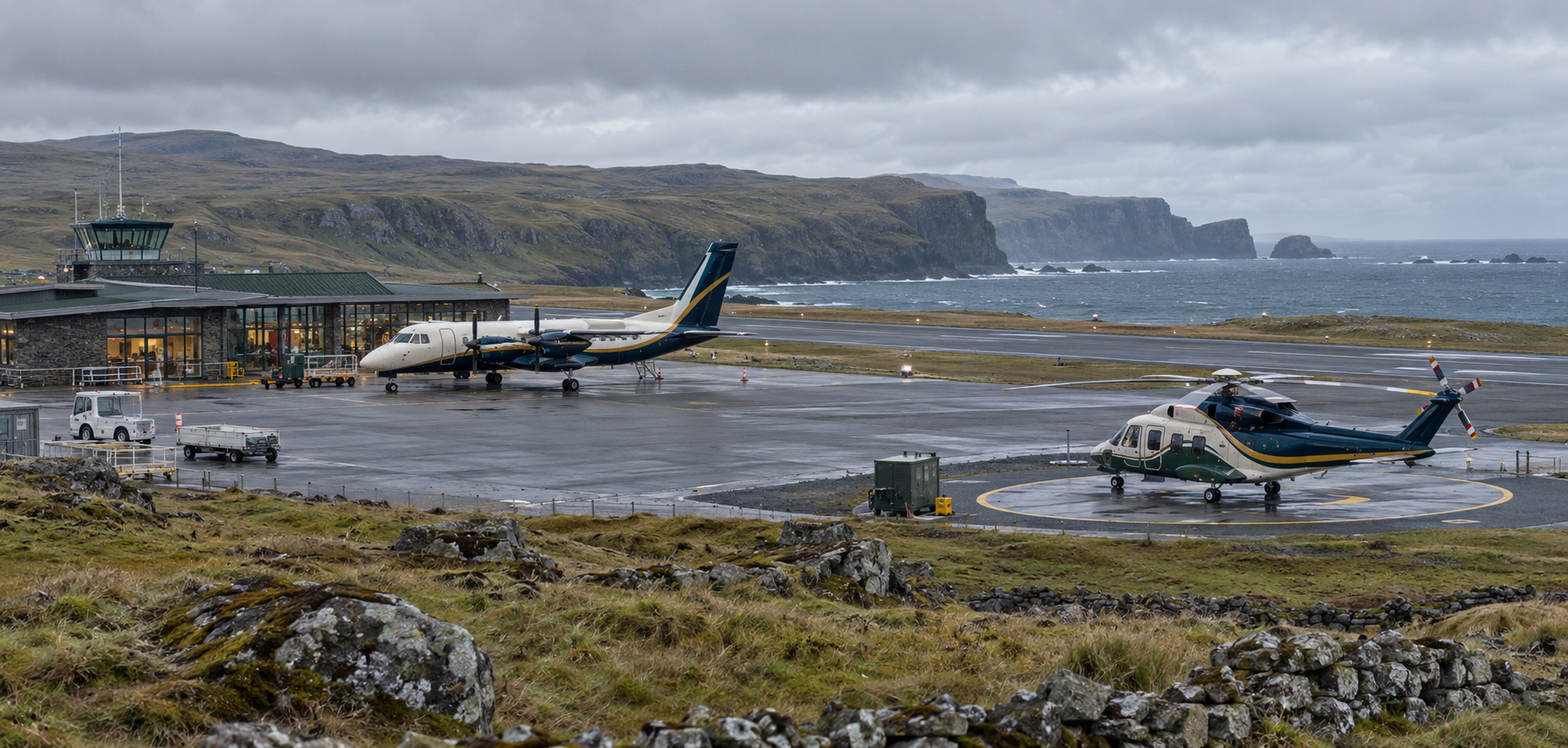
Tiravell Regional Airfield with a twin-engine turboprop, low stone terminal, paved runway, and national search-and-rescue helicopter on its helipad
Regional Aviation & Medical Access A small airport built for an isolated island

A single approximately 1,350-metre paved runway supports short-field regional turboprops, medical aircraft, mail, and light cargo. The low terminal includes weather observation, fire cover, de-icing equipment, a rescue hangar, and a sheltered passenger room rather than the facilities of a large commercial airport.

A separate helipad beside the clinic permits direct patient loading. Tiravell owns one medium twin-engine helicopter, operated and maintained by a contracted professional crew as Tiravell Air Rescue One. It serves search and rescue, medical evacuation, offshore inspections, and urgent island work. Planned missions can reach the nearest suitable Greenland facilities; routine travel and the longer Iceland route remain fixed-wing responsibilities.

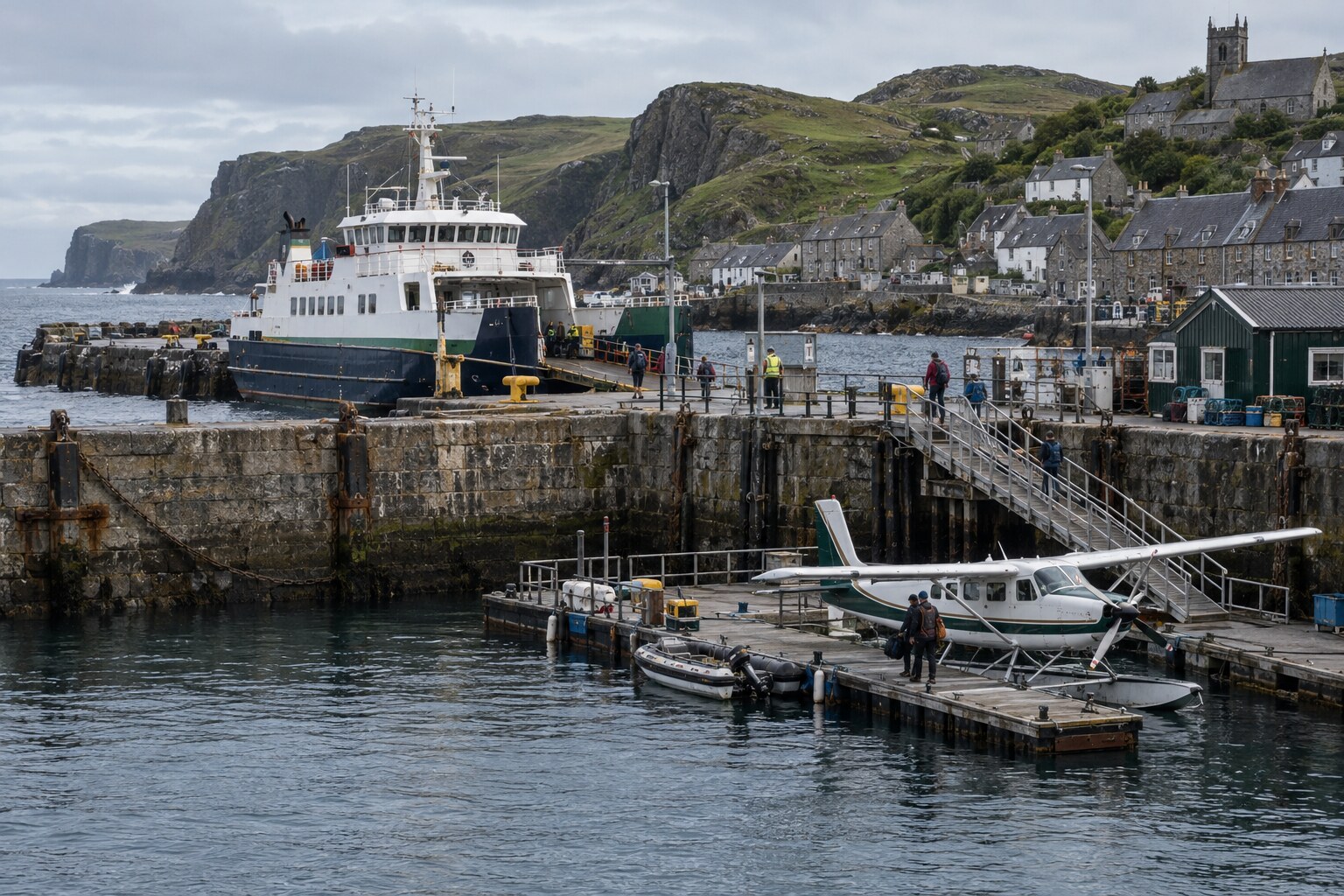
Caeravell's two-level maritime platform with a passenger ferry at the upper berth and a seaplane and small boats at the lower dock
The Maritime Gate Caeravell's two-level landing platform

The raised stone-and-timber berth serves ferries, supply ships, and larger visiting vessels. A lower floating stage rises with the tide and gives seaplanes, water taxis, and small boats a safer place to load and unload.

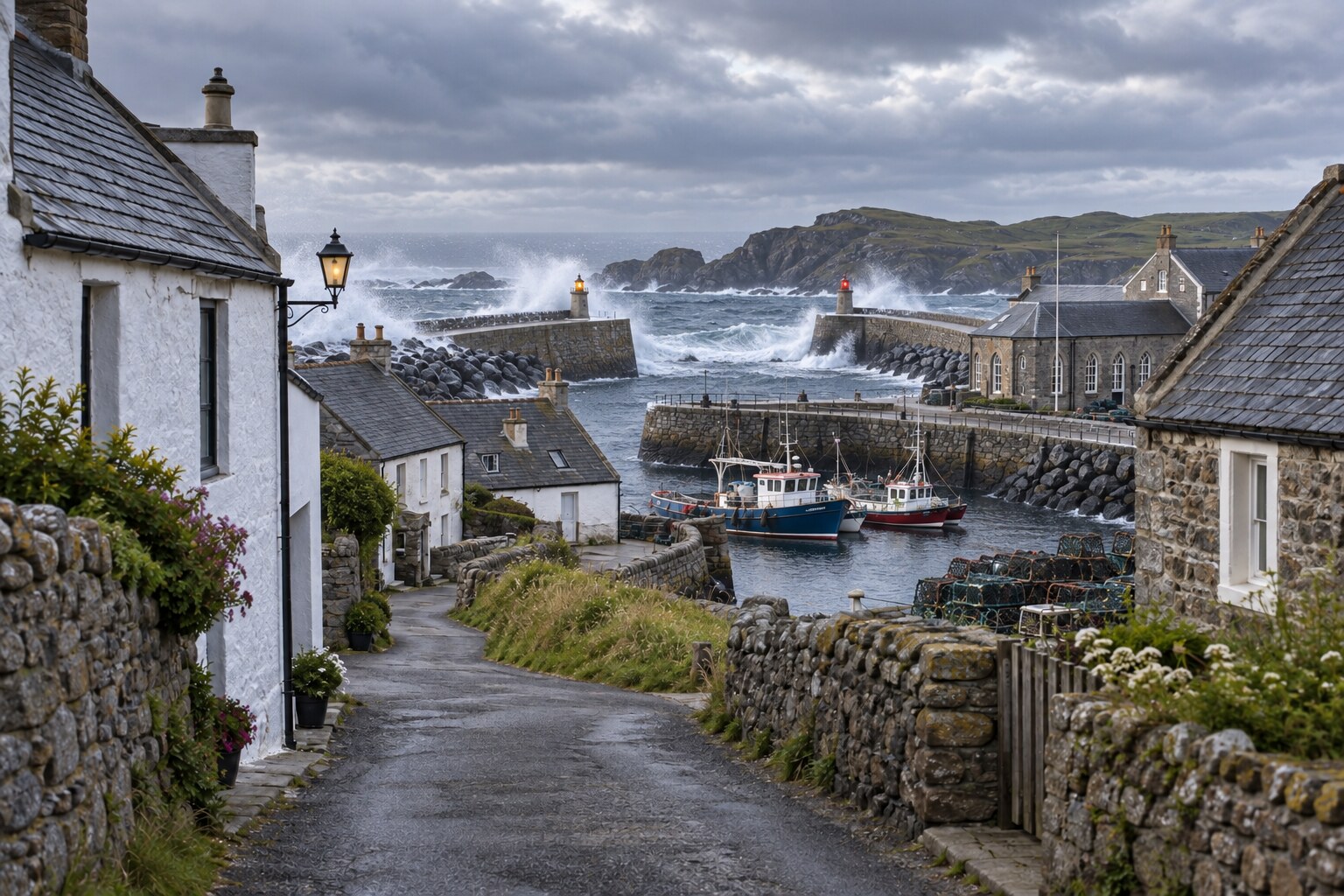
Winter waves breaking against Caeravell Harbour's twin stone breakwaters while fishing boats rest in calmer water inside
Harbour & Coastal Protection Breaking the force of the North Atlantic

Two curved stone-and-concrete breakwaters reach from opposite sides of Caeravell Harbour, leaving a carefully marked opening for ferries and fishing vessels. Their armoured outer faces take the force of winter seas, while navigation lights mark the entrance and the water inside remains substantially calmer.

A low sea wall protects the working waterfront from surge and spray. Sloped rock armour reinforces the capital's most exposed edges by absorbing wave energy rather than simply reflecting it toward neighbouring buildings. The defences are concentrated around Caeravell and its maritime platform; Tiravell's remaining coastline is kept predominantly natural.

The adjoining residential inlet receives lighter protection because its headlands already remove much of the open-ocean force. One shorter rubble-mound arm, a broad small-boat opening, and reinforced house-lined shore reduce storm waves while preserving circulation through the cove.

Caeravell's National Fleet

Four vessels keep
the island connected.

Tiravell's enlarged, ocean-going fleet gives passenger travel, essential freight, fisheries work, and renewable-energy exports dedicated capacity with useful backup. Sailings are coordinated through Caeravell Harbour and remain subject to weather, berth capacity, cargo compatibility, and safe navigation.

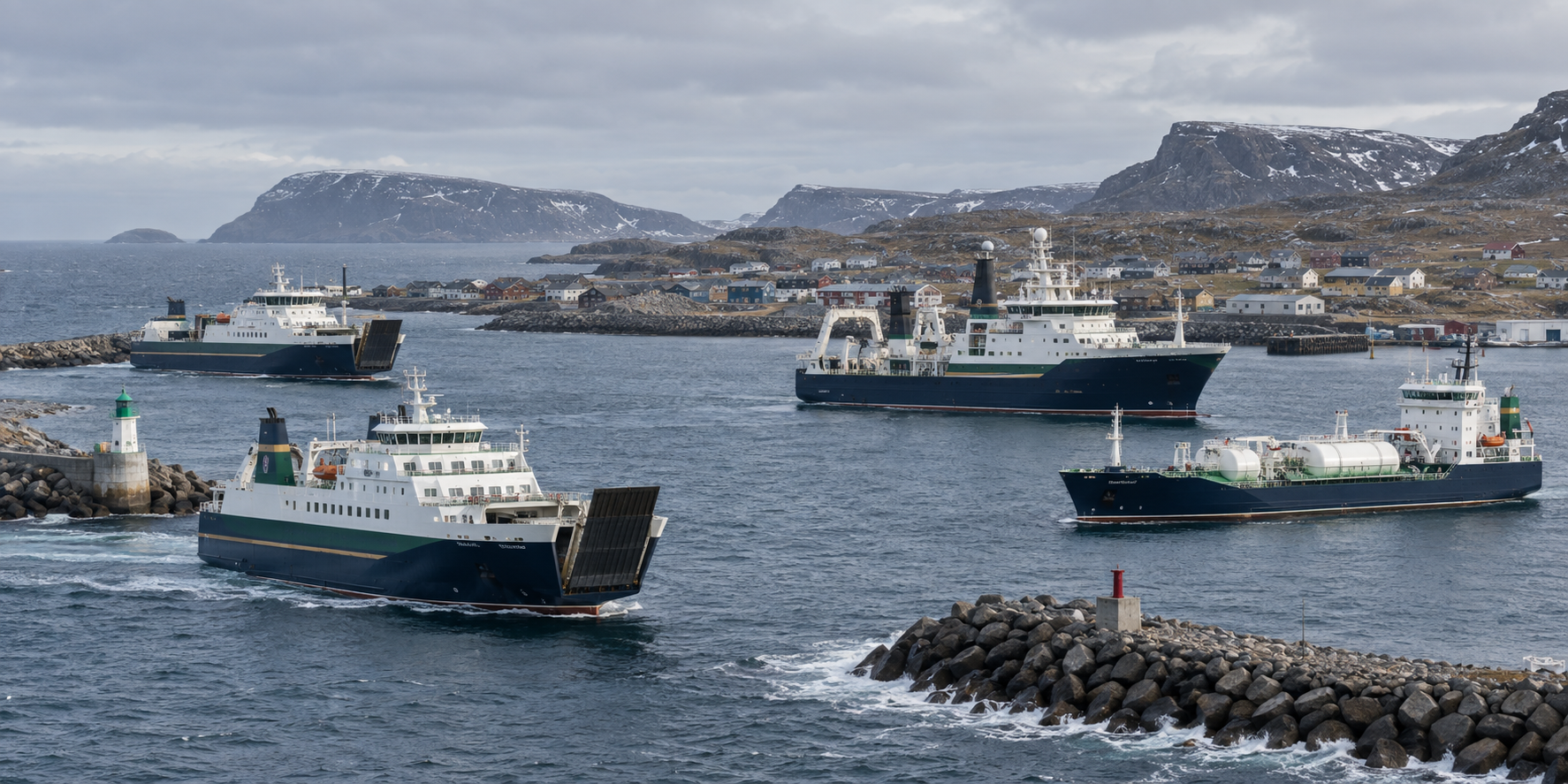
Tiravell's two mixed passenger-and-freight ferries, fisheries and research ship, and green-ammonia export carrier in Caeravell Harbour
The national fleet: two mixed-use ferries, one fisheries and research ship, and the dedicated renewable-energy carrier.
01 · Principal passenger & freight ferry

TSS Aaron

The principal roll-on/roll-off ferry carries residents, visitors, mail, medicines, accompanied vehicles, refrigerated food, and priority supplies. Enclosed lounges, accessible cabins, and a strengthened freight deck make multi-day weather delays more manageable and allow the vessel to support evacuation or relief work.

02 · Reserve passenger & freight ferry

TSS Quinn

A second ocean-going roll-on/roll-off vessel brings building materials, machinery, food, and winter reserves while carrying passengers in certified cabins and lounges. It provides schedule resilience when the Aaron is in maintenance and can lead heavy-cargo, storm-relief, or community evacuation sailings.

03 · Fisheries, research & mixed service

TSS Shannon

The national fisheries and environmental ship supports fishing crews, surveys coastal waters, and undertakes exploratory voyages. A flexible working deck, refrigerated hold, passenger berths, and pallet capacity allow it to carry people and compatible goods when research or fishing duties leave room.

04 · Renewable-energy & compatible freight

TSS Tiravell

A purpose-built small products carrier exports green ammonia from the northwest renewable-fuels berth and returns with approved industrial supplies. Its ammonia tanks, dry deck cargo, ventilation, monitoring, and emergency systems remain physically segregated. For safety, it carries only its professional crew and authorised technicians while loaded with ammonia—not ordinary passengers.

Tiravell Island Trolley

The whole country,
one little loop.

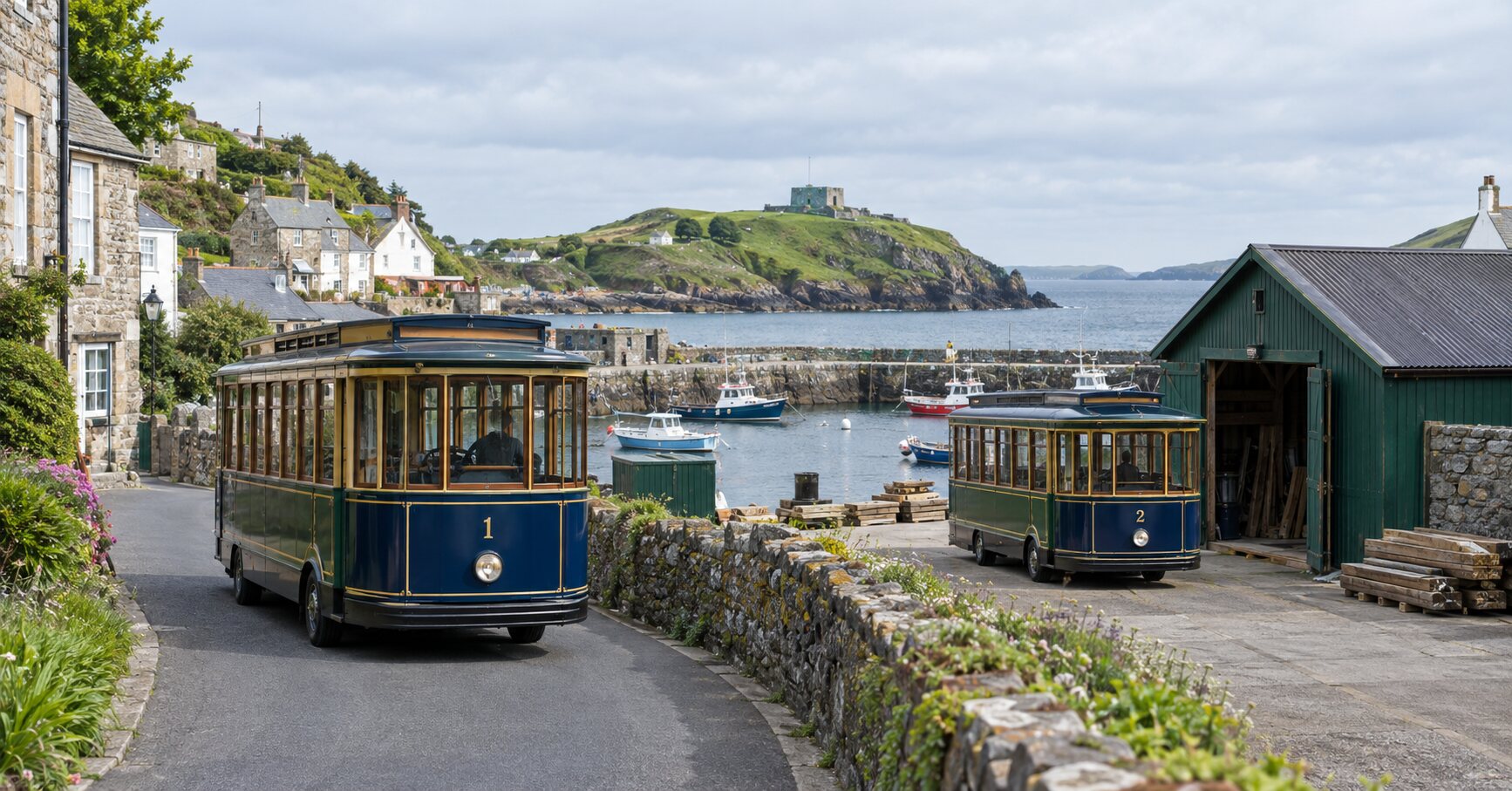
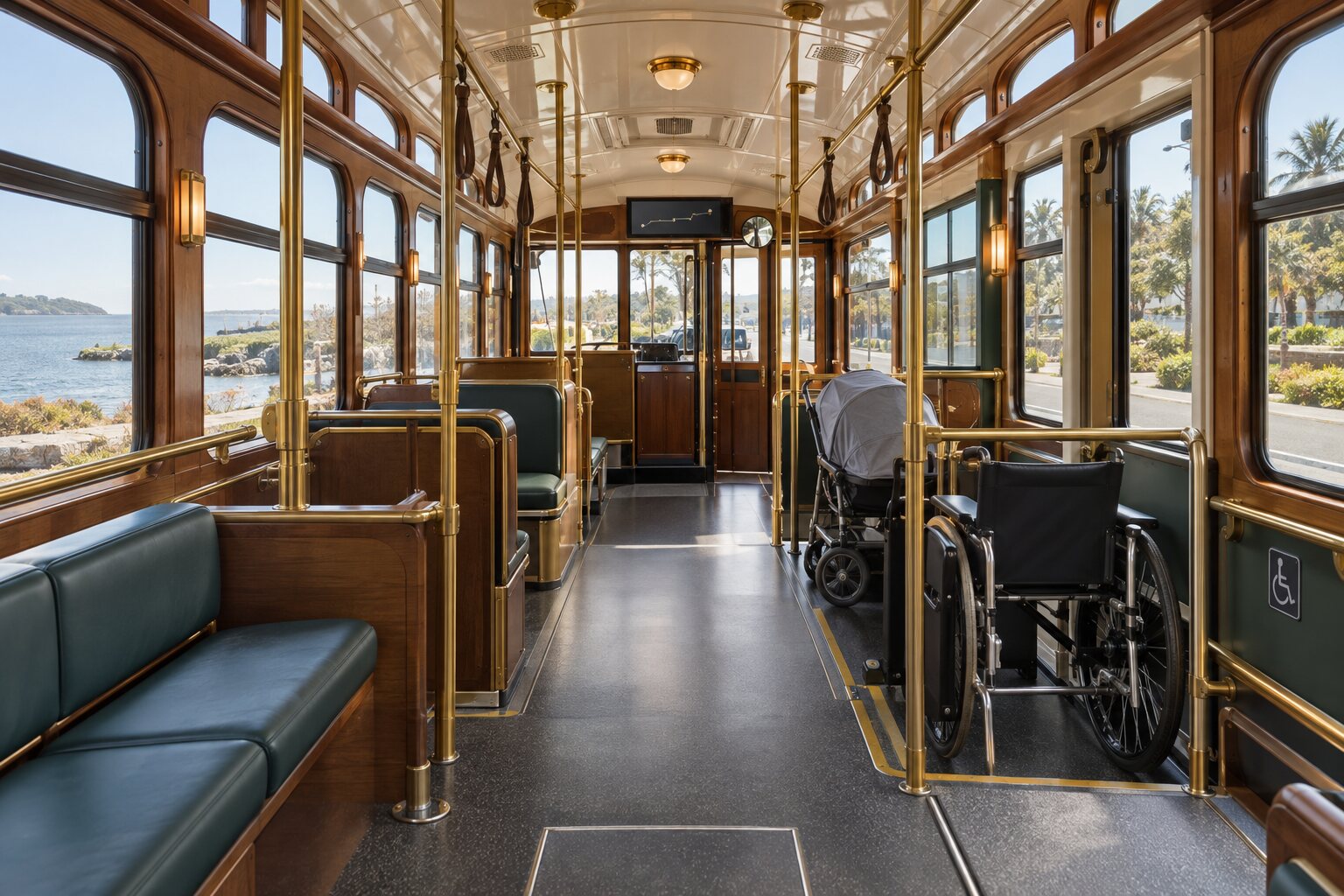
Known locally simply as the Trolley, Tiravell’s national transit service links Caeravell, New Galway, outlying homes, essential services, and the headlands. Its old-fashioned streetcar exterior conceals a modern battery-electric drivetrain: rubber tyres run quietly on a narrow dedicated lane, avoiding the cost and disruption of rails and overhead wires.

All yearmulti-vehicle service

Vehicles can operate together, cover school journeys, or rotate through maintenance.

36passengers each

Low-floor access with space for a wheelchair or pram.

70–85minute island circuit

A complete loop of the broader 8⅓-kilometre island; shorter settlement journeys remain much quicker.

30–60minute frequency

More frequent in the main season; hourly in winter.

The Island Loop

Eleven useful stops.

  1. Caeravell Harbour & Guest House
  2. Town CentreGeneral Store, Luke’s & the green
  3. Civic QuarterGovernment House, clinic & school
  4. Playhouse & Picture House
  5. Residential Outskirts
  6. Caeravell CemeteryRequest stop
  7. New Galway & West FarmsCooperative, post counter & response shelter
  8. Greenland ViewRequest stop · exceptional clear days
  9. Radio Hill
  10. East HeadlandRequest stop · open-ocean view
  11. Keeper’s LightRequest stop · scenic terminus

Gold-ringed stops are request stops. The driver continues unless a passenger asks to alight or someone is waiting.

Public Timetable

Simple enough to remember.

Times may pause briefly for severe weather, funerals, emergency access, or livestock moving along a shared stretch of lane.

Season & dayFirst loopLast loopService
Spring–autumn · Mon–Sat07:0021:00Every 30 min
Spring–autumn · Sunday08:0020:00Every 60 min
Winter · Daily08:0018:00Every 60 min
Winter · School days07:30 extra15:30 extraSchool journeys
Festivals & performancesPublished for each eventAdditional service · opposite directions
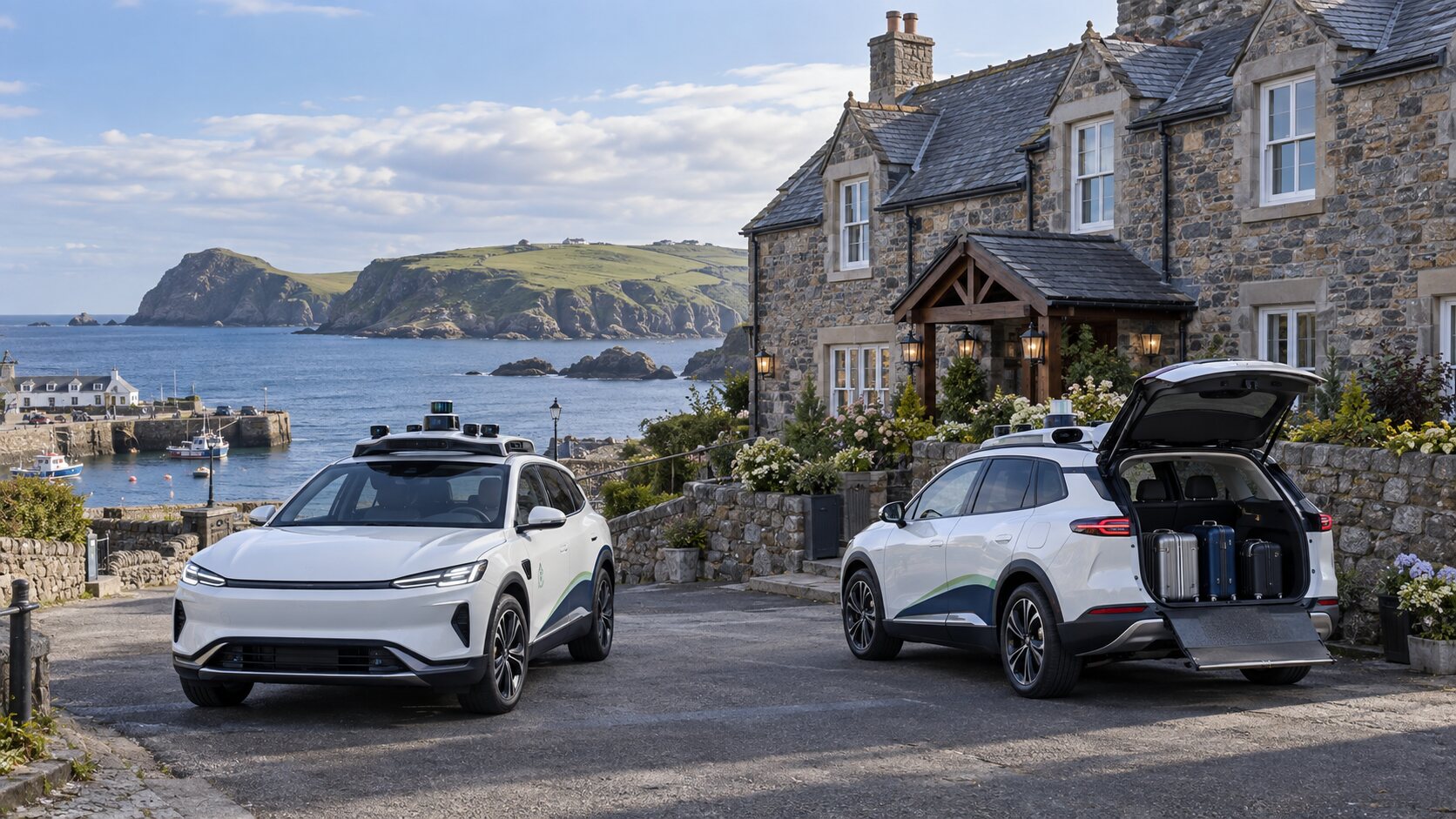
Autonomous electric taxis with roof sensors beside Caeravell Guest House and harbour

Bookable Mobility Service

For the journeys the loop cannot make.

Tiravell operates a small fleet of autonomous electric taxis. They can be booked by residents and registered guests for clinic visits, accessible door-to-door travel, luggage transfers, late arrivals, and trips outside the regular trolley timetable.

The fleet provides working and charging reserve, serves both settlements, and can be increased if demand, accessibility needs, or visitor numbers require it. Low speeds and geofenced island roads suit Tiravell’s scale, while remote supervision and manual fallback procedures remain part of the service.

The taxis supplement walking, cycling, and the public loop; they are not intended as everyday private cars.

Money & Exchange

The Tiravellan vell.

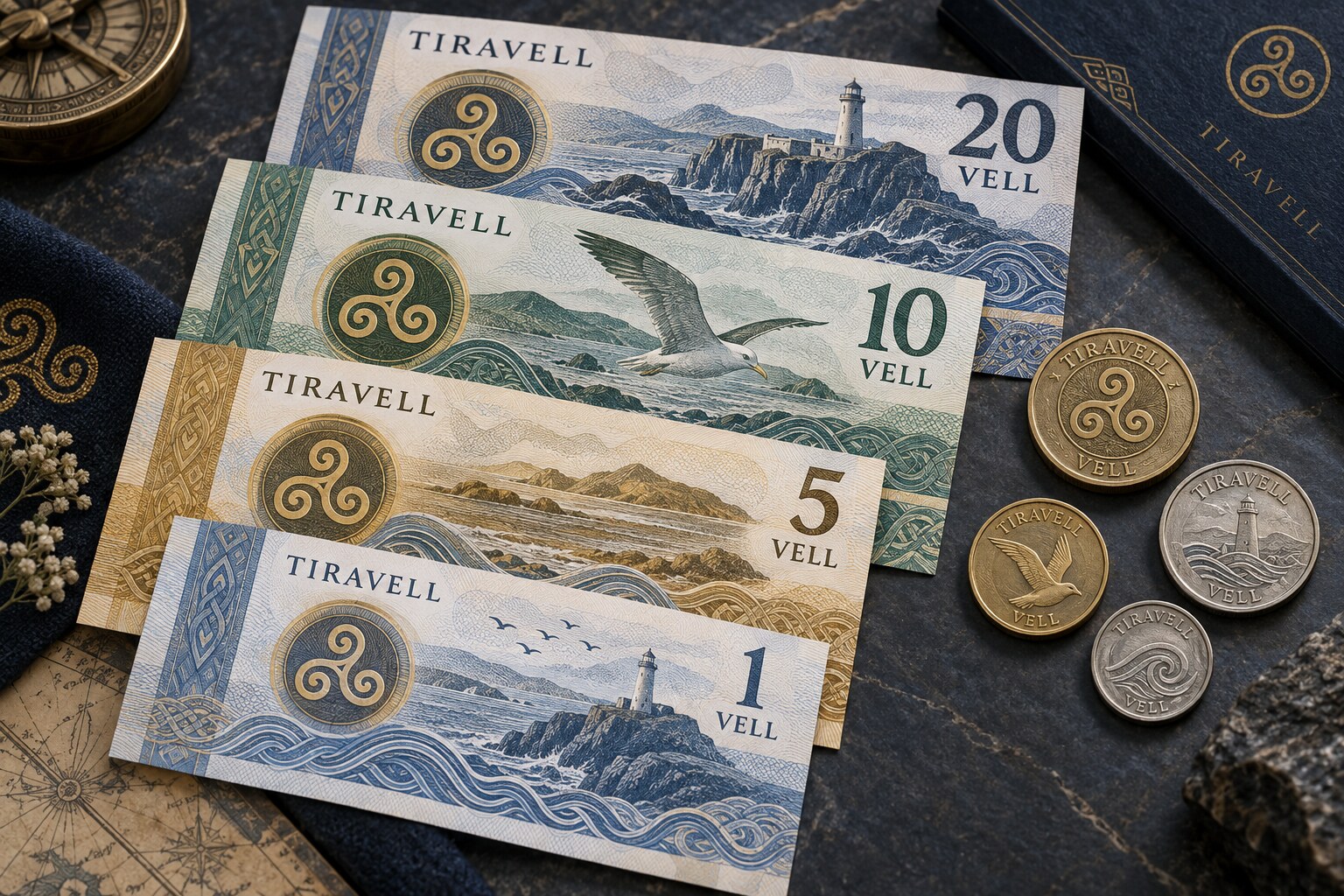
The national currency is the vell, issued in 1, 5, 10, and 20 vell notes alongside a small series of coins. One vell is divided into one hundred tides.

The Royal Treasury and Island Reserve oversees issuance and maintains a conservative reserve of foreign currency and essential commodities. Everyday prices are set in vells, while electronic payments and cash are both accepted throughout the realm.

Currency
Tiravellan vell
Subdivision
100 tides
Issuing authority
Royal Treasury and Island Reserve
Tiravellan vell banknotes and coins decorated with coastal scenes and the national triskele
Vell notes and circulating coinage

Travel Document of the Realm

The Tiravellan passport.

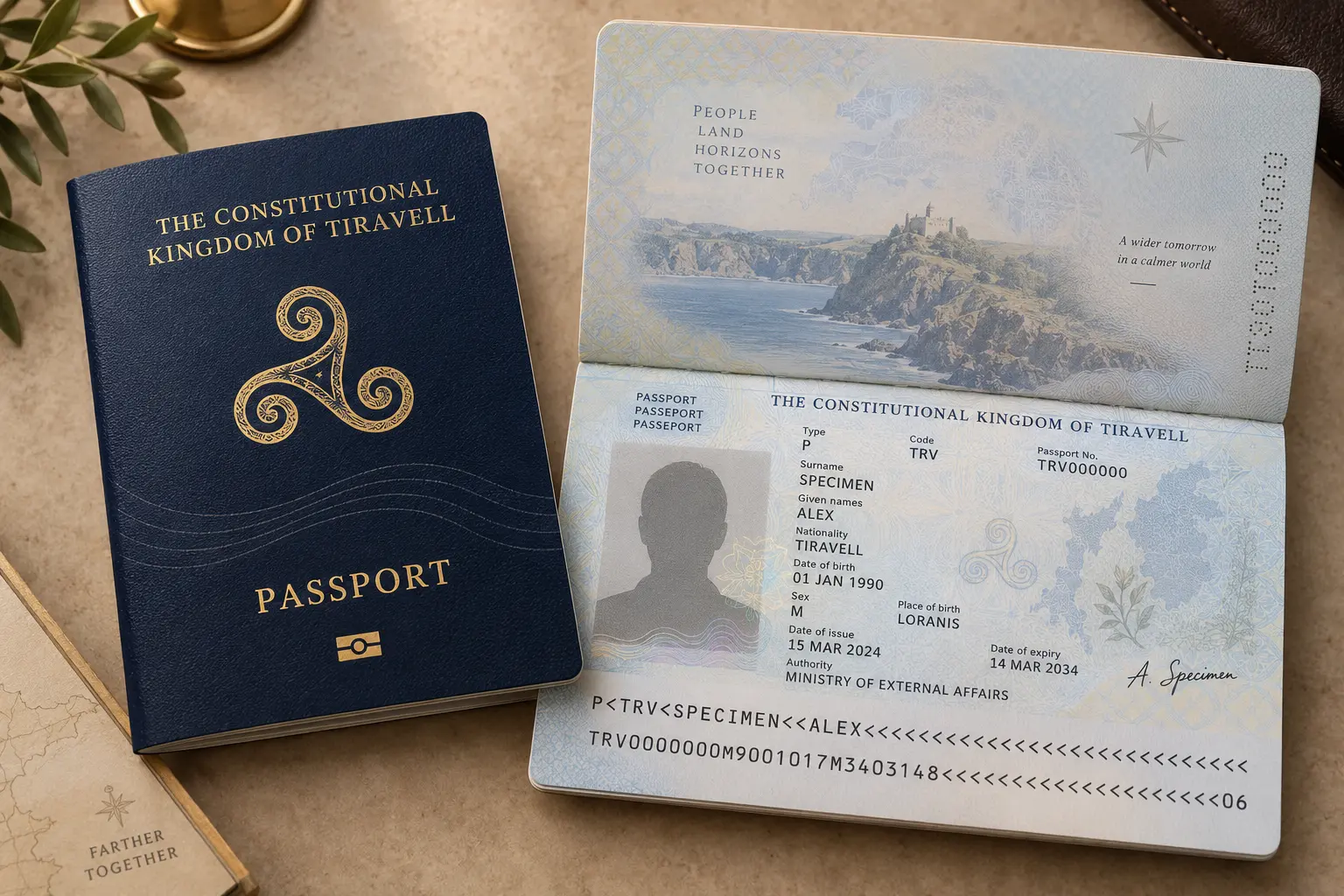
Issued in deep navy with the golden triskele and a subtle pattern of Atlantic waves, the passport reflects the same colours carried by the flag. Its interior records citizenship in both the constitutional kingdom and the island community that sustains it.

Because Tiravell is so small, applications and renewals are handled personally through Government House rather than a separate passport agency.

Closed navy Tiravellan passport with gold triskele beside an open specimen identity page
Passport of the Constitutional Kingdom of Tiravell · specimen

Culture & Heritage

Stories carried
across the water.

Tiravellan culture draws on Celtic-inspired music, knotwork, storytelling, coastal craft, and a deep respect for the sea. Community gatherings keep old tales beside new ideas.

Between sea and sky,
we keep the light. — Traditional Tiravellan saying

National Symbols & Traditions

Small emblems.
Deep belonging.

Tiravell's national symbols come from the cliffs, coves, working harbour, and Celtic inheritance of its people.

Bird

Atlantic puffin

Small, steadfast, and perfectly at home on the North Atlantic cliffs.

Flower

Sea thrift

The pink coastal flower that finds a way to bloom in salt wind and thin soil.

Tree

Rowan

A traditional Celtic symbol of protection, planted beside homes and public buildings.

Animal

Grey seal

A familiar presence in the cove and a symbol of the island's bond with the sea.

Fish

Atlantic cod

The fish that sustained the first settlers and remains central to the harbour economy.

Dish

Cove Stew

Smoked whitefish, potatoes, leeks, carrots, and herbs, served with warm oat bread.

Anthem

Between Sea and Sky

A quiet anthem of endurance, neighbourly duty, and keeping the light for one another.

Motto

Small in Scale, Whole in Spirit

A reminder that the worth of a country is not measured by the space it occupies.

Colours

Navy, white, green & gold

Sea, peace, land, and the unbroken continuity represented by the golden triskele.

National sport

Competitive rock skipping

Known locally as the Cove Cast. Skips are counted first and distance breaks a tie. The annual final is conducted with cheerfully unreasonable seriousness.

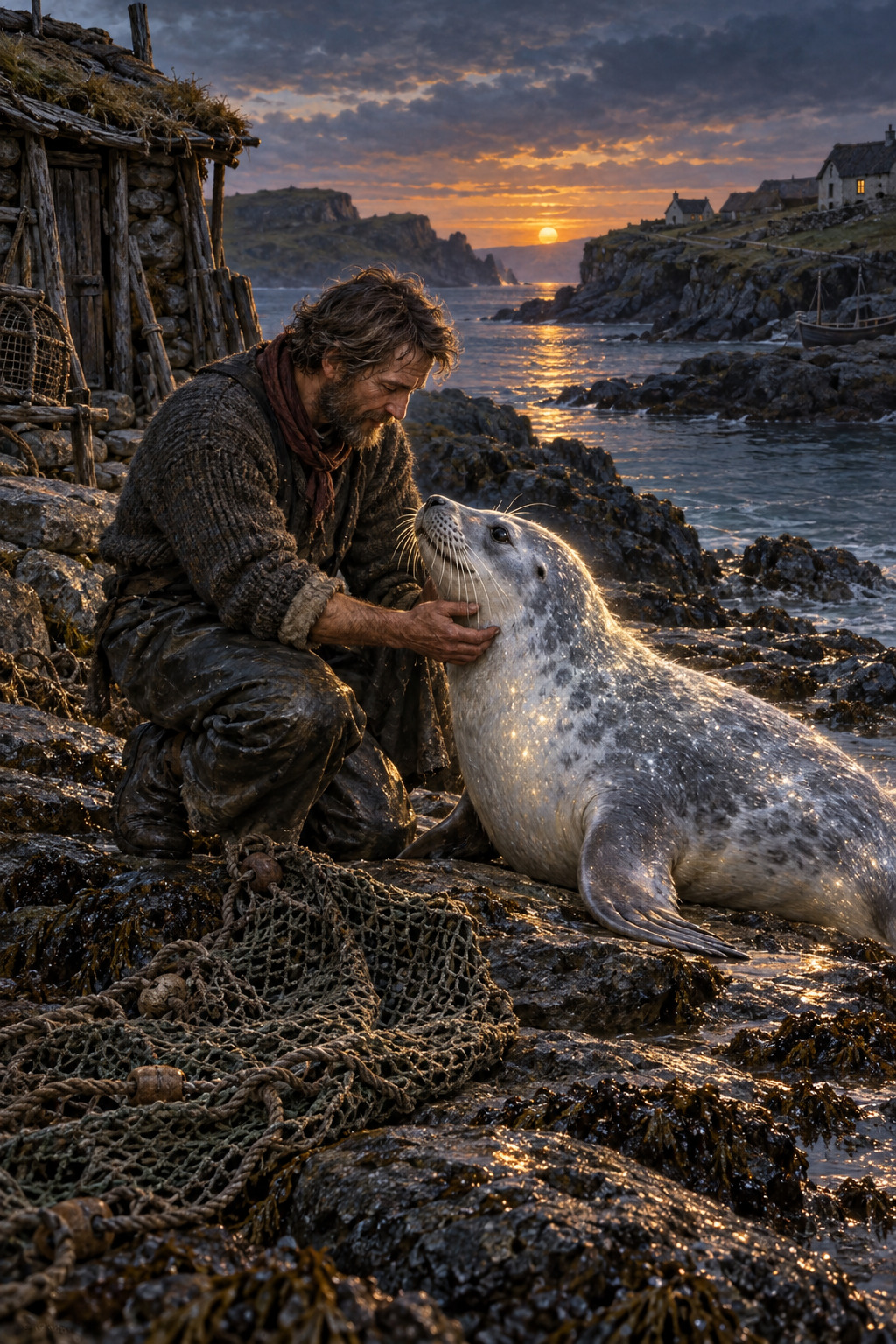
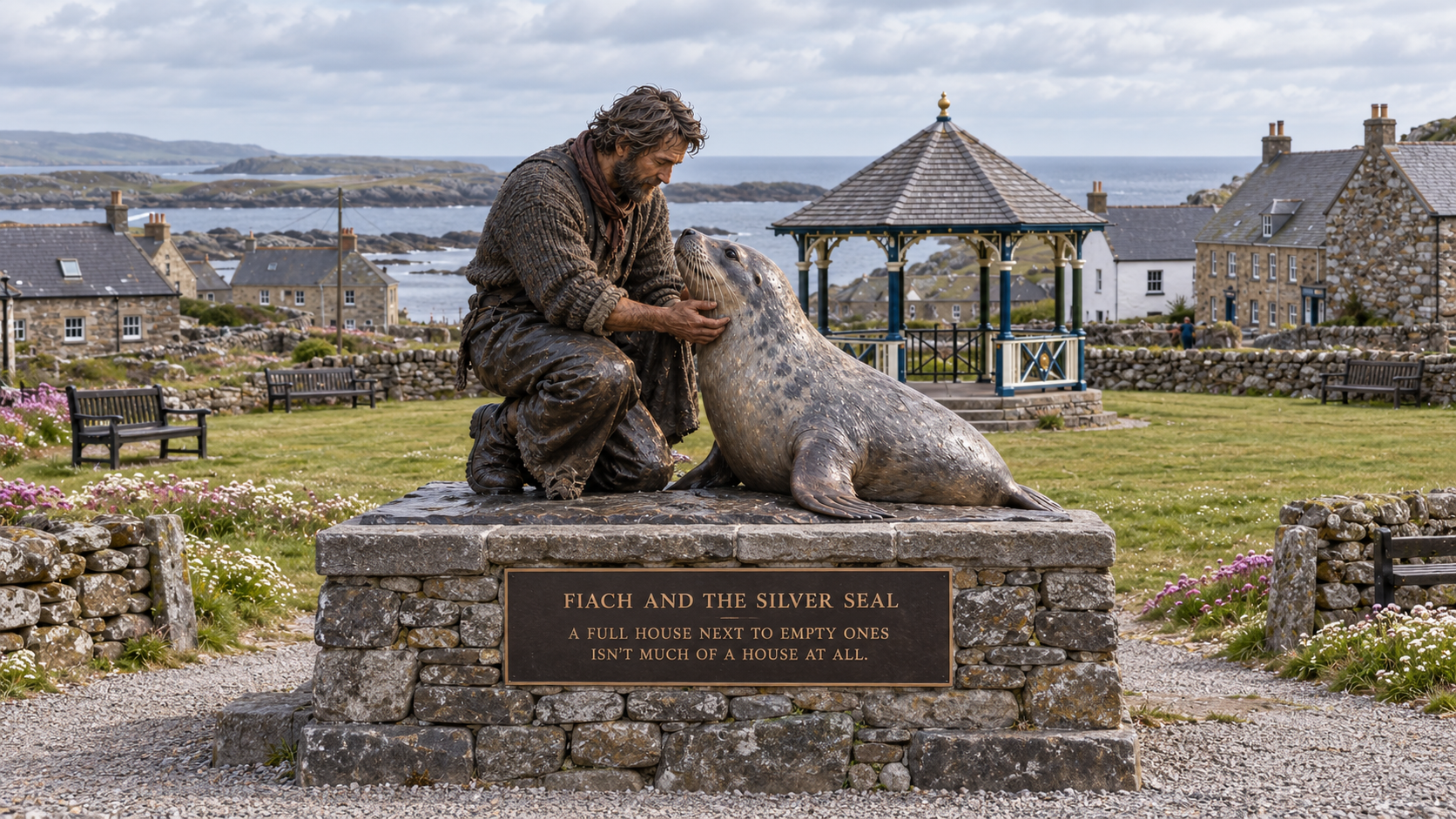
Fiach the fisherman freeing a luminous silver seal from his net in a North Atlantic cove

Tiravellan Folklore

The Fisherman Who
Asked for Enough.

Before Tiravell had a name, a fisherman called Fiach freed a great silver seal and was offered any wish. Instead of asking for a castle or gold, he asked that no one on the shore go hungry through the winter.

The old tale says the seal answered not with treasure but with a lesson: gather the neighbours, bring what each household can spare, and share it. The story is now told beside Tiravellan hearths as an early expression of the promise later written into the Covenant of the Cove.

“A full house next to empty ones isn't much of a house at all.”
Read the complete illustrated tale

The National Anthem

Between Sea
and Sky.

Written in a stately six-eight time, the anthem is sung at Constitution Day, the opening of the Assembly, and the close of Landing Day.

Verse I

From the cove where our forebears came,
Through the storm and silver rain,
Hands together, hearth and harbour,
Guard the shore and keep the flame.

Chorus

Between sea and sky, we keep the light,
Crown and people, equal in right.
Small our island, strong our care,
Tiravell, our home, forever fair.

Verse II

Rowan bends above the headland,
Puffins wheel on northern air,
Every voice within the Assembly
Builds the common future there.

Final Chorus

Between sea and sky, we keep the light,
Crown and people, equal in right.
Small our island, strong our care,
Tiravell, our home, forever fair.

National Broadcasting Service

Radio Tiravell.

Listen here for music, island stories, public notices, Assembly coverage, and programmes from Caeravell. The player carries the live broadcast whenever the station is on air.

Radio Tiravell is the island nation's only radio station. Tiravell does not operate a national television station; residents instead receive television broadcasts from various English-speaking nations.

Tiravell cherishes its Christmas celebrations, so Christmas music can be heard throughout the year on the nation's only national radio station. Older Irish music is also heard throughout the day, alongside island stories, public notices, and occasional radio programmes. Its broadcast is a cultural tradition and does not establish or imply any official religious affiliation; Radio Tiravell serves listeners of every faith and of no faith.

Radio Tiravell · LivePress play to listen

Not hearing a programme? The station may be off air between scheduled broadcasts.

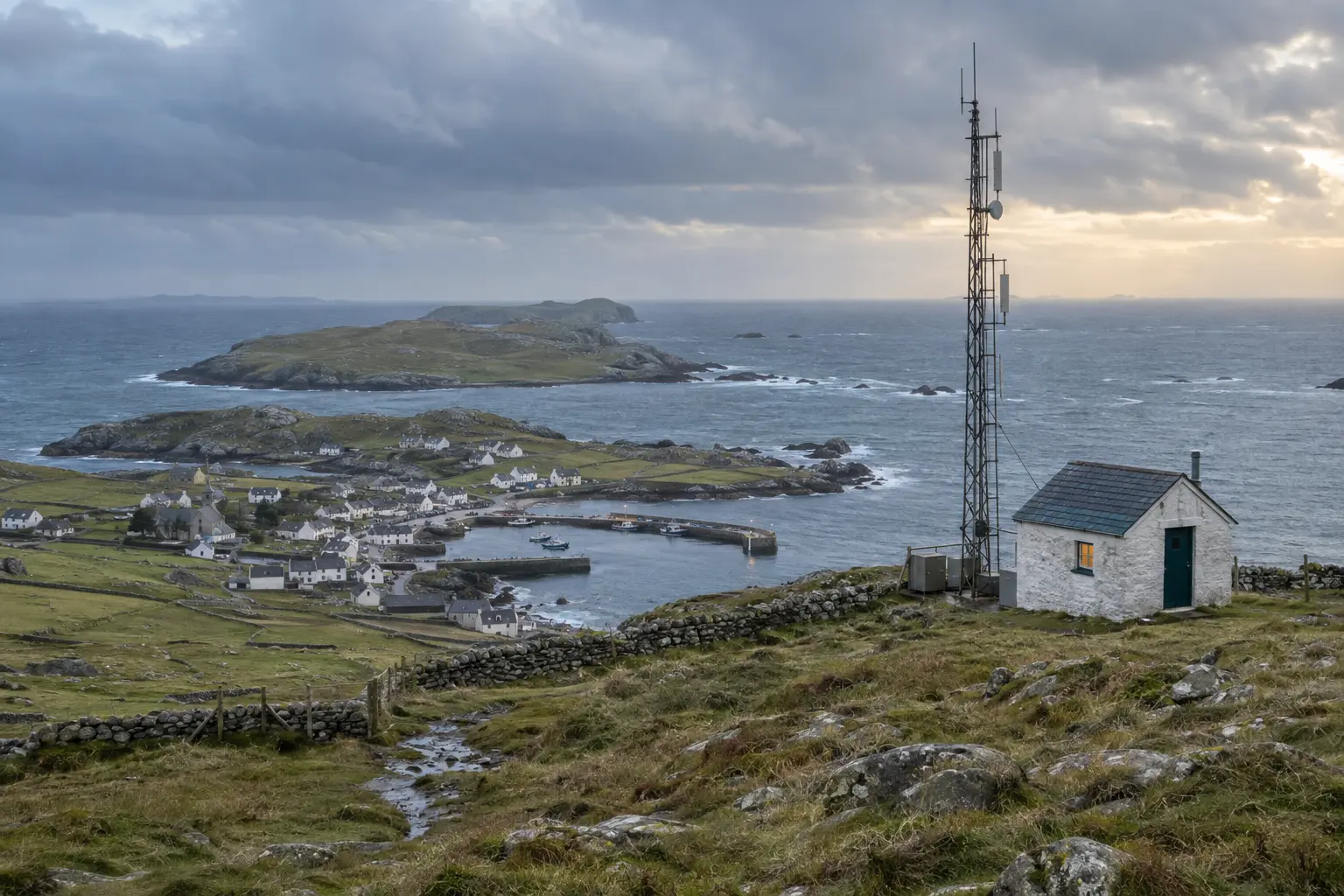
Radio Tiravell's modest transmitter tower and hut on a hill above Caeravell
Radio HillOne tower for the whole realm

The national transmitter stands above Caeravell, carrying music, public notices, island stories, and Assembly coverage across Tiravell's roughly eight-kilometre span.

Caeravell, New Galway & Island Life

Two settlements.
One shared island.

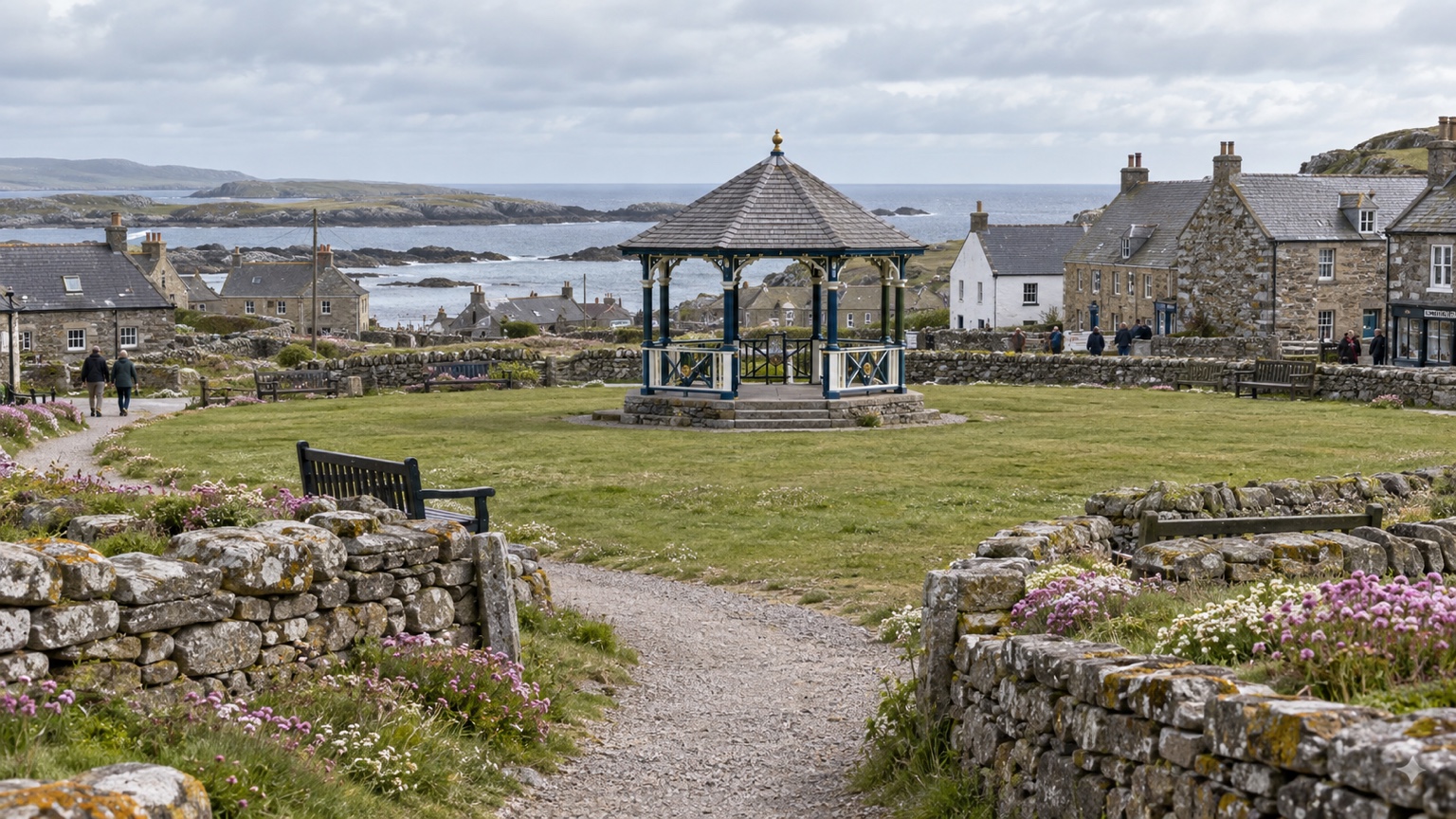
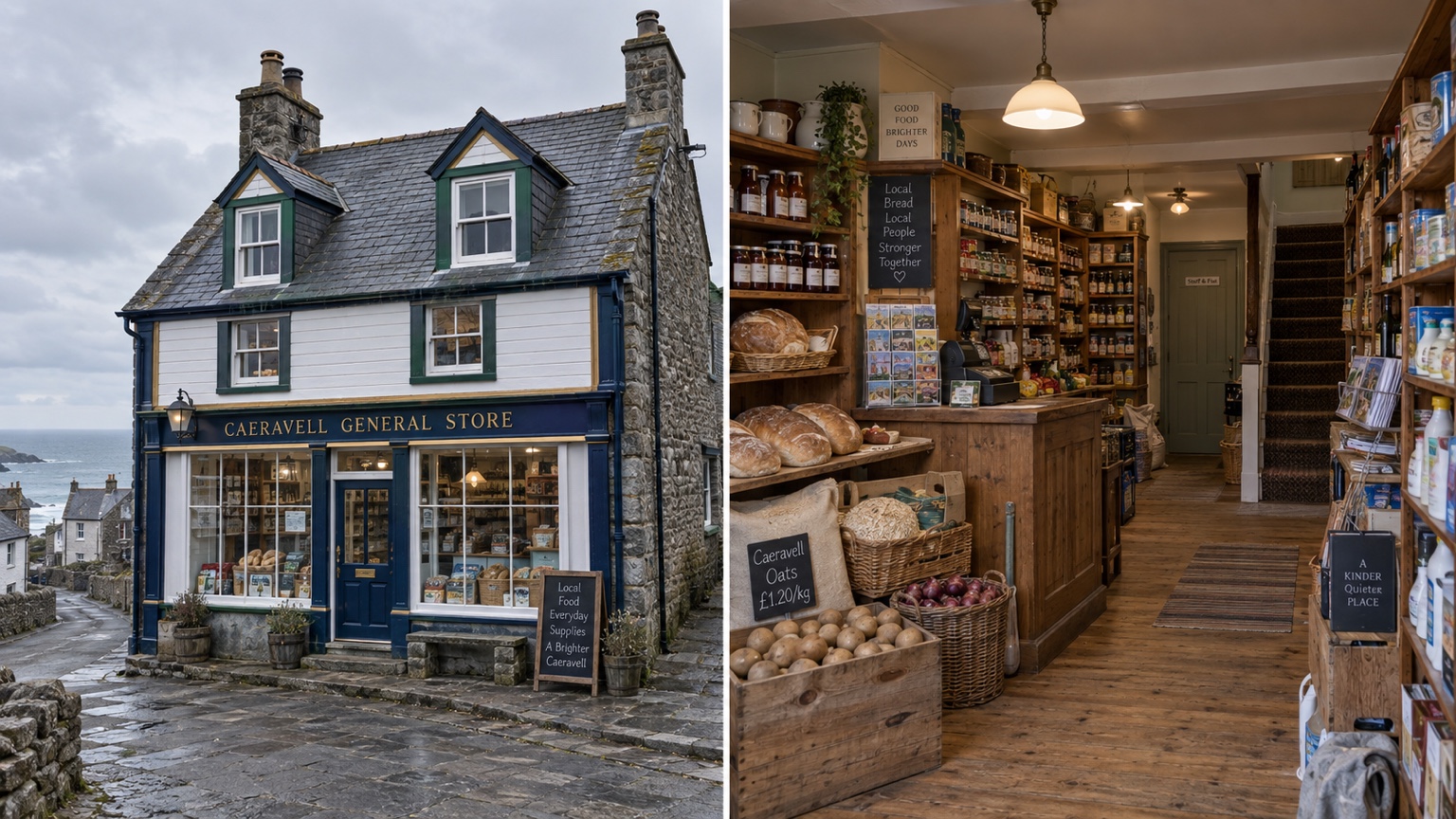
Caeravell remains Tiravell's capital and principal harbour, with Government House, the school, clinic, cooperative store, post office, and Playhouse & Picture House. New Galway is a quieter west-coast community with its own small quay. Both settlements combine stone houses with modest two- and three-storey apartment buildings, allowing more people to live close to services without overwhelming the landscape. Just uphill from Caeravell lies Loch Ireland, the freshwater lake that has supplied the capital since its founding.

School

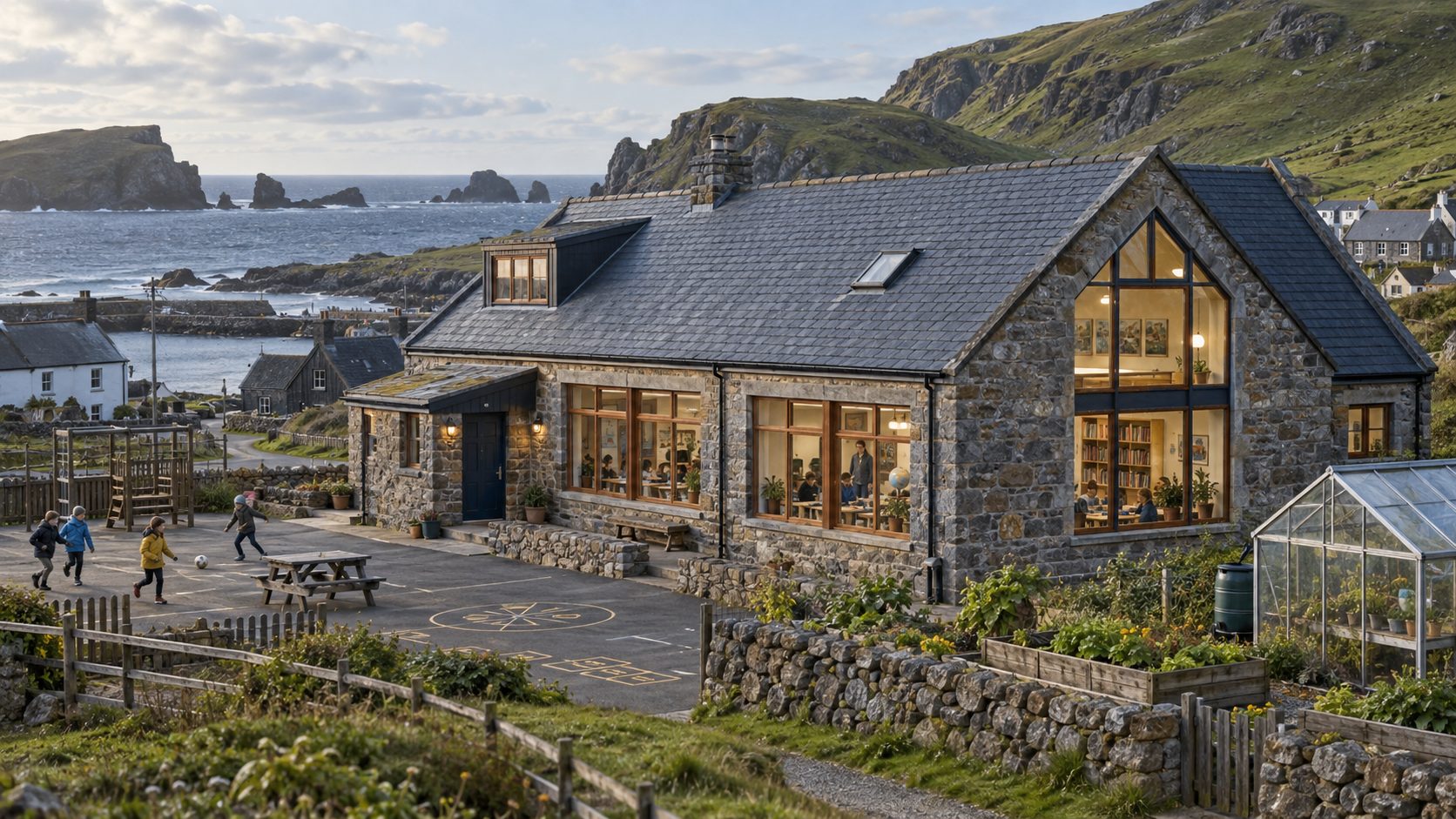
The community school serves roughly 75–95 children across five or six mixed-age classrooms, with a library, practical arts room, assembly hall and gym, playground, and teaching garden.

Caeravell homes

The capital mixes traditional houses, homes above shops, and several low-rise apartment buildings around its walkable harbour neighbourhoods.

New Galway

The TV3 settlement has houses and small apartment buildings above a west-coast quay, plus a cooperative grocery and postal counter, public storm shelter, emergency stores, and a compact response bay.

Getting about

Most short journeys are made on foot or bicycle. The expanded electric Trolley and bookable mobility fleets connect both settlements, while harbour boats serve the coves. Fleet capacity is reviewed as needs change.

Weather

Cool summers, salt wind, fast-changing skies, long summer light, and dark winters shape the rhythm of work and gathering.

Fresh water

Rain and hillside springs feed Loch Ireland. The narrow Solais Stream carries its overflow through the village valley and into Caeravell harbour.

Shared meals

Cove Stew, oat bread, smoked fish, potatoes, and preserved berries appear often at meals shared among families and neighbours.

Aerial view of Tiravell showing Caeravell, New Galway, both settlements' coastal protection, the regional airfield, rescue helicopter and airport helipad, clinic helipad, water works, glasshouses, Éire Energy House, and the offshore wind-and-wave district Christmas Hill Loch Ireland Caeravell Covenant Cove Keeper's Light Northwest Shoals Glasshouse District Éire Energy House Water Works New Galway
The principal settlements, places, and freshwater of Tiravell

At the Heart of Caeravell

The places that keep
island life close.

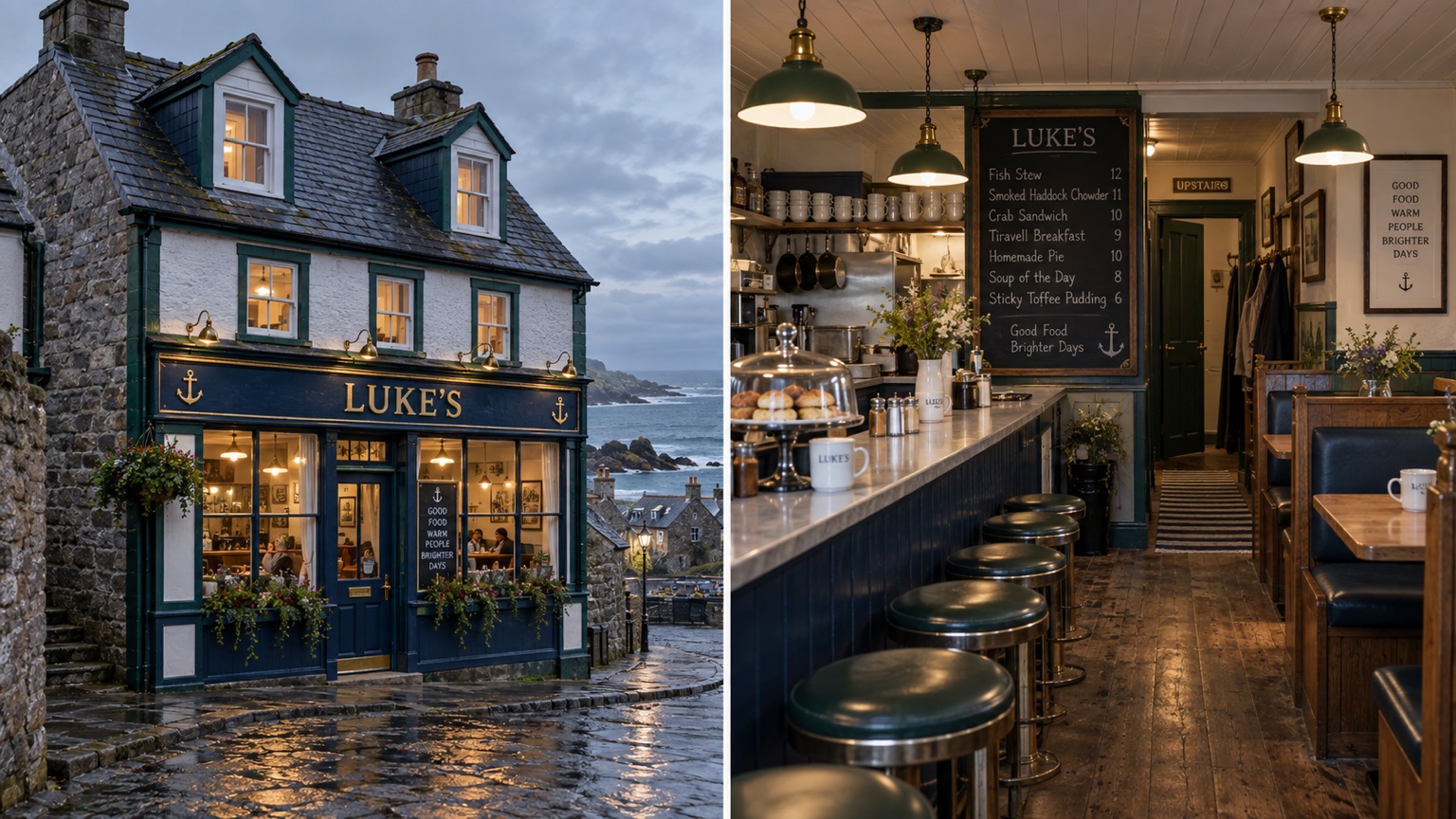
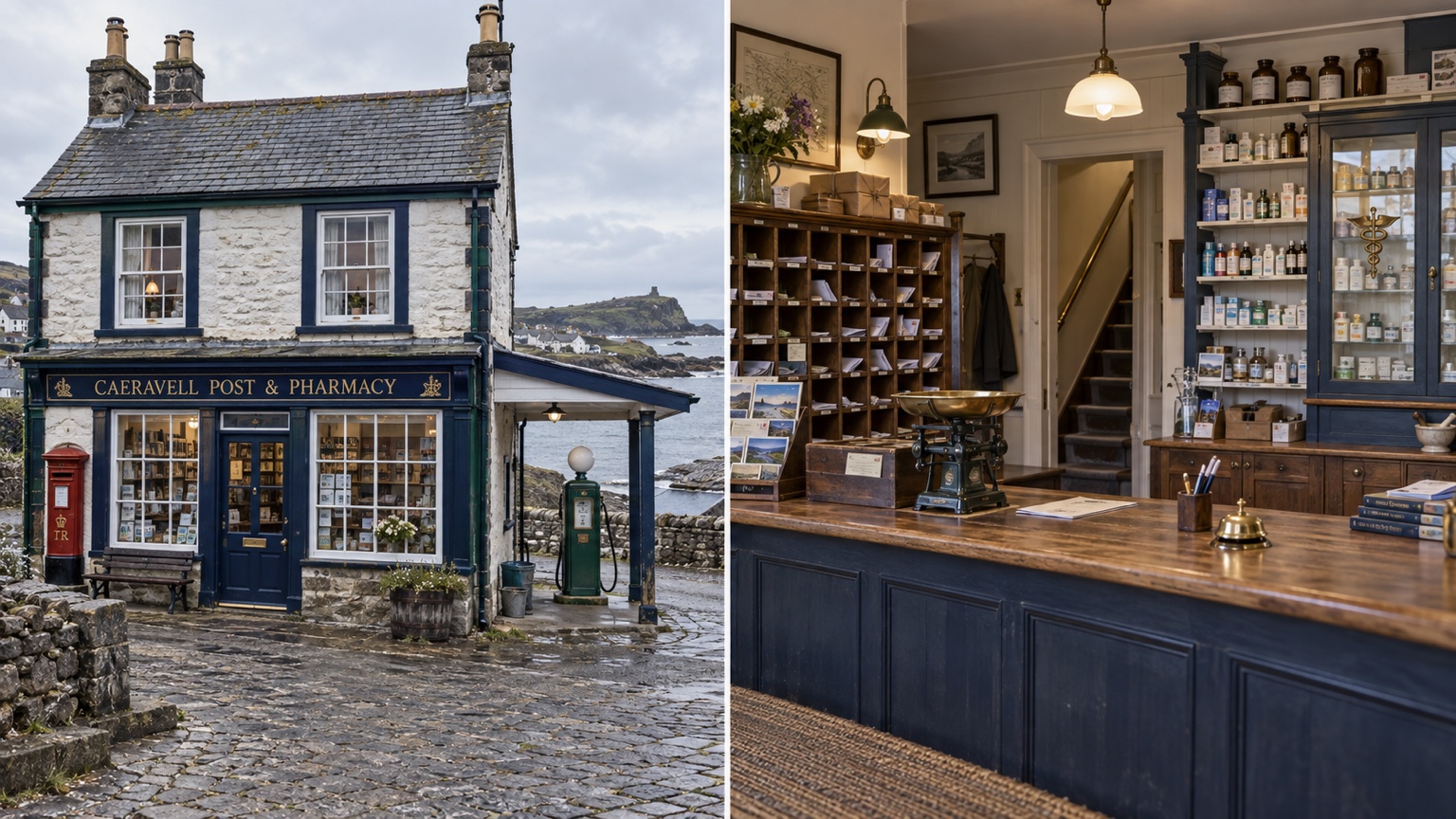
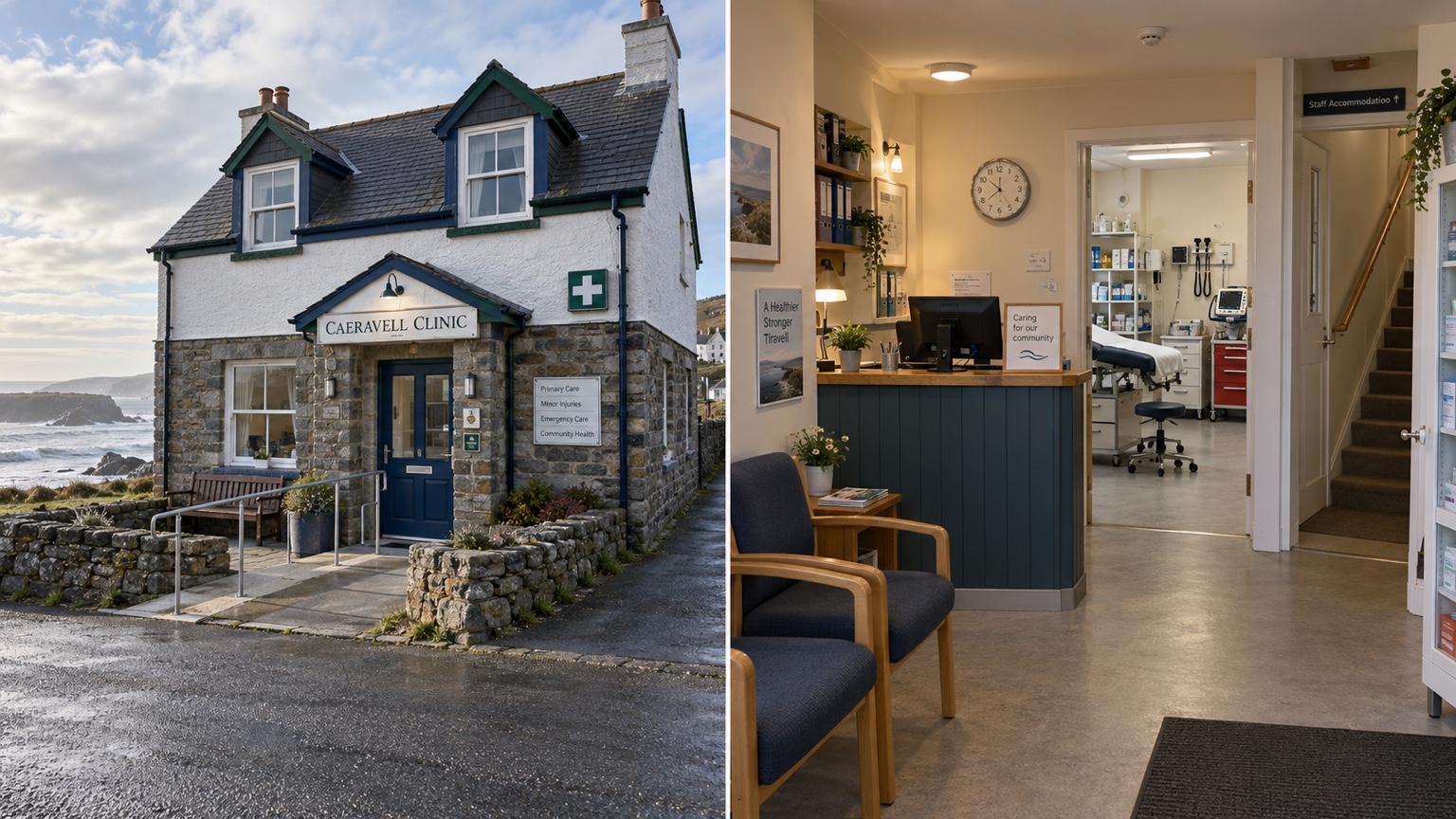
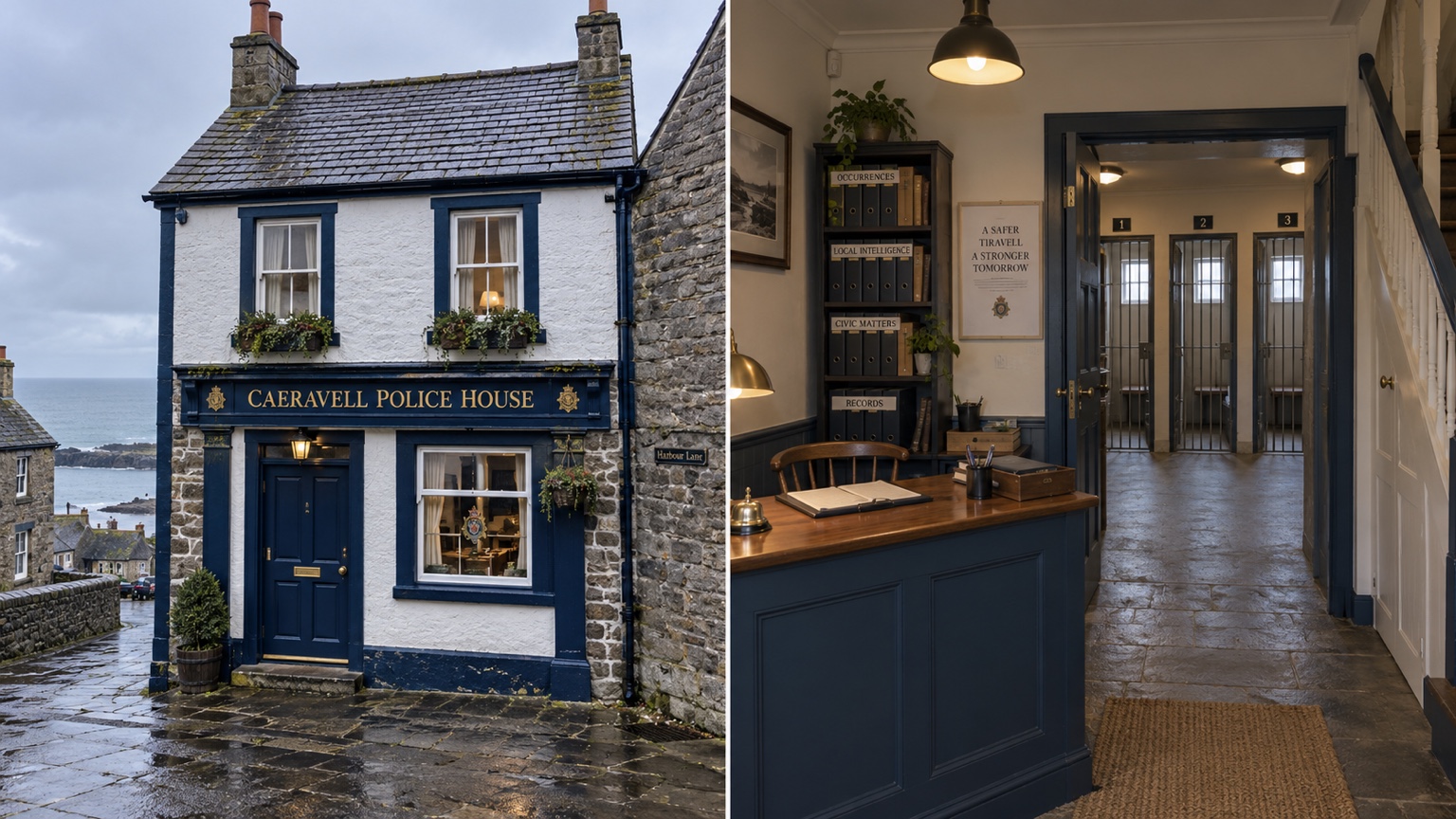
Caeravell's essential services are modest, familiar, and woven into the village itself. Several of its shops and public buildings include a small house or apartment above, keeping work, home, and community within easy reach.

The Tiravell Gazette

News from the island,
week by week.

Notices, reports, and community stories from the Tiravell Gazette.

Open the Gazette in Google Docs Open Current & Past Gazettes
Latest Dispatches

Beyond the Village

Caeravell Cemetery.

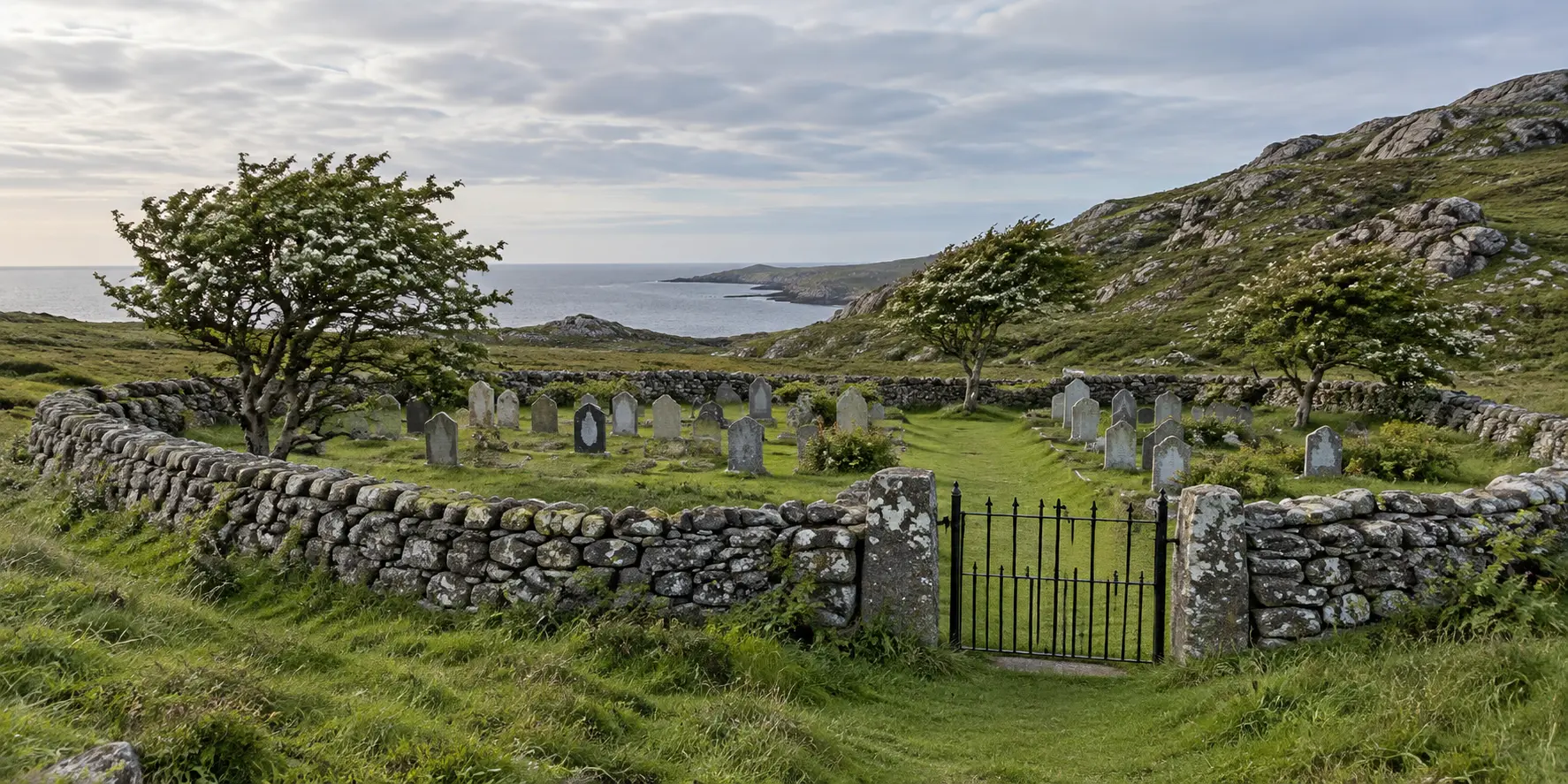
Although named for the capital, Caeravell Cemetery lies well outside the settled village in a quiet, uninhabited part of Tiravell's western headland. A low dry-stone wall and iron gate enclose the island's shared burial ground, reached by a minor path across the open country.

Caeravell Cemetery in an isolated western part of Tiravell, enclosed by a dry-stone wall and iron gate
A place set apartQuietly maintained beyond Caeravell's settled limits

The National Year

Days held in common.

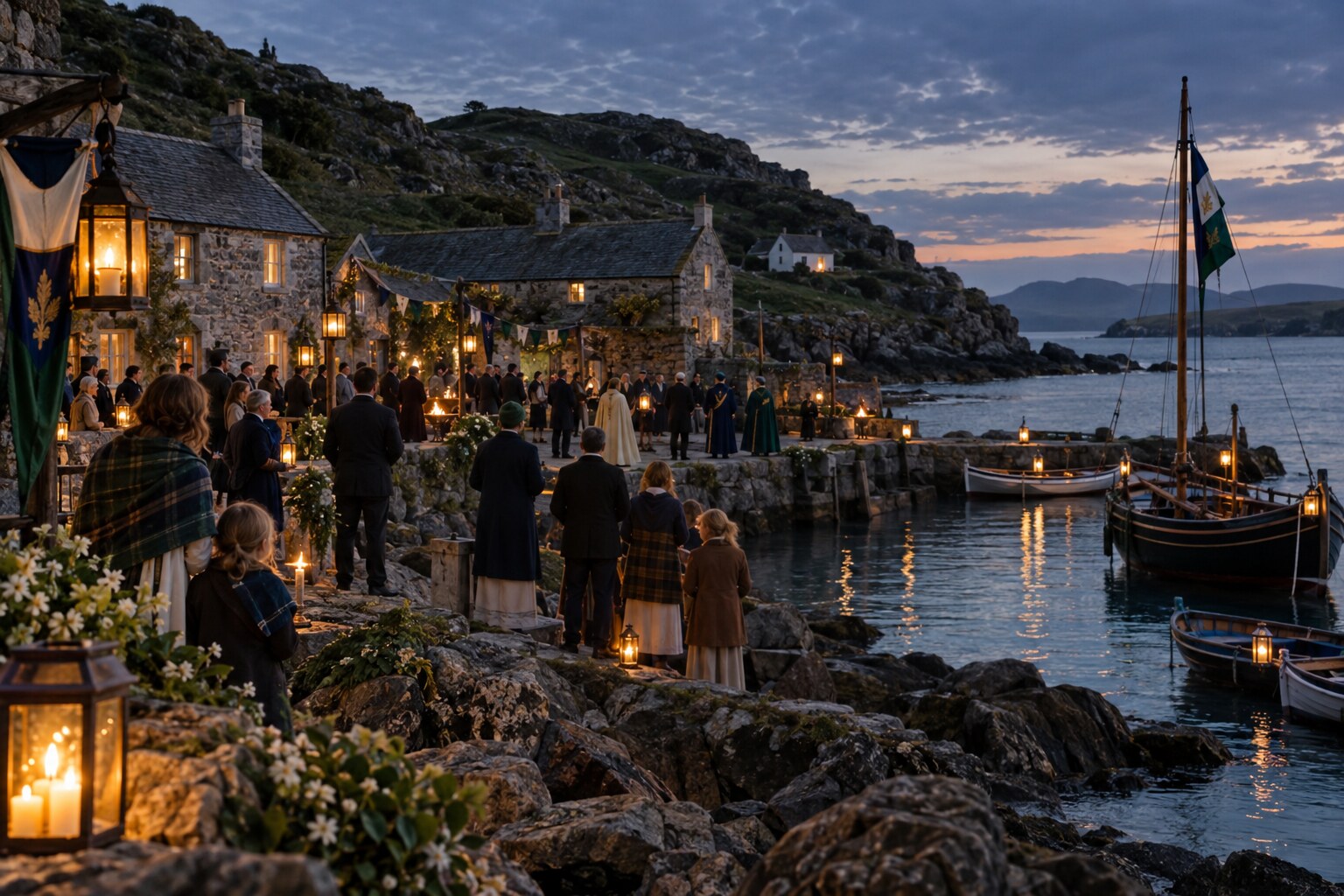
The people of Tiravell marking Landing Day with lanterns at Covenant CoveMay 12 · Principal Holiday

Landing Day

The arrival of the first settlers is remembered at Covenant Cove. The founding families are named, lanterns are launched at dusk, and the final of the Cove Cast is held on the harbour stones.

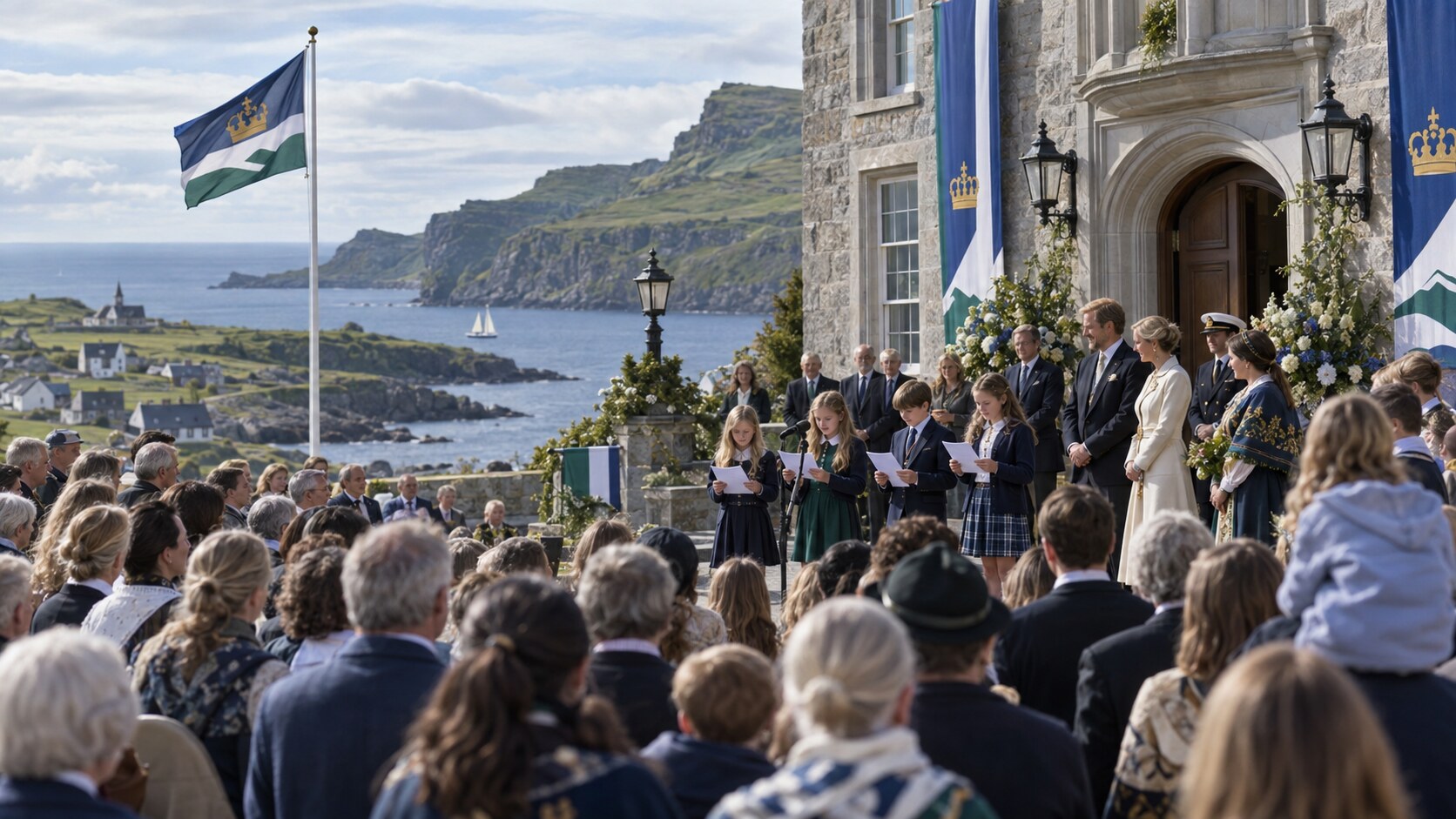
Tiravellans gathered for Constitution Day outside Government HouseAugust 5 · Principal Holiday

Constitution Day

Tiravell commemorates the formal adoption of its Constitution and national name on August 5, 2009. The Assembly meets in public session, schoolchildren read from the Constitution, and the Crown hosts a simple evening reception celebrating government by consent.

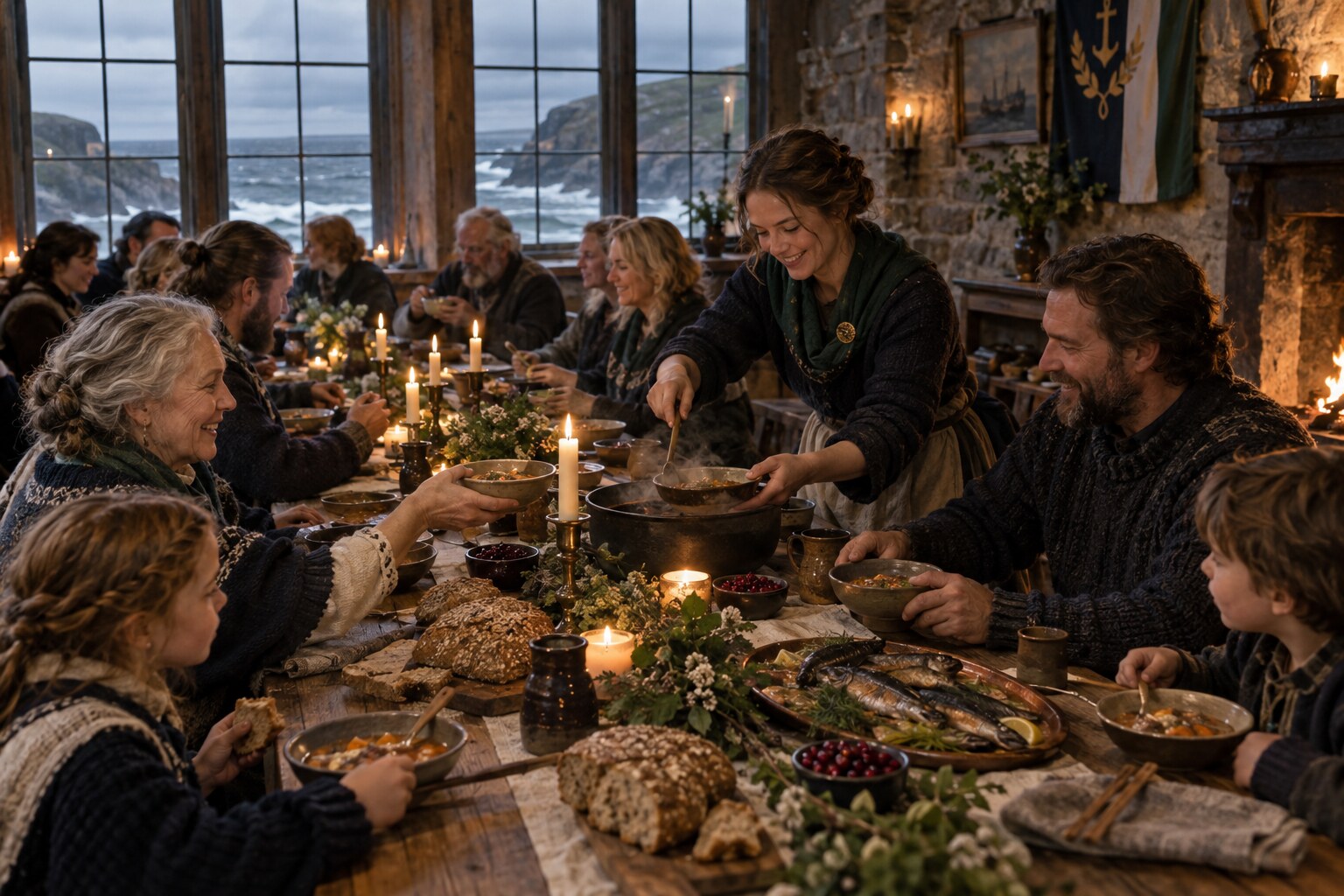
Neighbours sharing one of Tiravell's Day of Shared Thanks gatheringsNovember 7

Day of Shared Thanks

Tiravell's harvest thanksgiving is celebrated communally across Caeravell, New Galway, and the outlying homes. Families invite neighbours, exchange dishes, visit between houses and community rooms, and make sure no one gives thanks alone. Each gathering remembers the sea, the soil, the year's work, and the neighbours who carried one another through it.

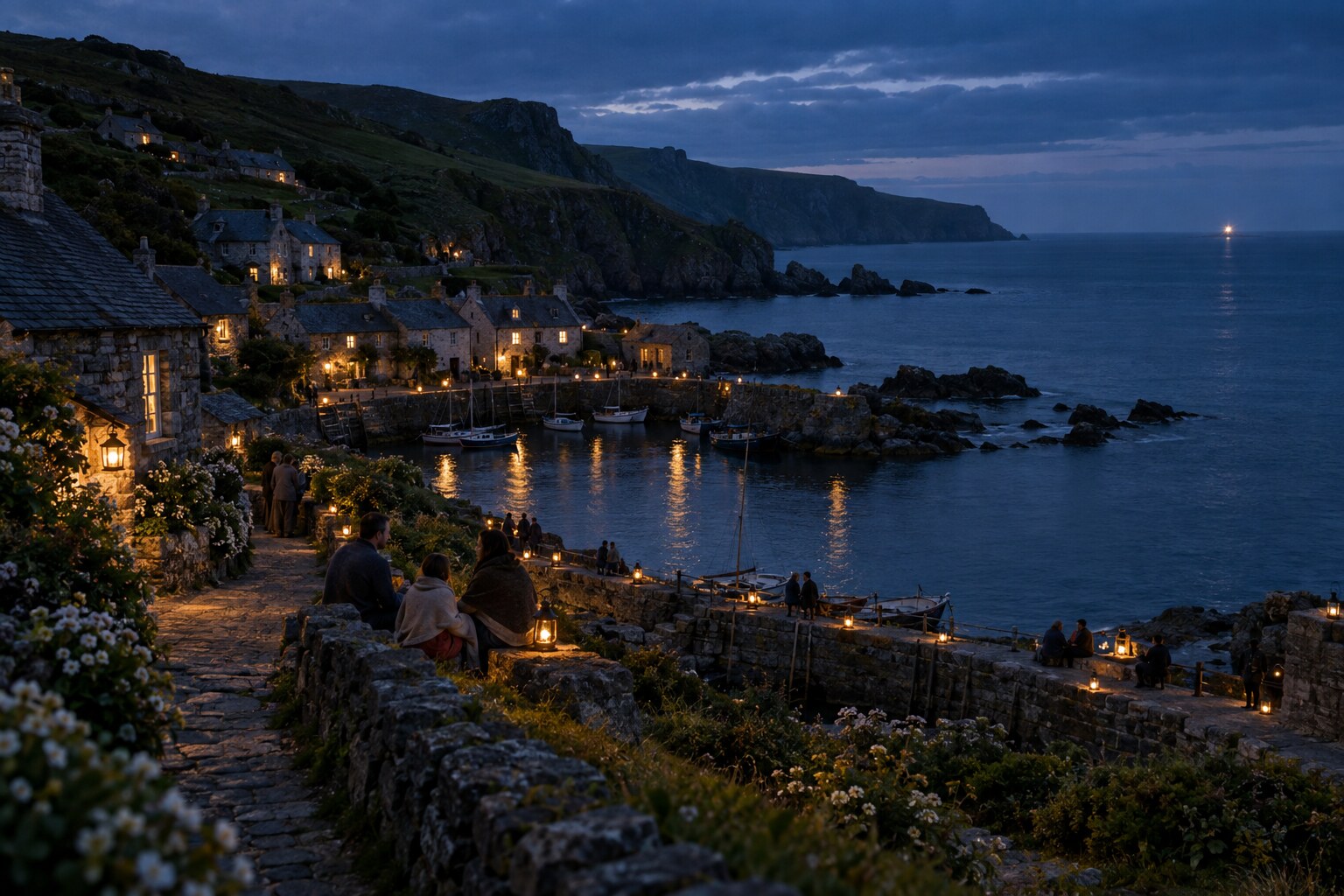
Lamps glowing in windows and along Covenant Cove on the Night of LampsMay 11

The Night of Lamps

On the eve of Landing Day, lamps are placed in windows and along the cove. Families share quiet stories of journeys, welcome, and the light kept for anyone still at sea.

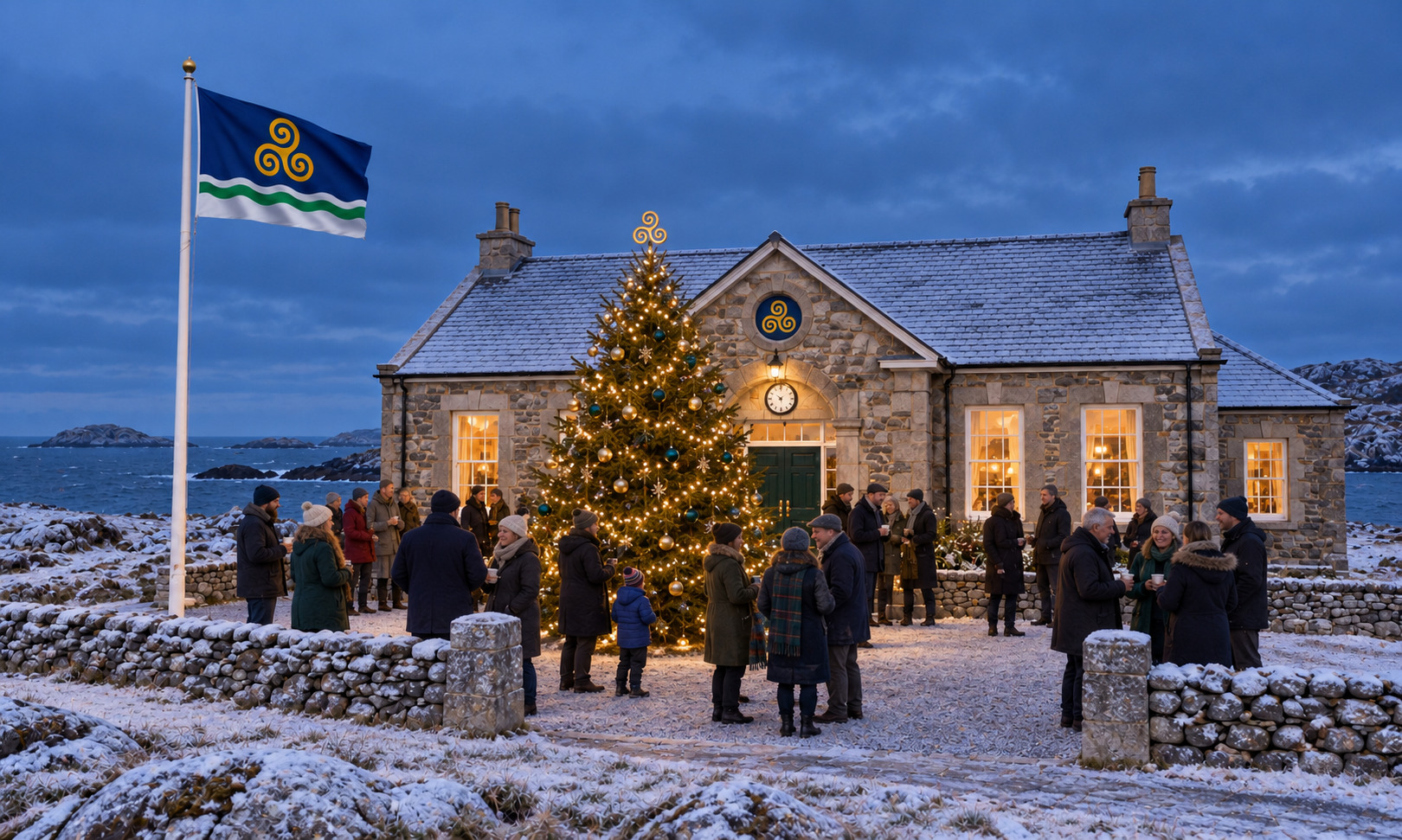
Residents gathered beside the illuminated national Christmas tree outside Government House in Caeravell
Christmas in CaeravellThe village gathering outside Government House, last year

Each December the people decorate one great tree in navy, green, and gold. Carols, hot berry cordial, oat cakes, and a reading for children bring the village together before the winter's longest nights.

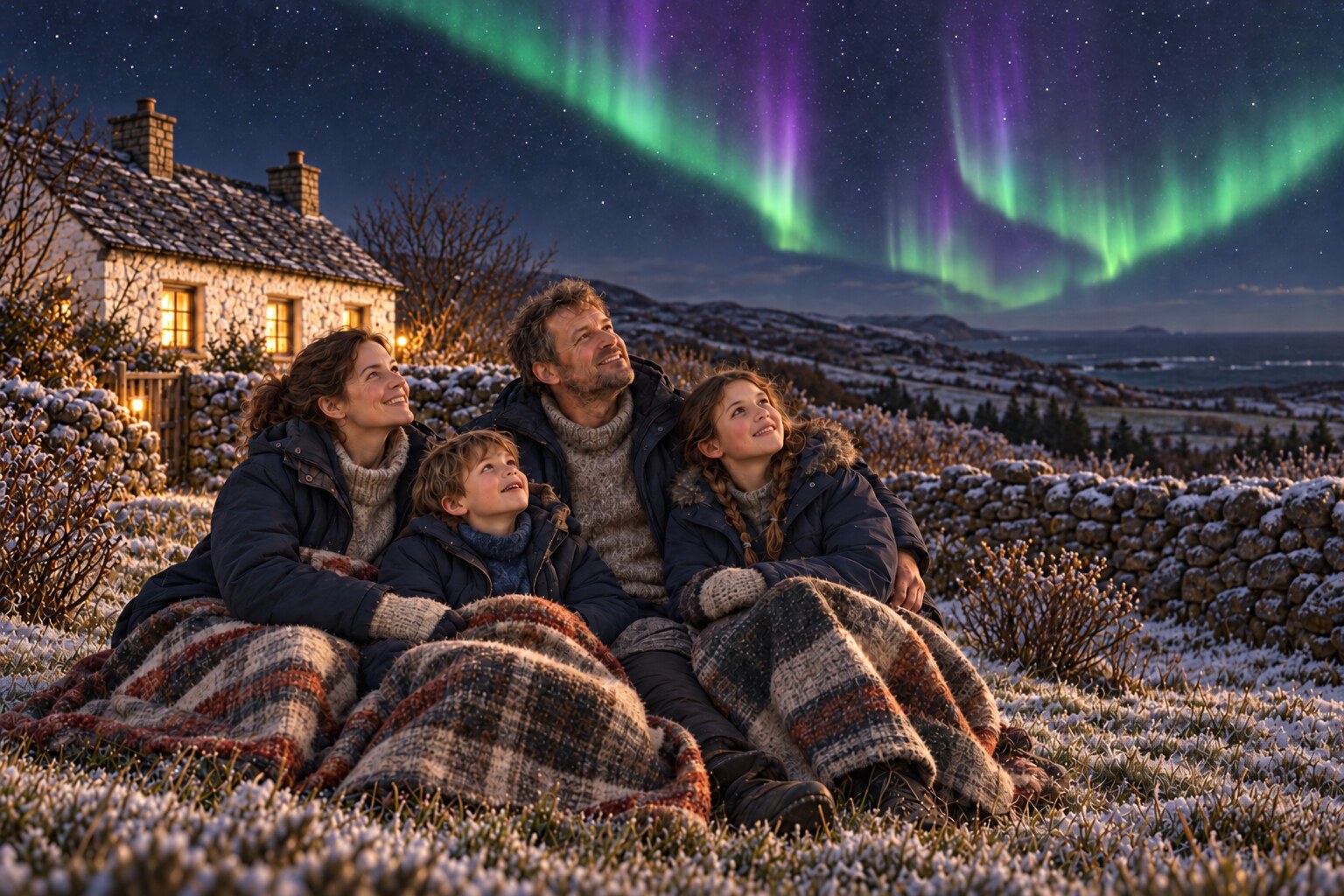
A Tiravellan family bundled beneath wool blankets outside their coastal cottage, looking up at the northern lights
Winter Life on TiravellThe northern lights, seen from home

On clear winter nights, families need not climb Christmas Hill to see the aurora. Away from the settlements' few lamps, green and violet light may sweep above the cottages while neighbours watch from their own doorsteps.

Marks of State

01

Coat of arms

A navy shield bearing the golden triskele above white and green waves, framed by two branches of rowan.

02

The Great Seal

A circular seal showing Keeper's Light above three waves and the words Crown · Assembly · People.

03

Passport & citizenship

The navy passport carries the triskele in gold. Full citizenship certificates bear the Great Seal and the recorded vote of the Assembly.

04

Postage stamps

Small issues honour puffins, sea thrift, the lighthouse, the Royal Home, and important moments in Tiravellan history.

Relations Beyond the Island

Friendship first.

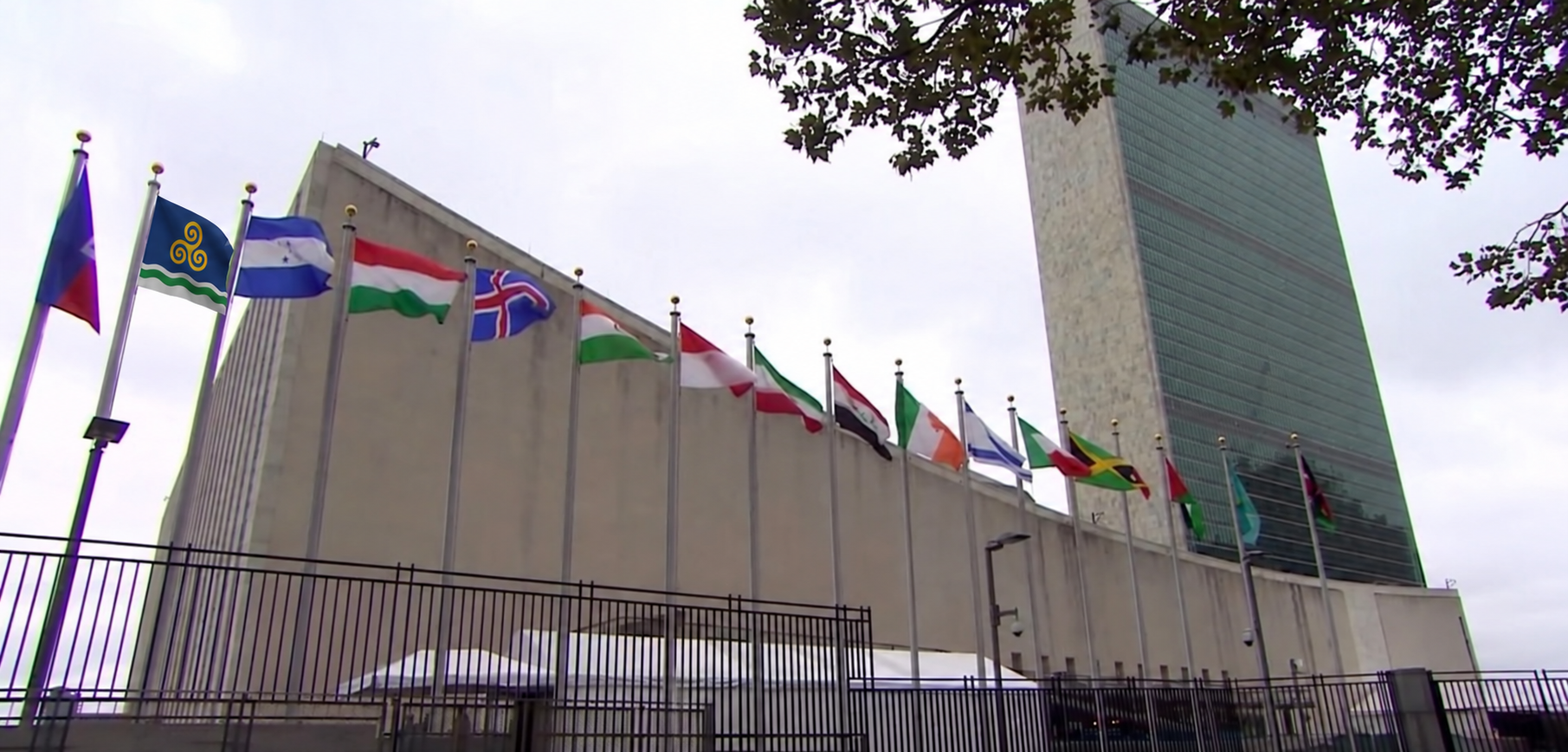
Constitutional adoption opened a new chapter abroad. Following the formal adoption of the Constitution on August 5, 2009, Tiravell gained wider diplomatic recognition and was admitted to the United Nations, confirming its place within the international community.

The flag of Tiravell flying near the beginning of a line of national flags outside the United Nations headquarters
Tiravell at the United NationsThe national flag joins those of fellow member nations following international recognition after the 2009 constitutional adoption.

Tiravell approaches other nations and communities in a spirit of peace, courtesy, and practical friendship. It welcomes friendship agreements, cultural exchanges, correspondence between schools and civic institutions, visiting delegations, and treaties that respect the Constitution and the equal dignity of all people.

The realm has no standing military and seeks no quarrel. Its public agreements may address northern and maritime cooperation, resilience, cultural exchange, institutional dialogue, or a broader statement of peaceful intent.

Each record identifies Tiravell's own adoption and intention. A named counterpart assumes reciprocal obligations only through separate approval and execution by its competent authorities.

Open the Treaties & Agreements Folder
Peace

Disputes should be addressed through dialogue, law, and patient diplomacy.

Friendship

Cultural, educational, and ceremonial exchange is warmly encouraged.

Openness

Treaties and formal agreements belong in the public record.

Caeravell Post Office

Post from
the northern sea.

The Tiravell Postal Service carries local correspondence, government notices, visitor postcards, and outgoing mail through Caeravell Harbour. Each dispatch receives the circular Caeravell postmark and the date in Tiravell Standard Time.

Postal codes

TV1 serves Caeravell and its harbour. TV2 serves rural homes, farms, and service districts. TV3 serves New Galway. A four-digit delivery point follows the zone, as in TV1 1042 or TV3 3018.

Address format

Recipient name
Building or street
NEW GALWAY TV3 3018
TIRAVELL

Standard letter rates

Local letter to 50 g: 1 vell
North Atlantic letter to 50 g: 2 vells
Worldwide letter to 50 g: 3 vells
Postcard: 2 vells

Stamps and parcels

Regular stamps feature sea thrift, puffins, Keeper's Light, and the national triskele. Parcels are priced by weight and available ferry route at the post-office counter.

Frequently Asked Questions

A few useful answers.

What time is it in Tiravell?

Tiravell uses Tiravell Standard Time, UTC−2, throughout the year. The live national clock appears in the Practical Information section above.

May visitors come to Tiravell?

Yes, but transport and rooms are limited. Advance arrangements are customary, and ferry travel depends on North Atlantic weather.

How does a person become a citizen?

A child is a citizen from birth when at least one parent is a Tiravellan citizen ordinarily resident in Tiravell, including when the parent is temporarily overseas for travel, government service, or work. Full citizenship may also be granted by public vote or limited royal nomination; honorary citizenship remains a separate public honour.

May a member of the Royal Family become First Minister?

Yes. A royal family member who meets the same citizenship and age requirements may be elected without preference from title. While serving, that person must suspend royal duties and privileges and may exercise authority only as the elected First Minister.

How does Assembly voting work?

Every resident aged sixteen or older has one equal vote. For a formal ballot, each eligible member receives a secure, single-use code and may vote electronically from home. Assisted terminals and sealed paper ballots are also available at Government House, and certified totals are published with an independent audit record.

Does Tiravell have an official religion?

No. Every faith and every person of no faith is equally protected. Christmas music and seasonal observances are cultural traditions and do not establish a religion.

Does Tiravell maintain armed forces?

No. Tiravell has no standing military and permits no conscription. Civil protection and any lawful defence service are voluntary.

Embassy of Tiravell

A door to the realm.

Embassies and consulates represent Tiravell abroad. This website does not identify a private home as a diplomatic mission or publish a residential address.

chancellor@tiravell.org
Read A History of Tiravell (PDF)
Open the living history book in Google Docs

Contact the Realm

Contact Us.

For official correspondence, press inquiries, cultural exchanges, or questions concerning Tiravell, please contact the Office of the Chancellor.

Chancellor@tiravell.org